
There were six of us in a spacious North Devon barn in late June. Exmoor is Martin’s favourite place. He was gyrating wildly to the sound of Europe’s ‘The final countdown’. Milo was unperturbed: he is used to his owner’s eccentric behaviour. The song has an apocalyptic tone – at least that’s my interpretation of the lyrics. So the rest of us vetoed it as the theme song for our last week of walking the South West coast path.
Martin was right in one sense. We were coming to the end of a five year quest to complete our walk. Yenworthy Barn was a huge space for our week, with a wonderful view of the sea through a steep combe.
Our last forty miles would be over Exmoor – with its rolling hills, coastal woodland and Doone legends. It was so different from our earlier experience. Most people start at this end of the path. We were saving it to the end.
Saturday 25 June was before the Great Drought. Although folklore has already rewritten the history of 2022, there was rain in June. Our showery start was opposite the Imperial Hotel. In the first few minutes we walked past and missed Henry Williamson’s house on Capstone Hill. Martin was crestfallen.
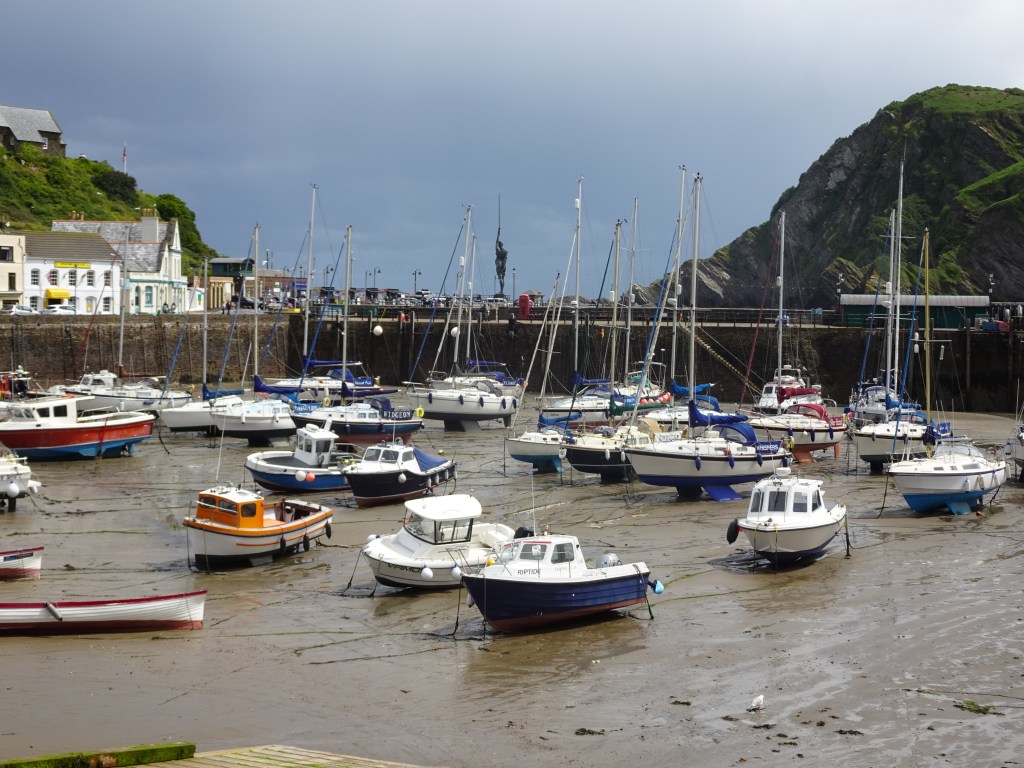
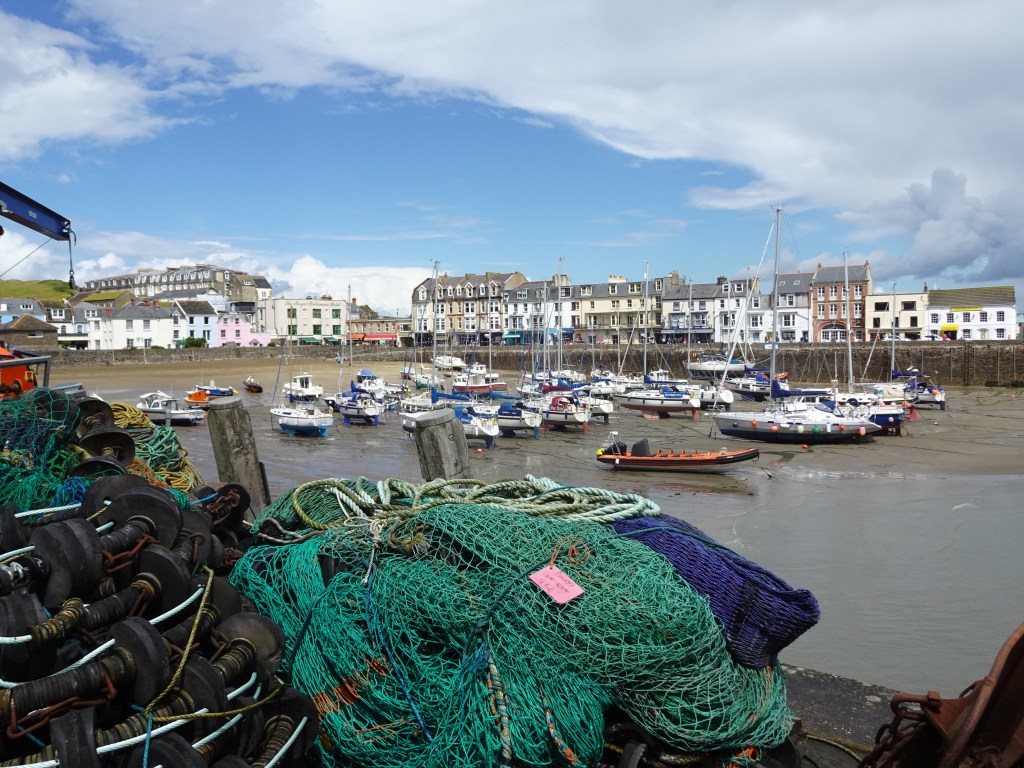
A short walk around the headland took us to the harbour and shortly afterwards to a view of Verity. We saw her from a number of angles as we climbed out of the town. She is hard to miss.
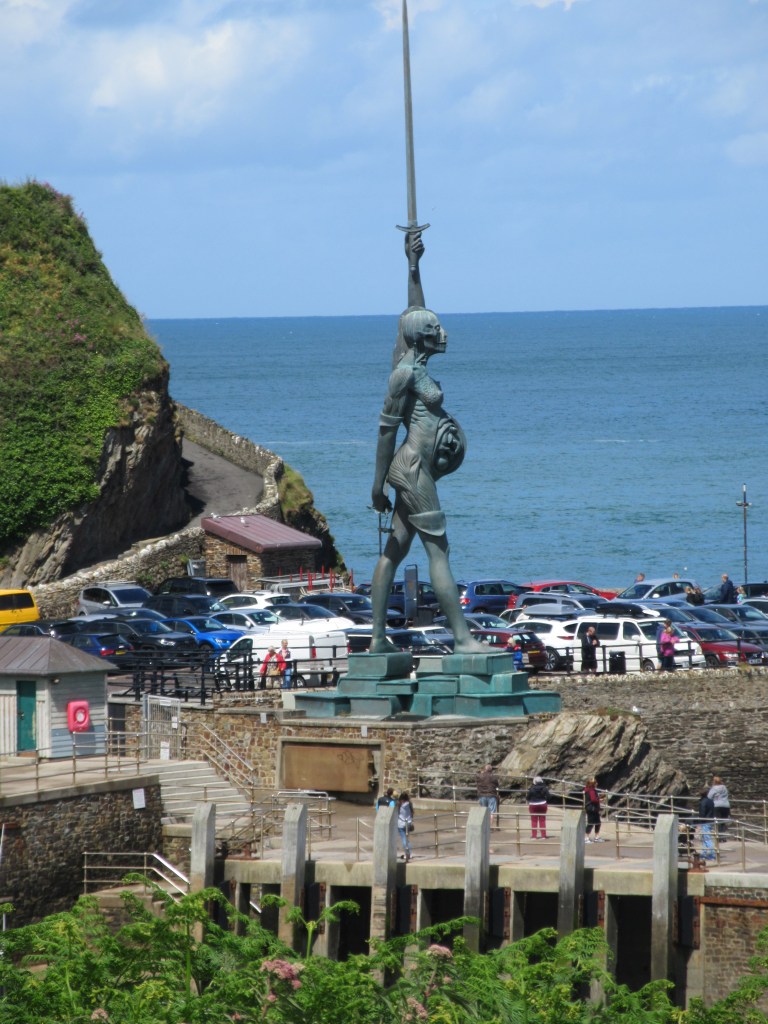

Mixed opinions. She was certainly striking with her strong posture and fierce sword. But the peeled back muscle and the half-revealed foetus were harder to like. She has been on loan to the town since 2012. We had no feedback about whether the good burghers of Ilfracombe want to keep her.
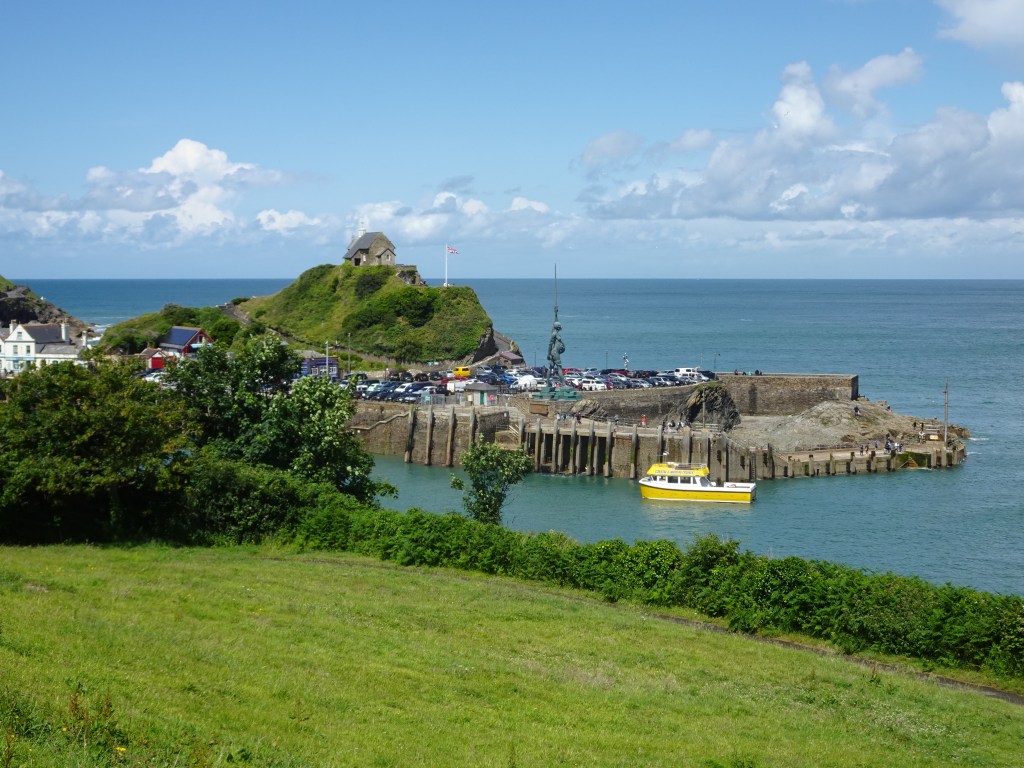

The views of Ilfracombe – and Verity – were good as we climbed out of the town. There are some intriguing features on the way. We skirted Hillsborough Castle but did not climb it. Apparently the peak is one of the few places in England from which you can see the sun both rising and setting over the sea. There were also attractive little coves – Watermouth and Smallmouth respectively.


The showers died out and the butterflies emerged.
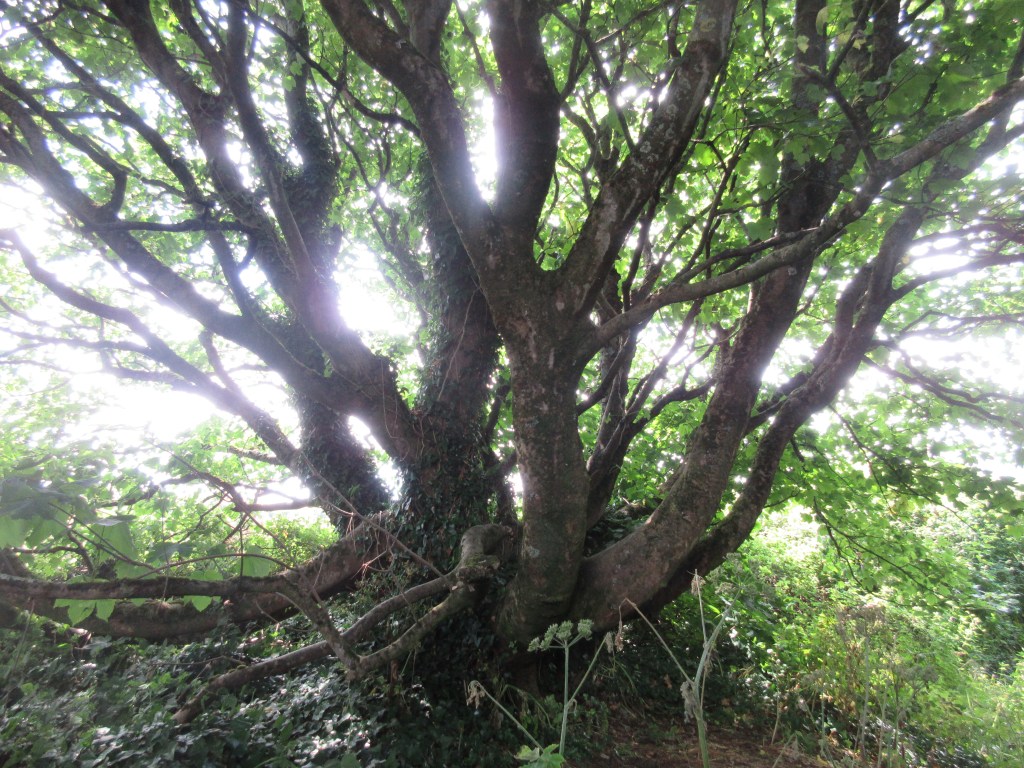
After one of our slowest passages we arrived in Combe Martin. We had averaged something like 1.54 mph.


We did not really deserve a drink after that. But we found a hospitable and lively pub in the Dolphin, having been cold shouldered by the Focs’le. On this section we met great contrasts in pub atmospheres: there were lots of welcoming, warm and enjoyable places to stop and relax. By contrast some of their colleagues were curmudgeonly and seemed to resent their customers. It did not feel like a recipe for success.
Driving home we passed The Pack of Cards.
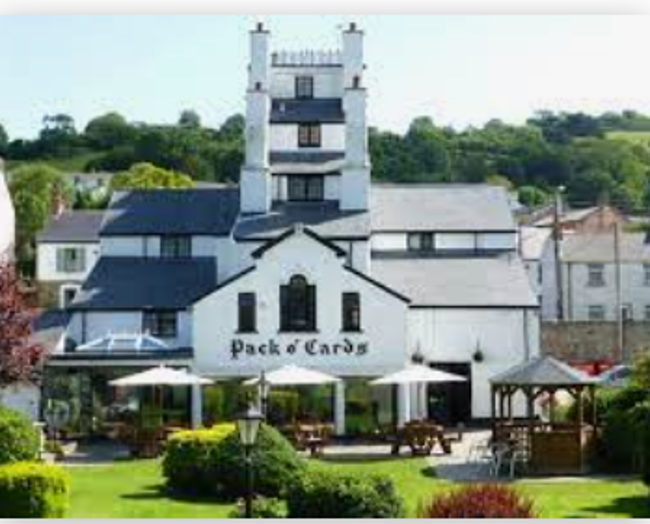
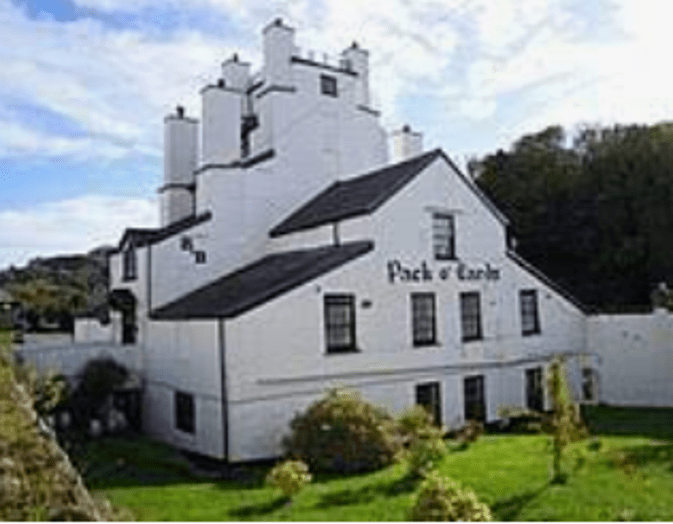
A strange building with a strange history. It was built in 1690 by a successful card player. Celebrating a notable win he built a house with 52 windows, 13 rooms and four floors. It’s for sale now and yours for a mere £800,000.
On Sunday the team was two. Richard and I climbed the long steep hill out of Combe Martin. Below us was Wild Pear Beach. Now a naturalist beach it features in Tarka the Otter. Martin had given us a bloodcurdling rendering of the otter pups meeting rats on the beach for the first time and slaughtering them.

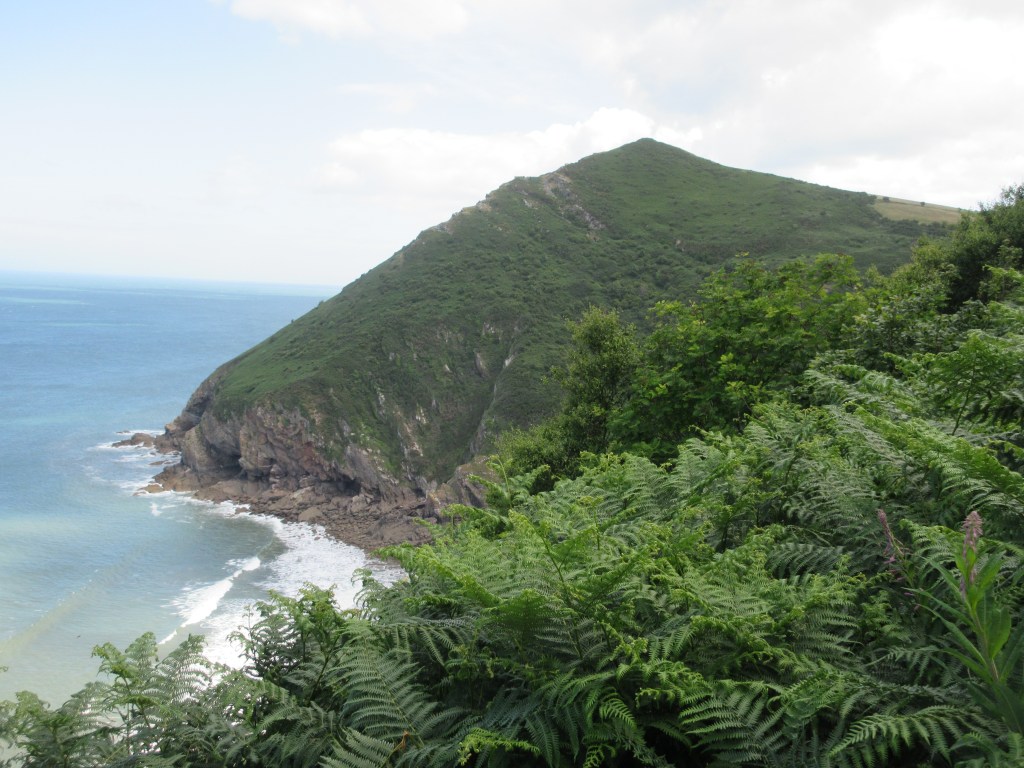

We left Little Hangman to the left and climbed on to Great Hangman. A cairn marked the highest point of the SW coast path at 318m, but also the highest cliff on the English coast.

The views were magnificent. From here we had several miles on the top of the cliff. It fell steeply to the sea covered by a blanket of bracken. Scattered rowan trees looked out of character. Butterflies entertained Richard. The haul included Painted Ladies, Meadow Browns, Speckled Woods and a Red Admiral.
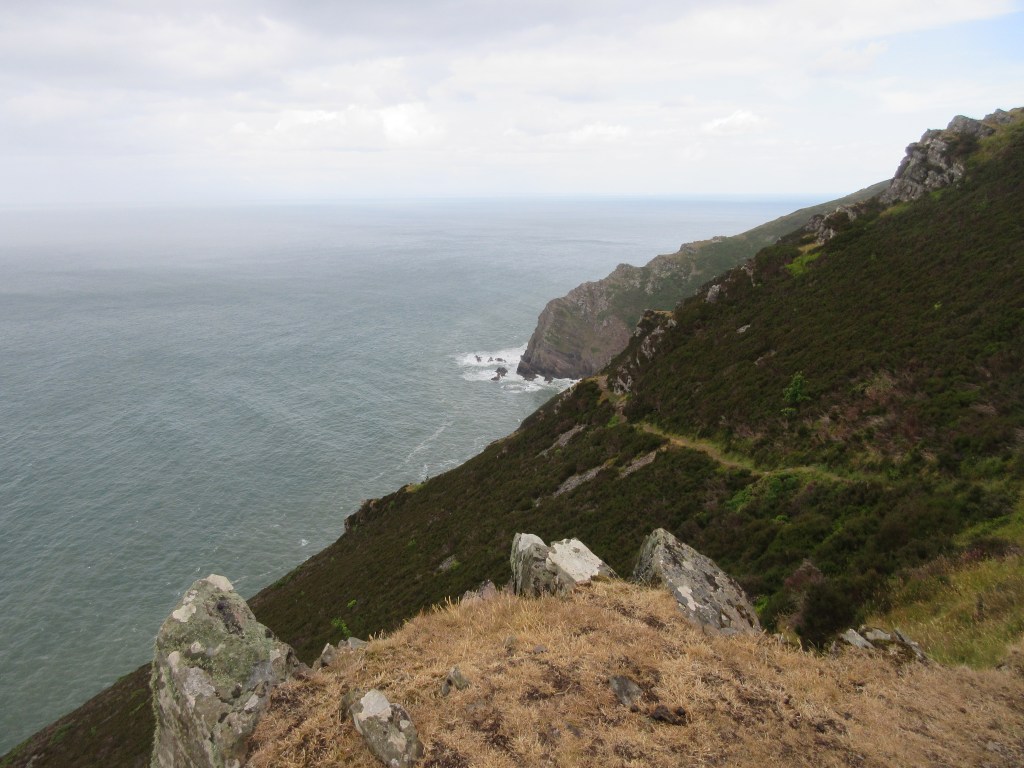
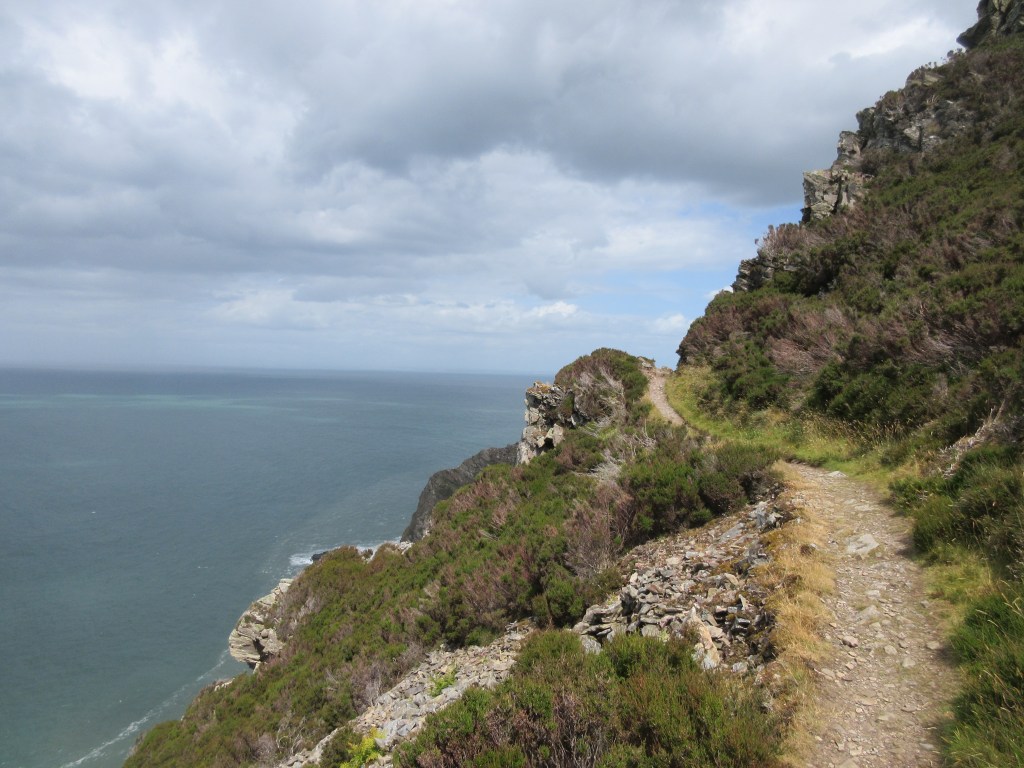
In mid afternoon we turned south along Heddon’s Mouth Cleave, a deep and dramatic valley.

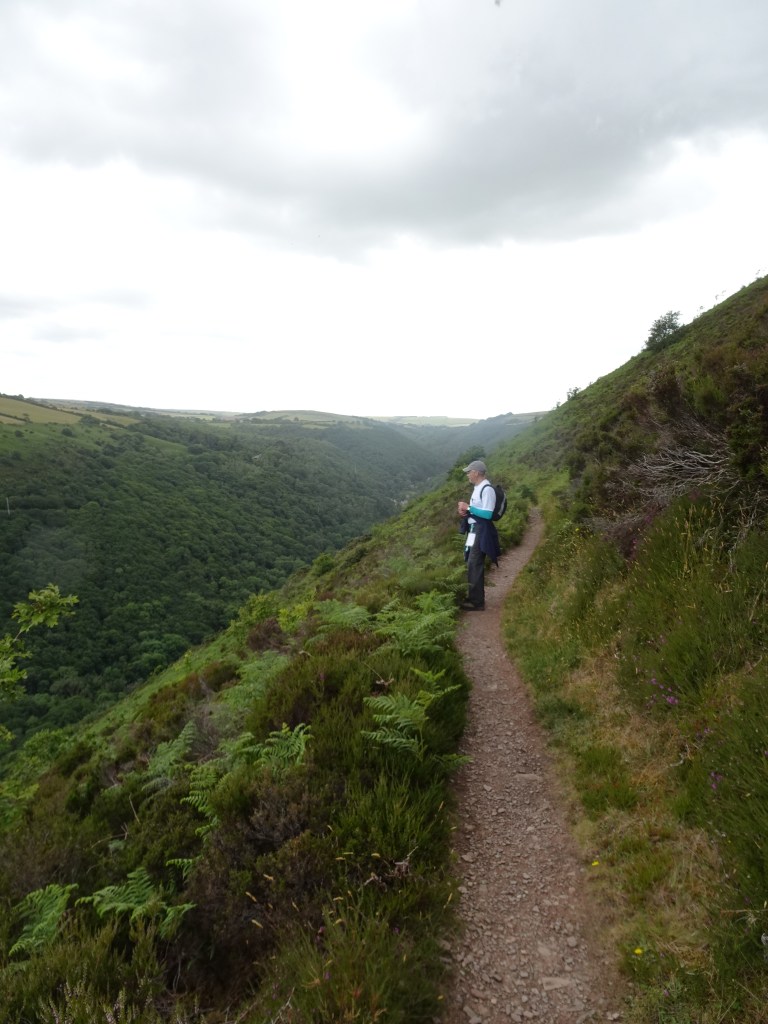
On the zig-zag descent we met Milo. Sally was not far behind.
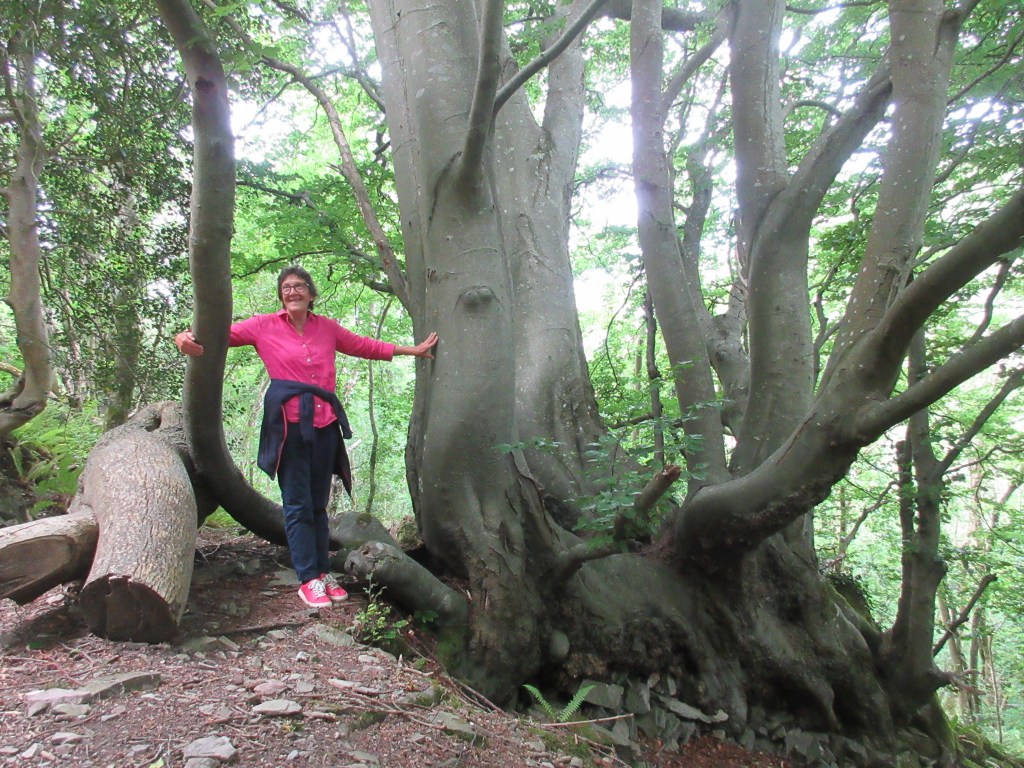
Martin was of course chasing something rare on the beach. We ended up with a pleasant drink outside the Hunter’s Inn. The barman, Zak, was an enthusiastic glass full-full person. A romantic, he described his great grandparents spending their honeymoon at the Inn. It had a great atmosphere. I fantasised about sitting in the bay window, close to a roaring fire, with the snow falling heavily outside. Wrong time of year.
The full team left Hunter’s Inn the next day. Martin was looking out for fritillaries. He thought the vegetation well suited, but unfortunately the fritillaries disagreed. The climb was as steep as the earlier descent. Milo dashed relentlessly back and forth, determined to exhaust himself. It exhausted me watching him.
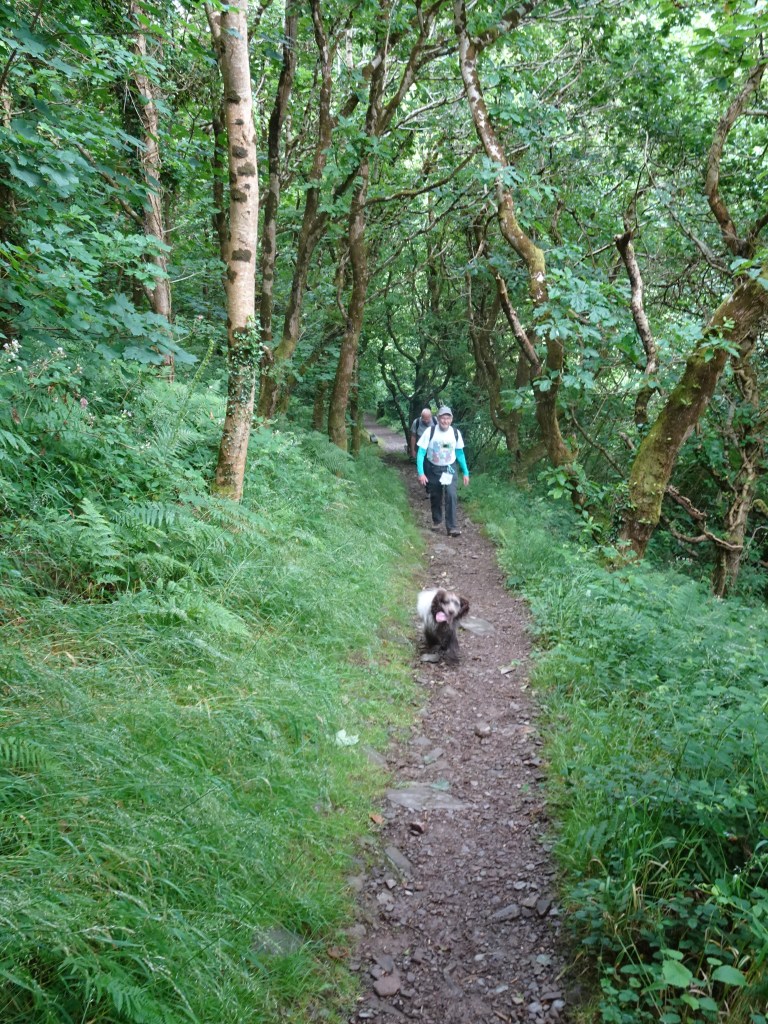

Increasingly the path was in woodland.

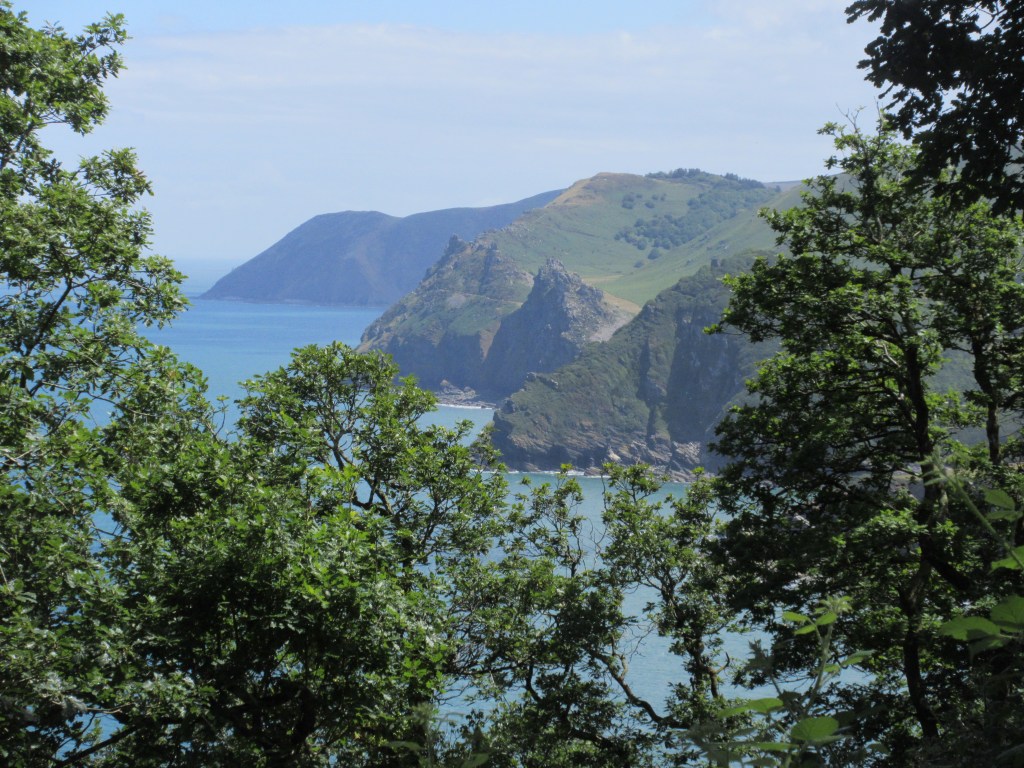
We emerged to pass Lee Abbey – established as a Christian community in 1946. Then on to the Valley of the Rocks.
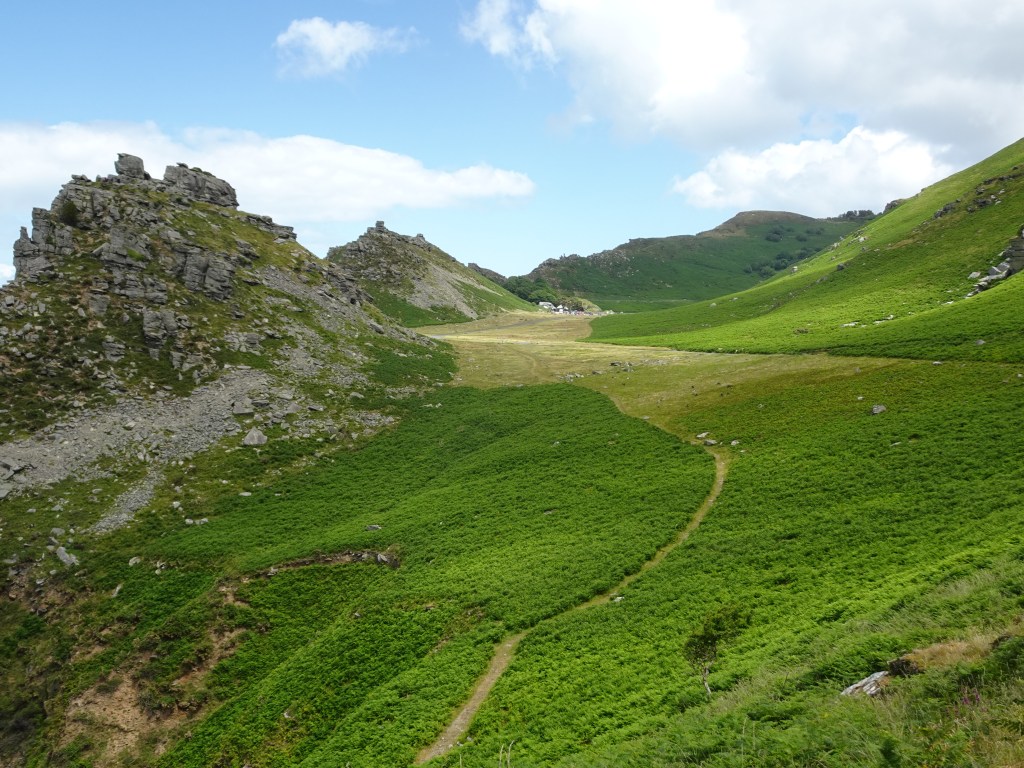
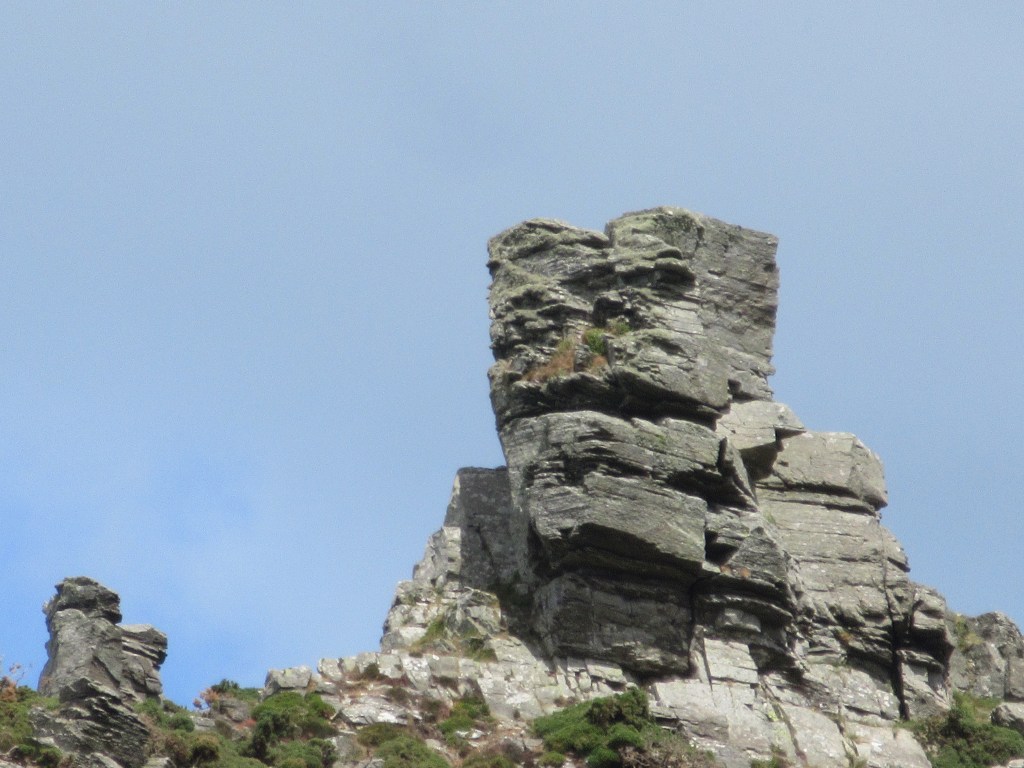
Richard and I, with high expectations from Martin, were a little disappointed. The valley is home to a trip of goats.


Martin described the goat war that rages in Lynmouth between the advocates and opponents of the goats. They don’t respect proud and tidy gardens. A long tarmac path took us round Hollerday Hill. I found the sharp drop from it unnerving. The goats were unfazed by it.

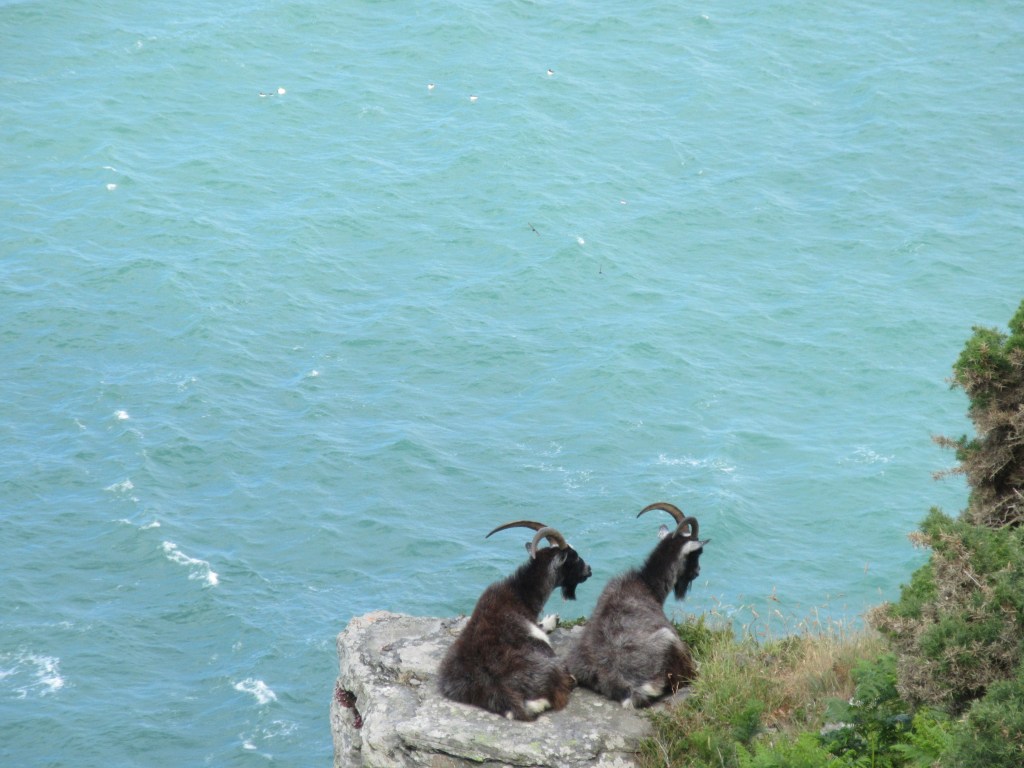
We missed the top of the funicular, so zig-zagged down into Lynmouth. The Rising Sun had another jolly landlord.


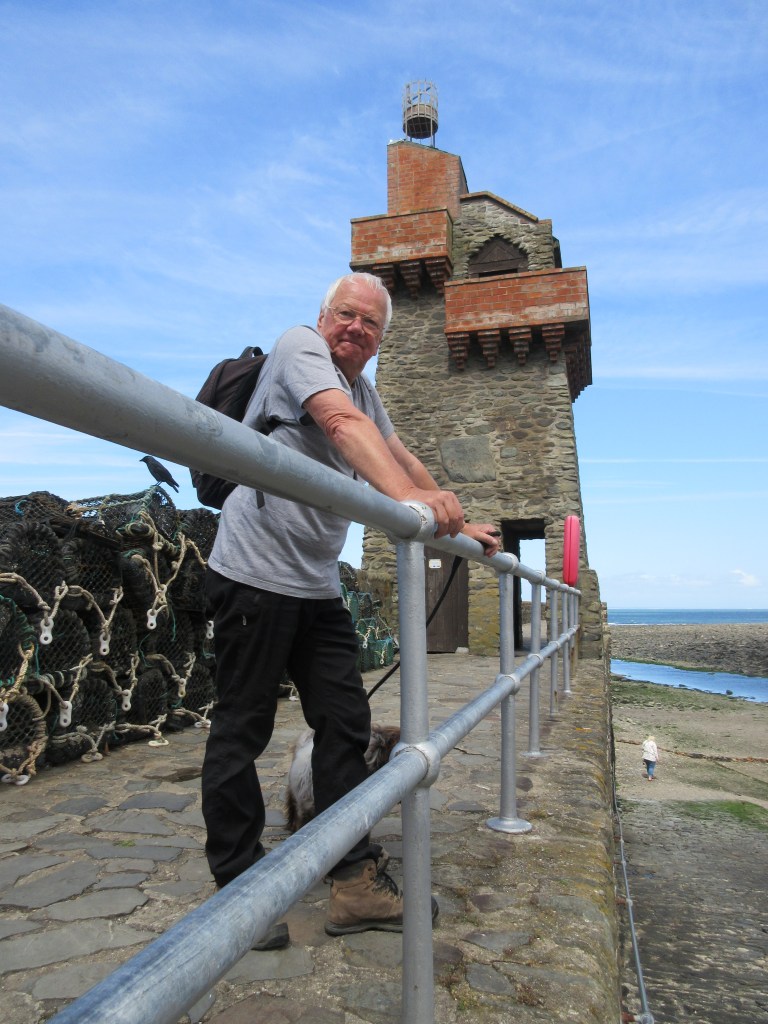
When Sally arrived, we changed to ice cream. Lynmouth has a small Rhenish tower. Richard and I took pictures of Martin posing in front of it. He thought observers might think he was a celebrity. We tried to dissuade him.

From the footbridge in Lynmouth you can look up the valleys of the two rivers – the West Lyn and the East Lyn – and imagine the roar of the water in August 1952. Nine inches of water falling on top already sodden ground created a devastating flood which killed 34 people. At its highest the West Lyn river was sixty feet above its normal level. In the wake of the flood 114,000 tonnes of rubble was cleared as the village was rebuilt.
The climb out of Lynmouth was long and steady.

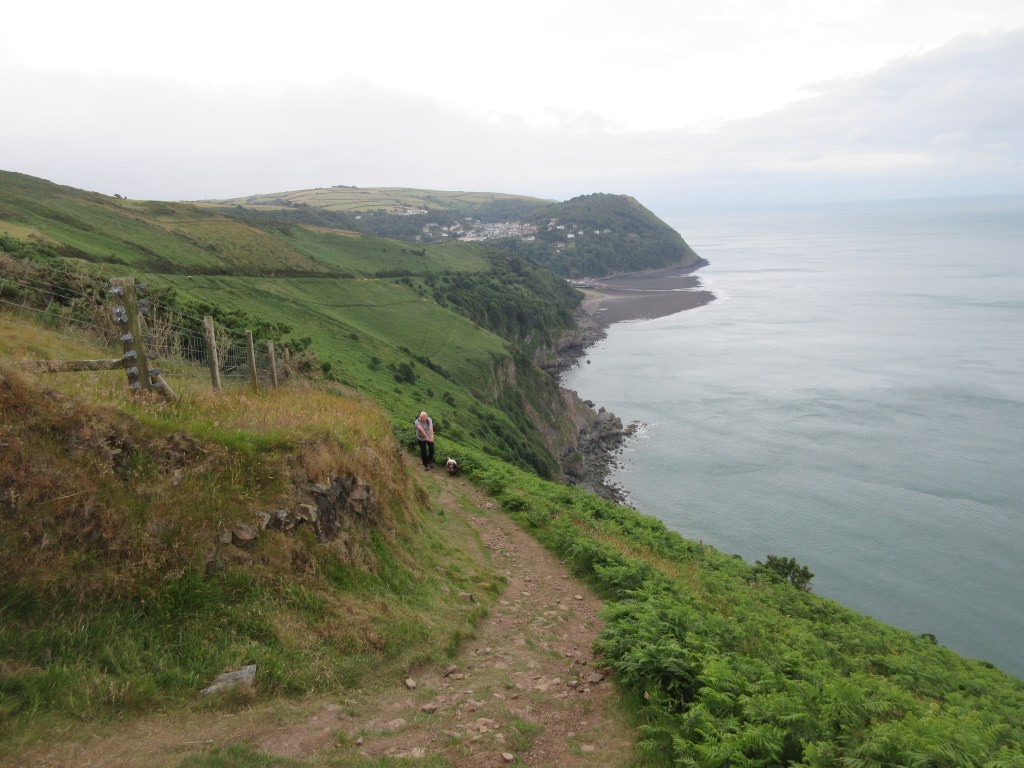
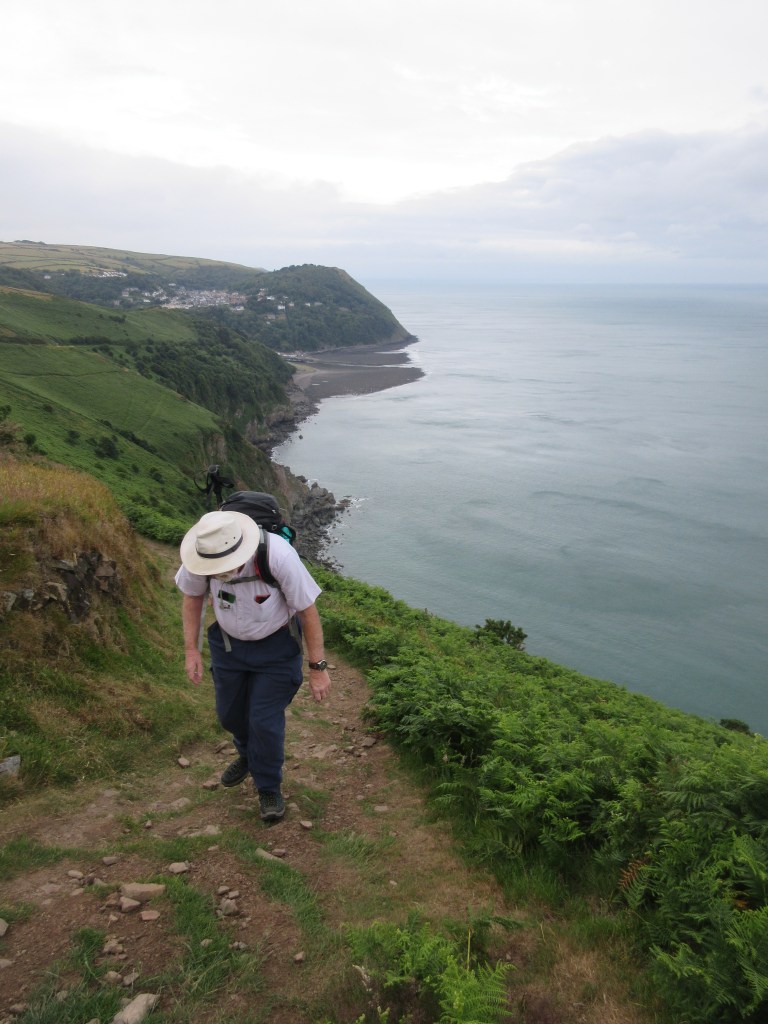

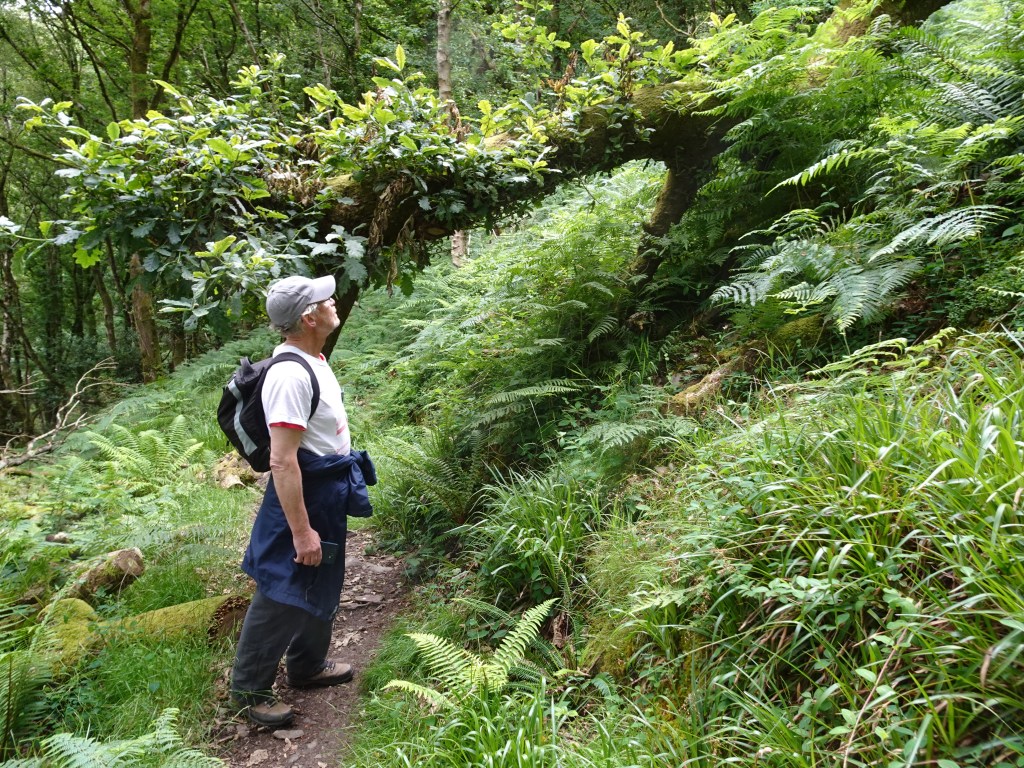
A long stretch of woodland was full of change. A section of dead rhododendron was followed by vigorous growths of it.
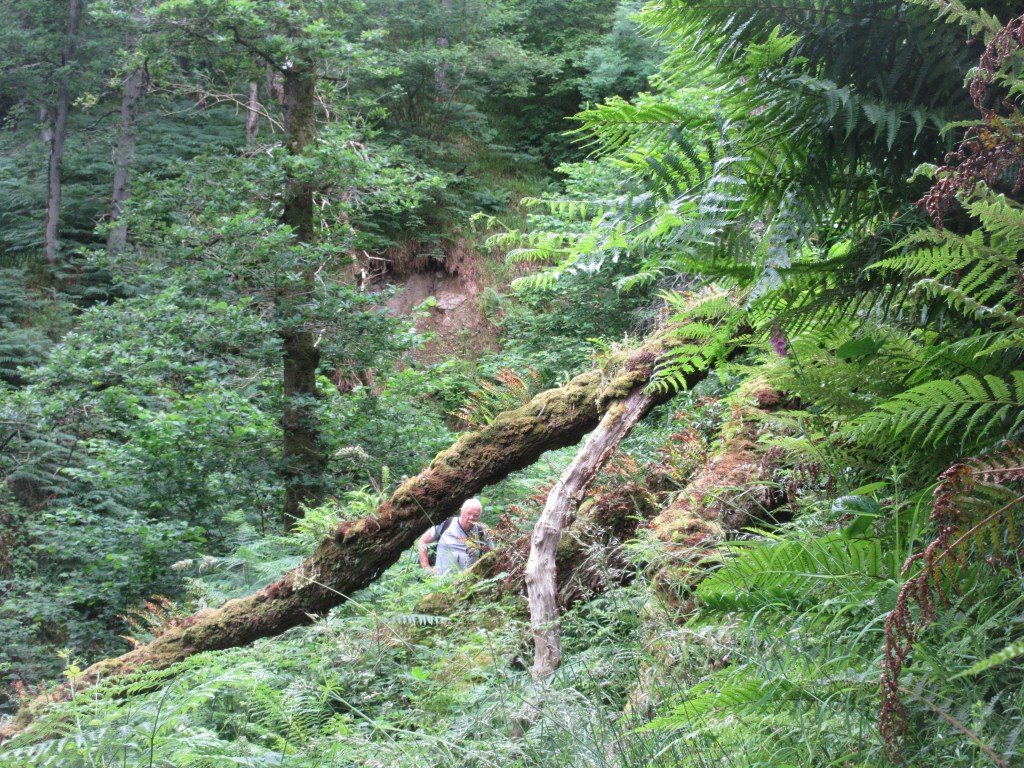
Four peregrine falcons flew out for a spontaneous air display for Martin. They would not have done it for us.
By mid-afternoon we were close to the house. A steep and narrow path took us up Yenworthy Combe to it. We had been surprised that there was no mention of an easy path between the farm and the coastal path. There wasn’t one.
Richard and I continued the next day, again struggling to get back to the main path.


Shortly afterwards we met a cheery couple whose SWCP journey would end at Ilfracombe. They had been at it since 2008. Culbone Church was a delight.


Miles from anywhere it was tiny and a great shelter from torrential rain. In one of the walls is a leper window through which the services could be watched. So whoever else was living nearby some unfortunate lepers were.
Approaching Porlock Weir we passed under a number of arches built by Lord William King who was obsessed with tunnels. His wife, Ada Lovelace, was more forward looking and worked with Charles Babbage on the first recognisable computer.


Near the arches we met Adam. He looked lean and fit, as you would on the 53rd day of walking from John O’Groats to Land’s End.
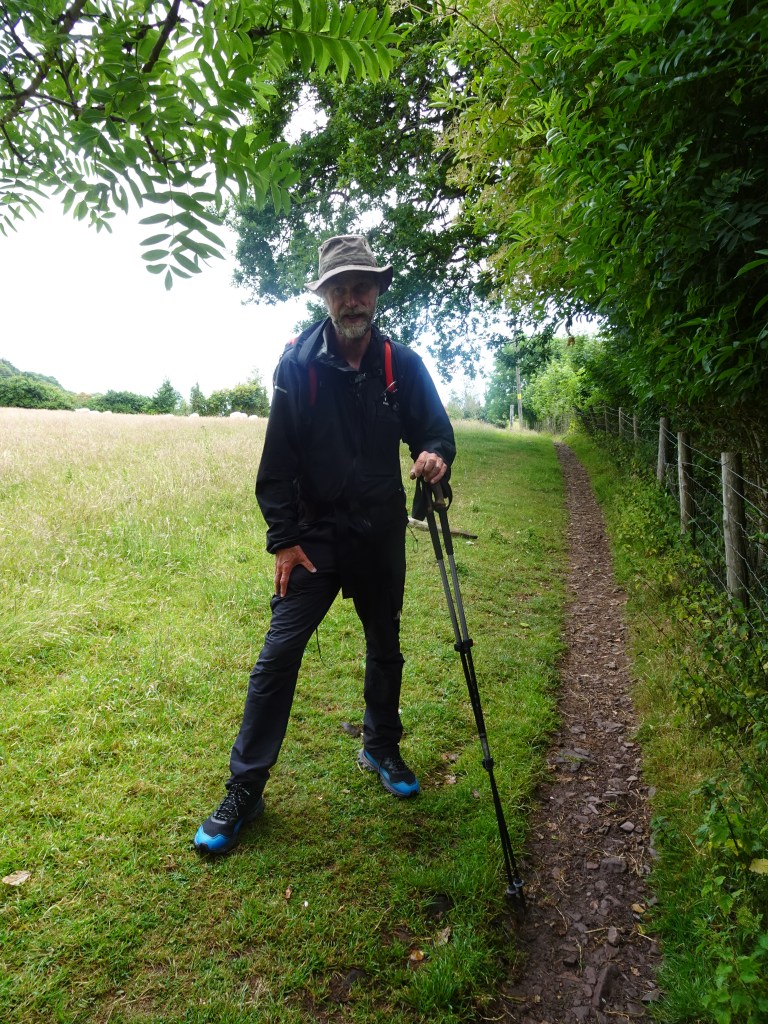
He had just completed 1,000 miles, making our endeavours feel puny. He was fundraising for the World Land Trust and finished his walk on July 14. His website is www.stonekicking.com.
Porlock Weir is a small village overlooking a perilous looking harbour.
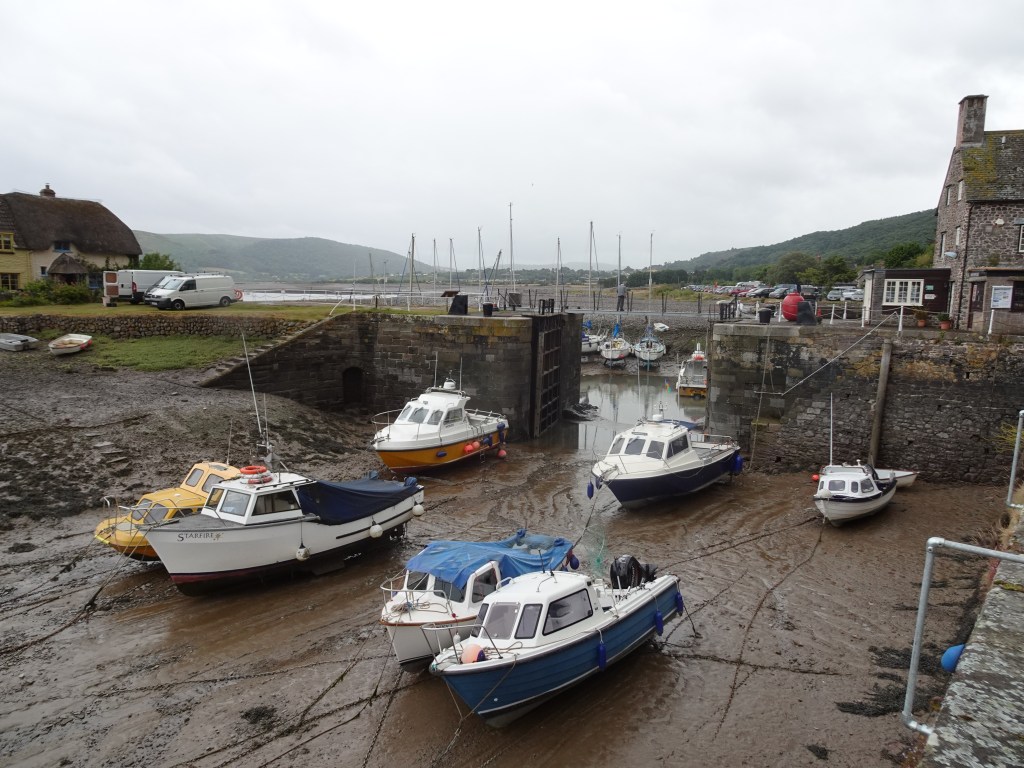
It was raining again. For the first time since January 2018 we stopped for lunch in a pub. The Ship Inn gave us an excellent meal and shelter from the rain. We set off for Bossington.
But you can’t leave Porlock Weir without thinking about the Louisa. In January 1899 a schooner with a crew of 18 went aground off the harbour. The weather was too rough to launch the Lynmouth lifeboat Louisa so the cox decided to haul her from Lynmouth to Porlock. Up the 1000’ Countisbury Hill and along to Porlock and down the notorious hill. Volunteers and horses pulled it, cleared the way and cut down whatever was needed. The Louisa was launched after ten hours of effort and the crew of the schooner saved.
Along the flat walk to Bossington is a dead area of trees and hedges killed by the salt water that has flowed in since the breach in the pebble bank in 1996.


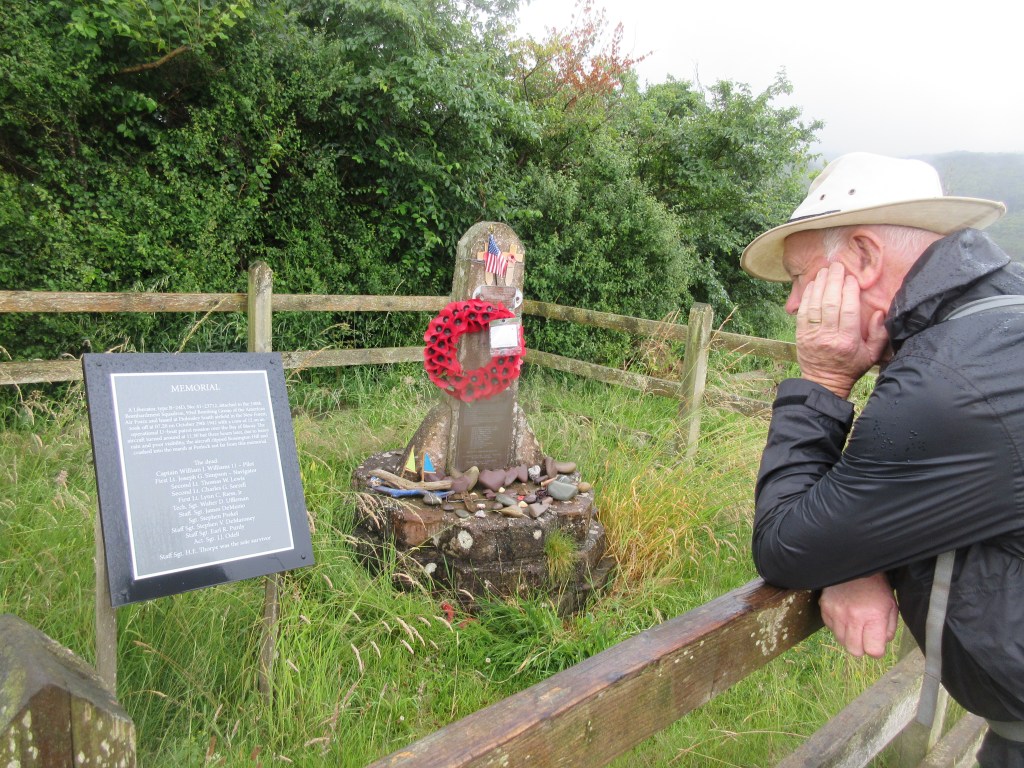
Half way along is a memorial to a USAF Liberator that crashed in poor weather returning from a patrol in 1942. Only one of the crew of 12 survived.
Day 72 of the trip dawned and there were three of us again. It was a pleasant last day
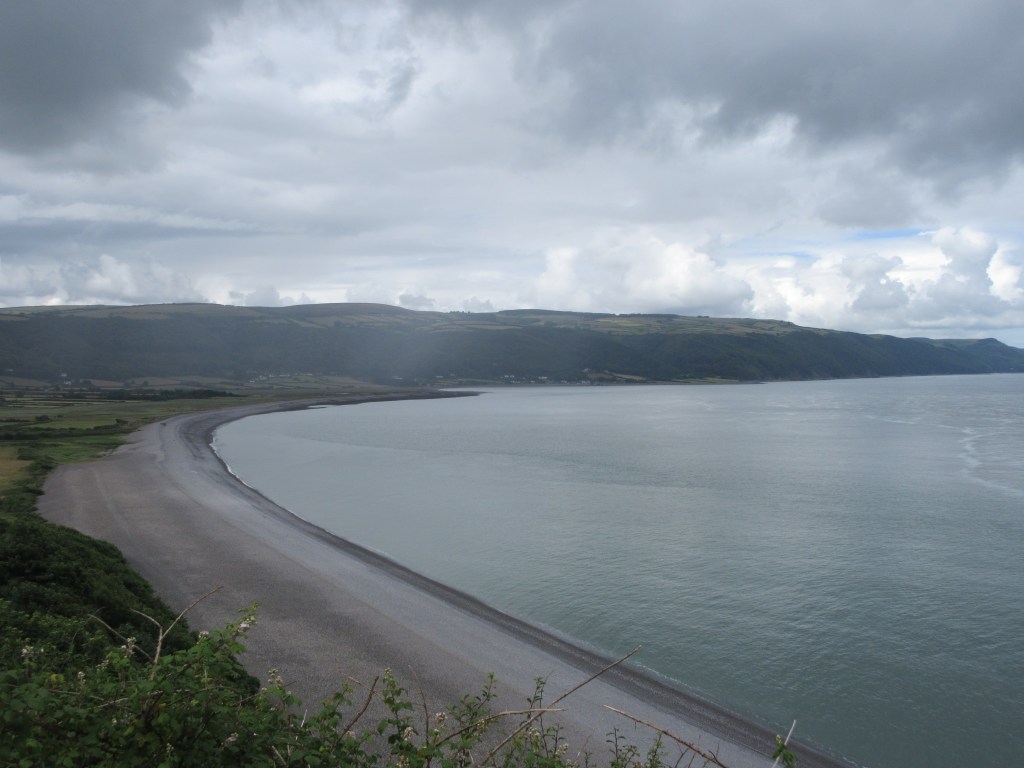
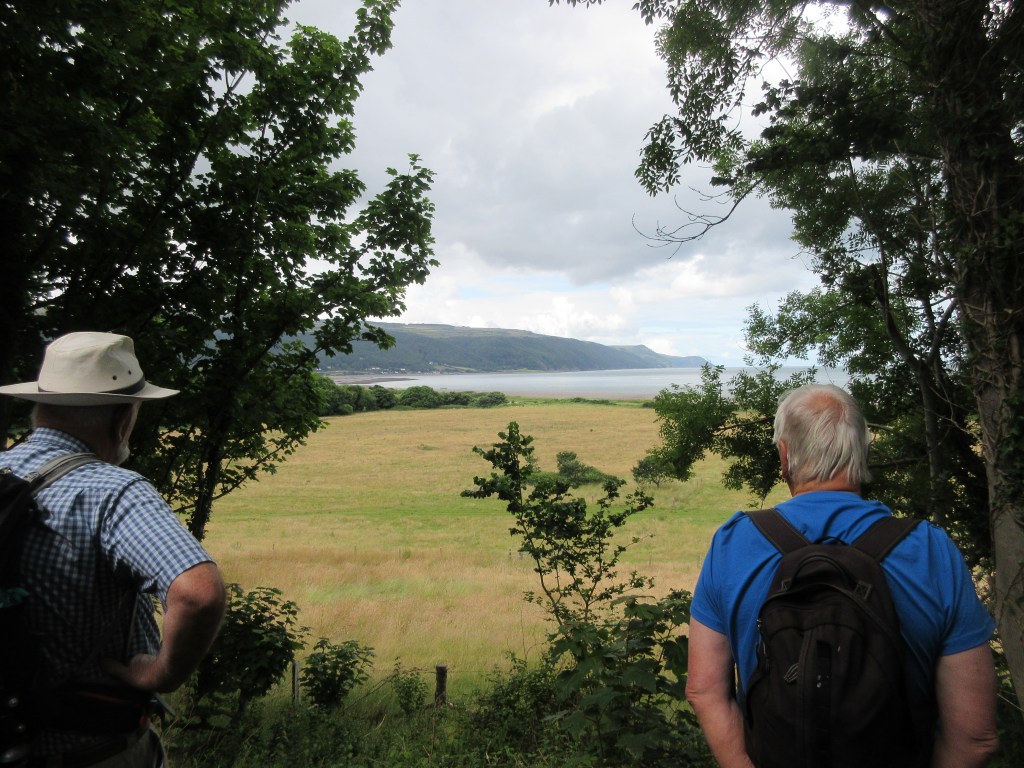
A steep climb up Hurlestone Combe rated as one of the ten hardest of the walk. Richard outpaced us both with ease.

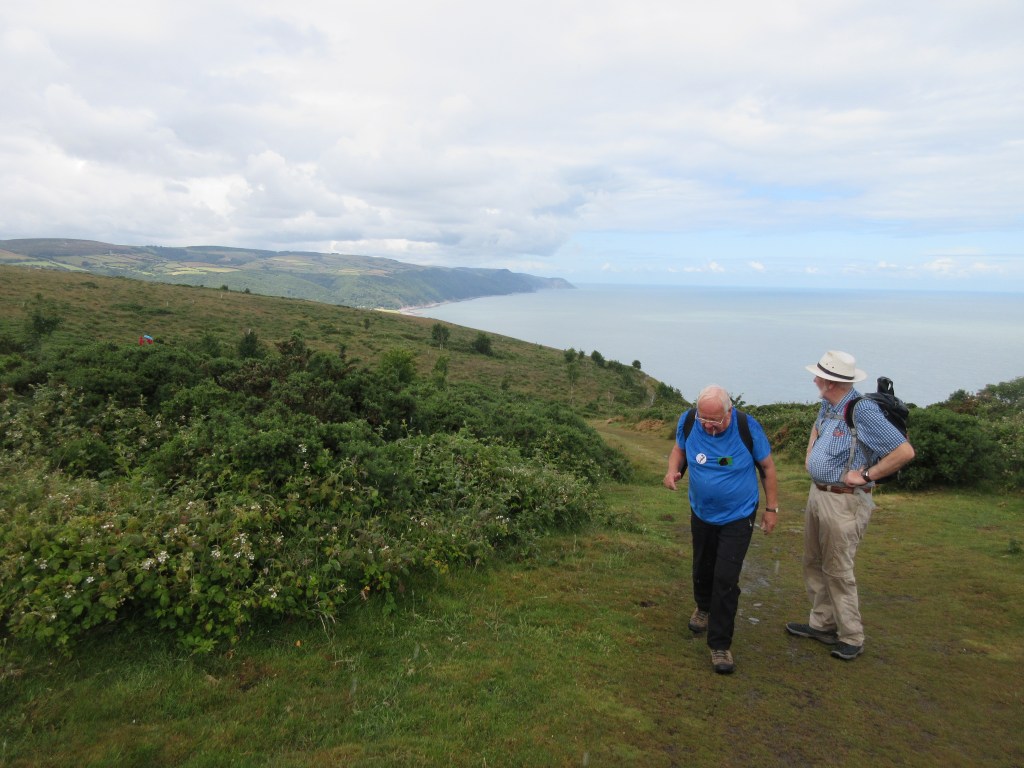
From there a long fairly level walk along the cliff. In the distance three orange silhouettes appeared over the horizon. Looking less threatening at close quarters were our three National Trust litter heroes – Zoe, Jonathan and Will. We had a good natter and admired their work. They explained the made up stone roads as being a relic of more intensive farming in the past and the use of the area by the US Army for training. I took what should have been an excellent portrait of them, but my camera took umbrage at the increasing rain and destroyed the image. My apologies to them.
The rain grew heavier as walked through pleasant woodland and eventually down a zig-zag path into Minehead.


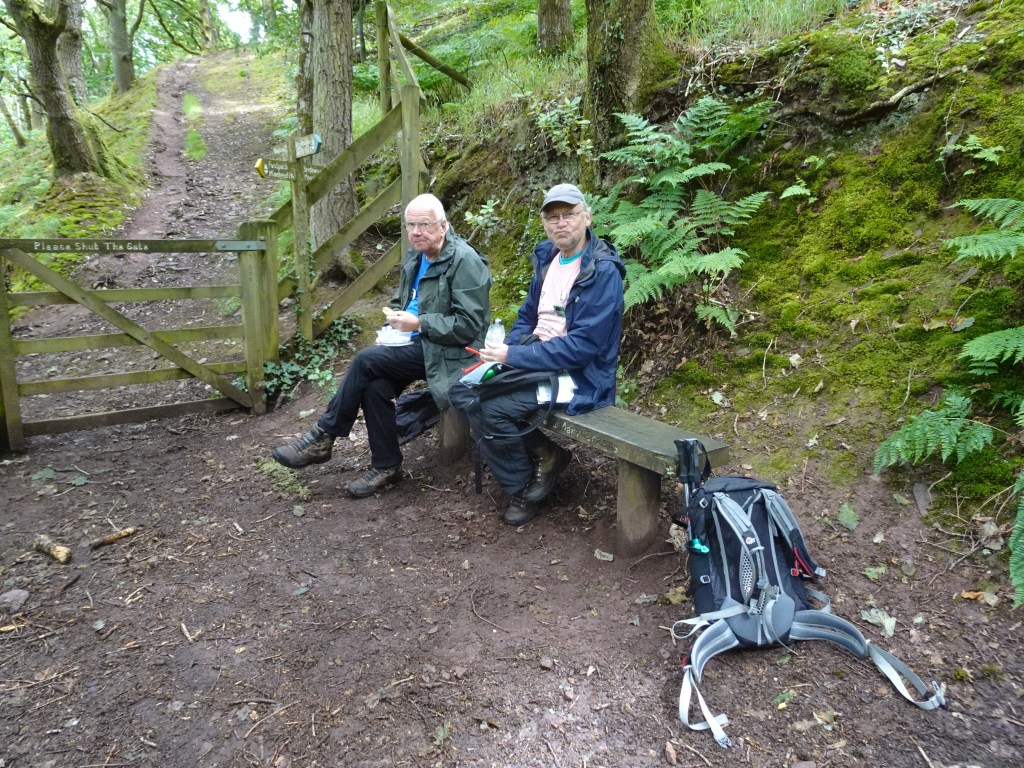
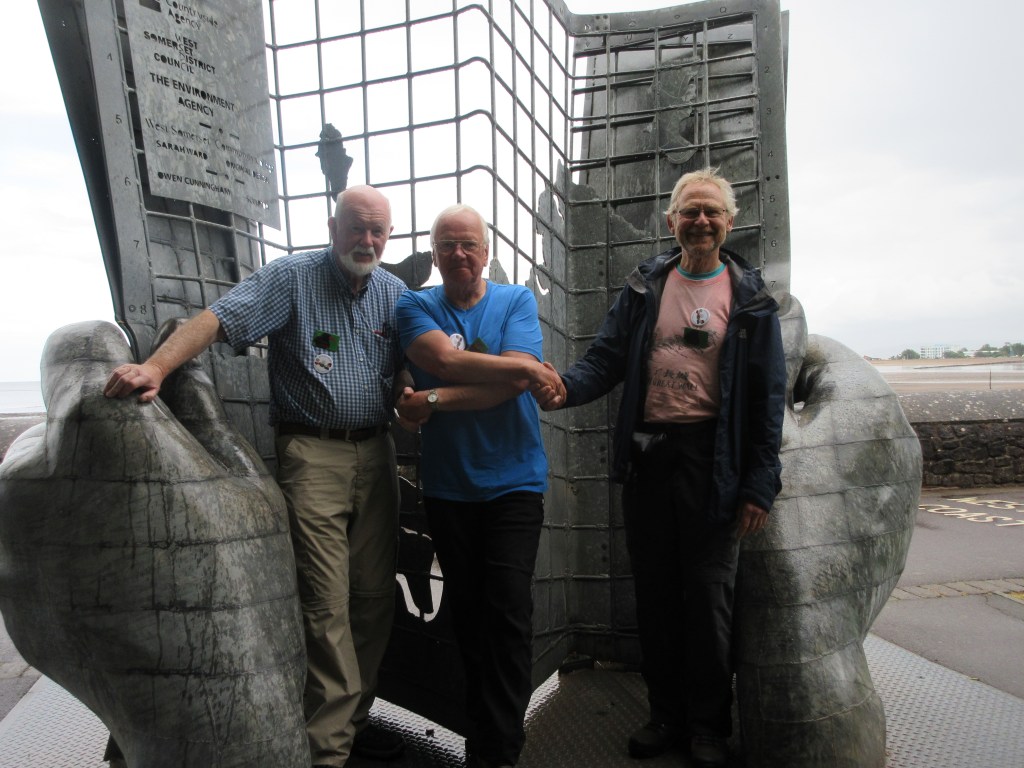
We did a little dance round the SW coast path end marker. We were there at last.

We retired to the Quay Inn for a deserved celebration to meet the least charismatic landlord of the trip. He grudgingly poured us drinks while retaining the best seat in the window of the bar. We didn’t stay long, preferring the company of the council’s shelter to wait for Wendy.
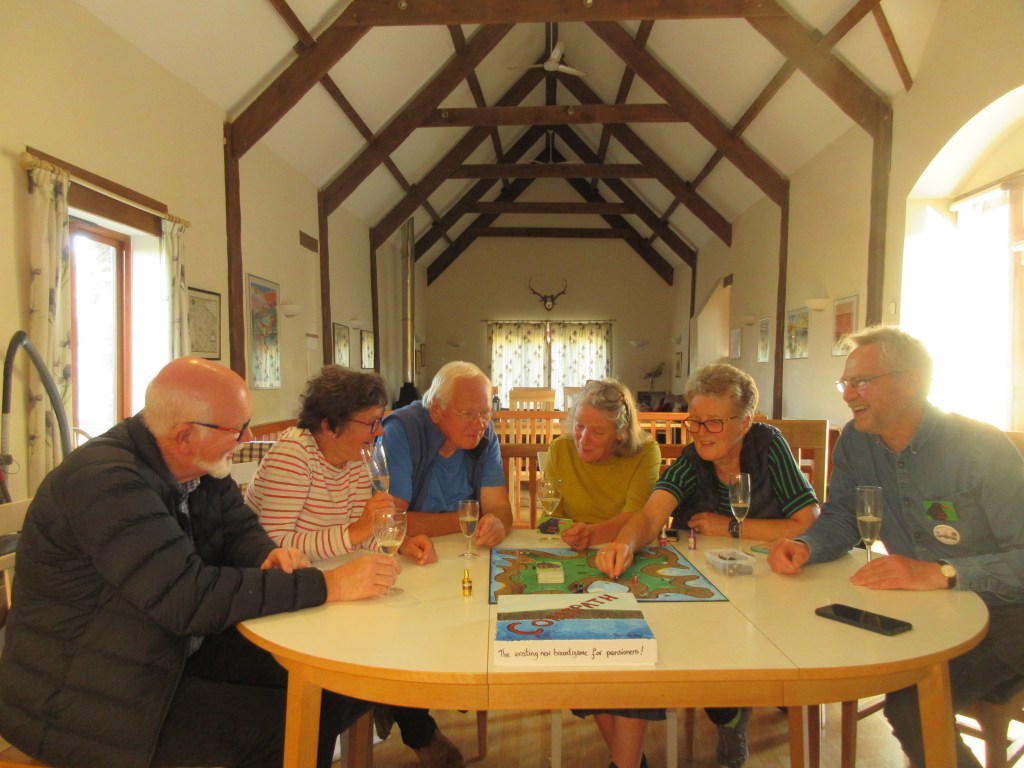
Back to the farm for a celebration of our four and a half years of walking. Martin and Sally had created an imaginative game based on the walk. We played it with enjoyment.
In 72 days we had averaged 8.75 miles a day. Not a fast pace, but a satisfying end. One issue has been settled: this was not a prelude, as Richard and I originally discussed, to the Camino de Santiago pilgrims’ walk. Perhaps something a little more modest. Our team had two to three walkers. But much of the organisation lay with the other three, Anne, Sally and Wendy, particularly Wendy, who organised eight cottage rentals and drove us down endless narrow lanes.


 Pensioners on The Path