
We stayed away from Cornwall for the summer to make room for everyone else. We decided it was safe to return at the end of August for our third week in 2019. Wendy got us an eccentric house in Long Rock, just west of Marazion. It had good views of Mount’s Bay and close views of the GWR trains running into Penzance. That immediately ticked the box for Martin.


Our party was five plus Milo. Sally was looking after grandchildren in Warwickshire. Our starting point was the Lizard and our aim to get well beyond Land’s End. Three walkers and Milo set off from the Lizard light on the last day of August. We were rewarded with the wettest hour we had experienced since leaving Poole and were rapidly drenched. A strong south-westerly kicked up the sea and drove the rain. The sedentary bird watchers by the light were pictures of joy.

As so often on this walk our start coincided with another political crisis. We were getting worried that this is more than coincidence and that in some mysterious way we were to blame for the latest fiasco. Undaunted we carried on. One hour in the squall blew through and the warm temperature dried our clothes. We were now walking on the flat plateau to the west of the Lizard.

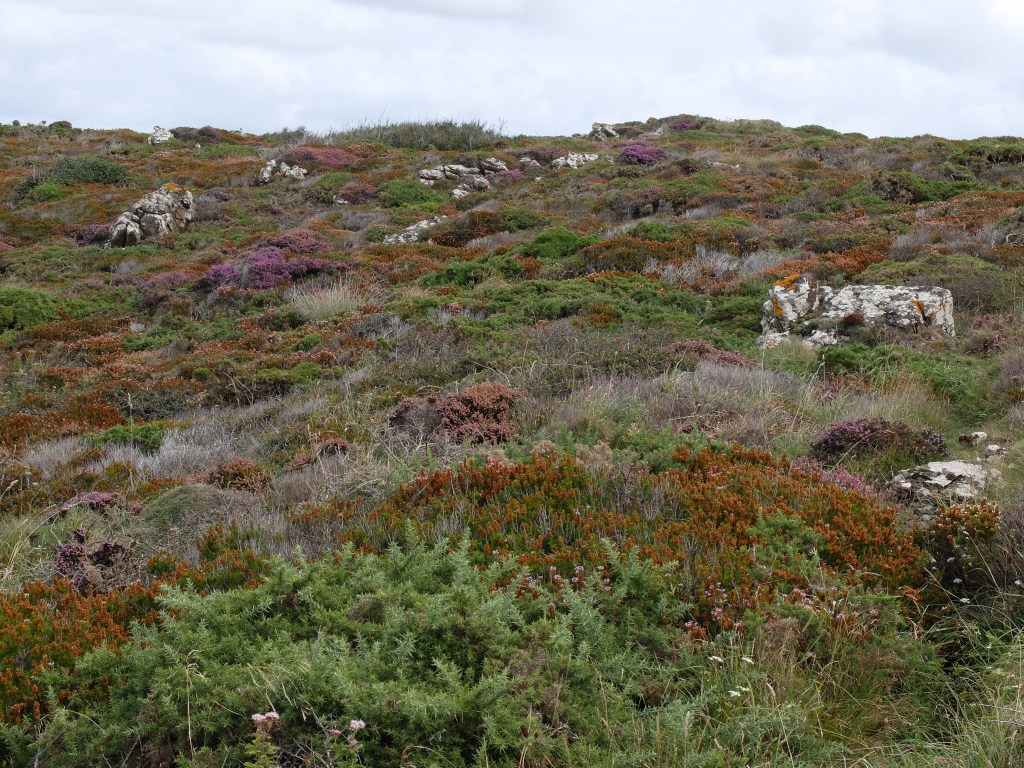
The mixture of the granite coloured with lichen and the heather created an attractive landscape.
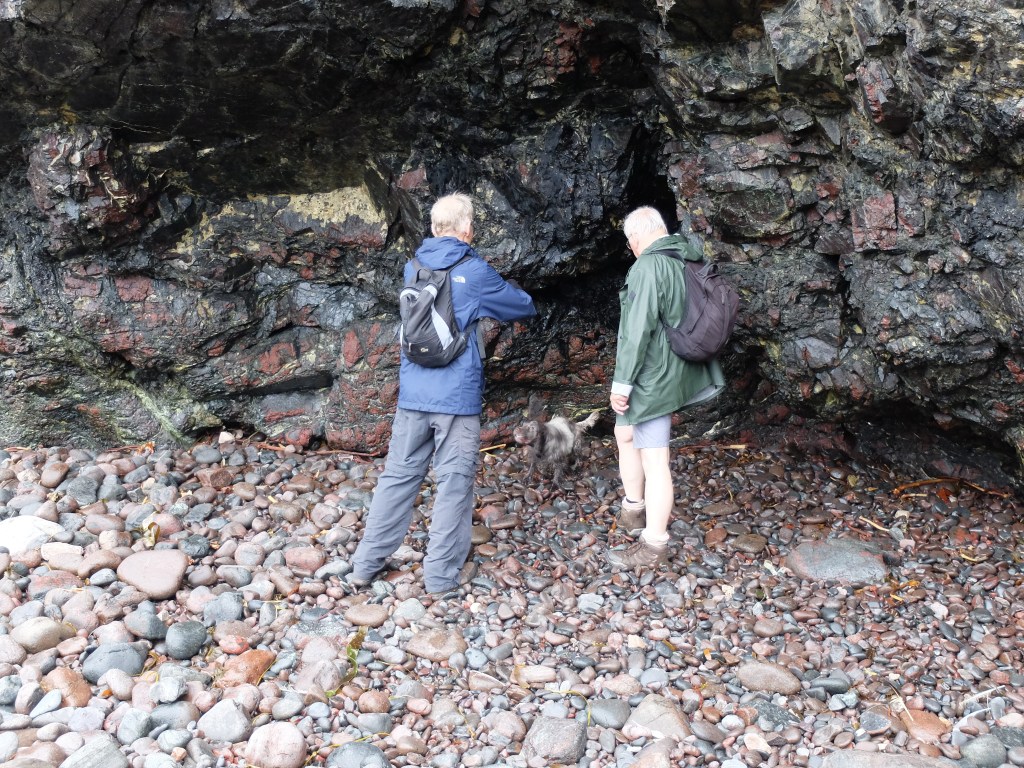
Dropping down into Kynance Cove we found intriguing red stained rocks.

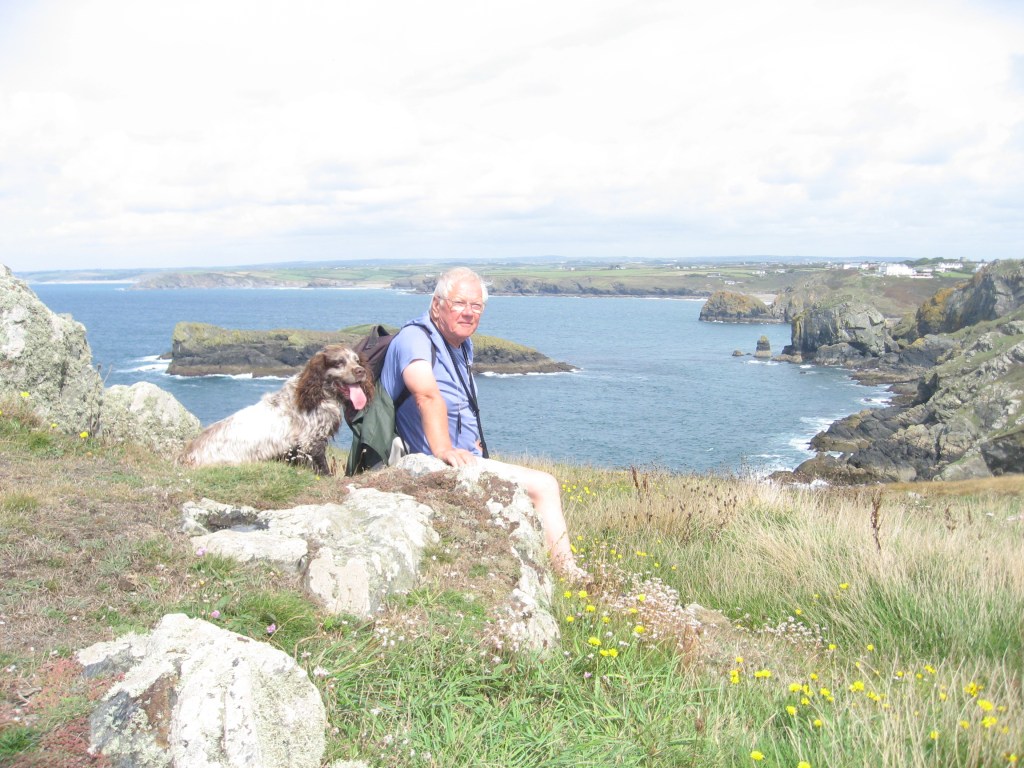
Coming round Rill Point the view of Mount’s Bay suddenly opened up – a delightful prospect but also quite a long way round. As we headed north the wind veered to north-west, giving us a brisk but sunny headwind. On this stretch the conversation turned to Poldark, and it got stuck in this groove. This was fine for the two addicts, Martin and Richard, but not so good for Dugald who had not made a start on the series. It’s not clear what Milo thought. Some of the poses struck by Martin were Poldark copies.
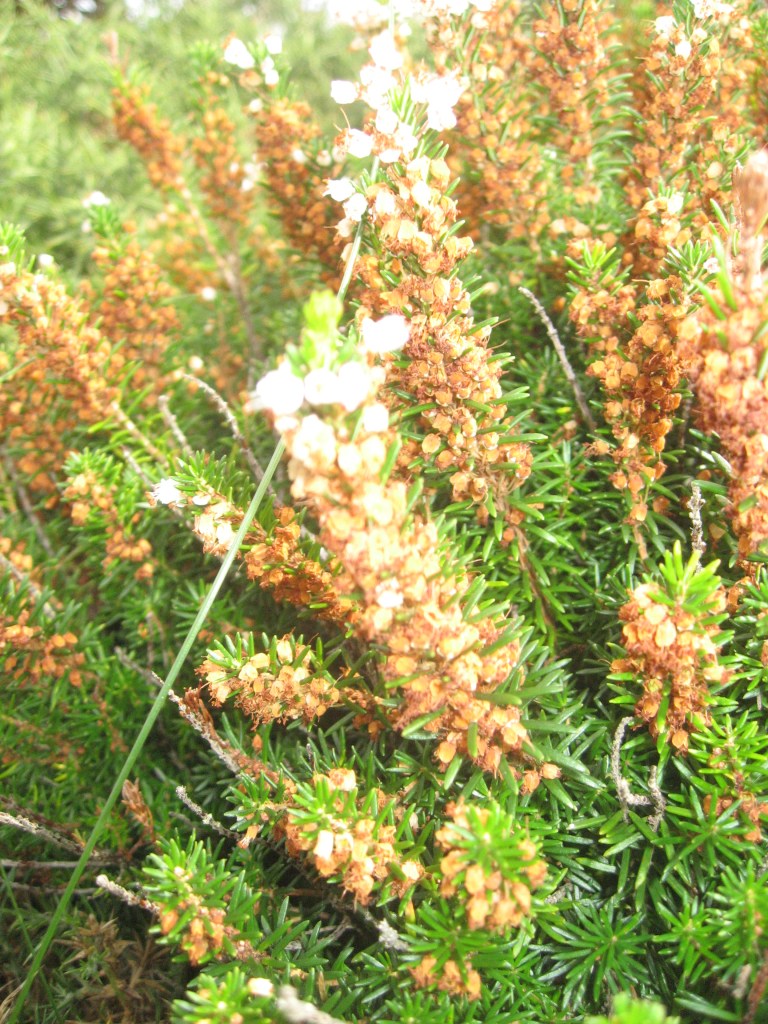
As we got towards Mullion the focus moved from Poldark to Cornish Heath growing in the nature reserve. There was a discussion as to whether Cornish Heath was a type of heather or not. It looks as though Erica vagans is indeed a type of heather.
After a pleasant lunch on a bench overlooking Mullion Cove we read the history of the Marconi Company and its work on radio telegraphy. Poldhu Cove was the heart of this work and this is where we ended after a day of moderate walking in difficulty and distance. We were not going to repeat our error from March when we overstressed the team with 13 miles of tough walking on day 1.
Sunday morning in Poldhu was warmer and more pleasant than the previous day. The cove is overlooked by the former Poldhu Hotel, now a care home. Below it a large beach entertained legions of surfers, even at this early hour.
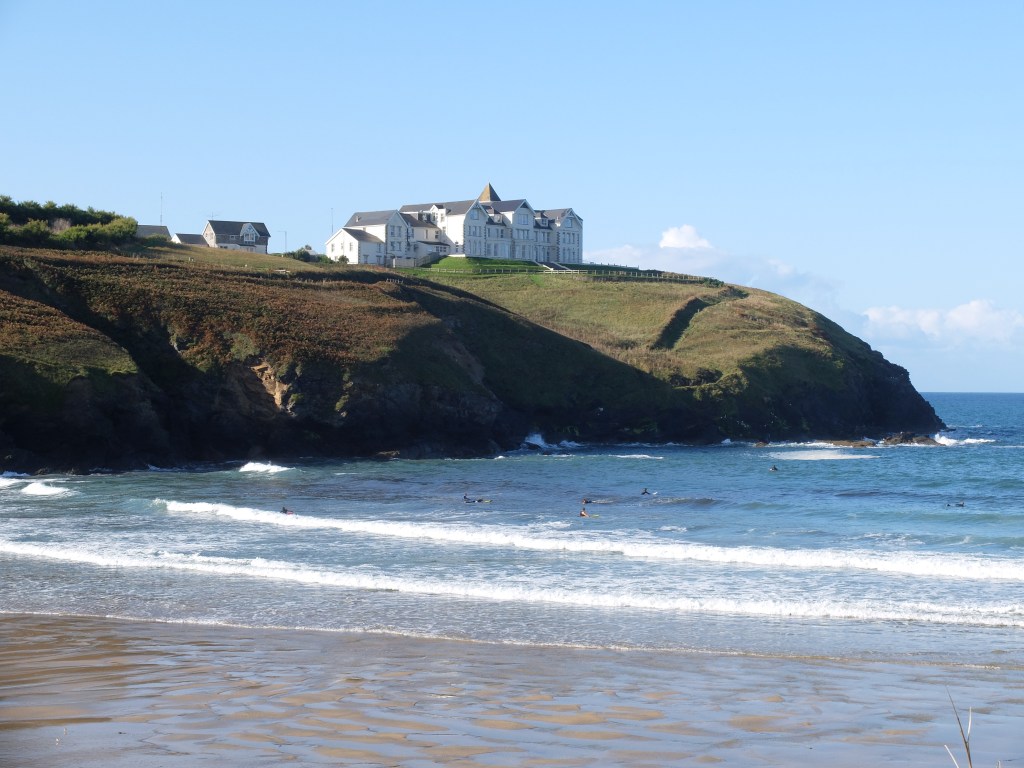
Just to the north is a large mound behind which nestles a tiny church – the Church of the Storms dedicated to St Winwaloe. He was an abbott in Brittany born of exiled English parents. His connection with the area was not clear – at least to us. In the waters off the cove a Spanish treasure ship was wrecked. Ingenious miners took a shaft out to the wreck but were beaten back by the water pressure when they tried to break through to the treasure. Brave but risky!

Half an hour later we had a brief view of three seals at Halzephron Cove, but they were shy about cameras. Like the seals the choughs Martin had promised us were reluctant to show themselves. On the low cliff were remnants of the area’s fishing past.


The path levelled out as we came to Loe Bar which holds in the water of Loe Pool, the largest freshwater lake in Cornwall. On a sunny morning it all looked serene and calm.
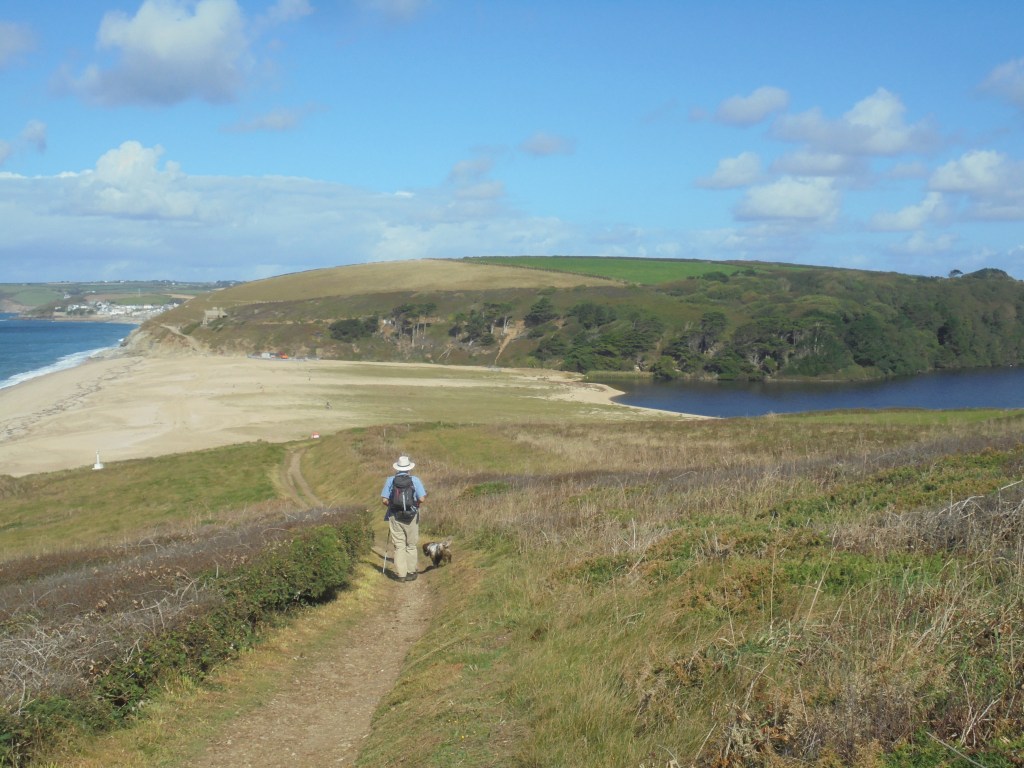

The bar has a dangerous side. The memorial to the crew of HMS Anson lost in a storm on the bar in 1807 is a reminder. The loss of life appalled Henry Trengrouse who developed the rocket propelled rescue line in response. The tragedy had another effect: shocked by the casual way in which the victims of the shipwreck were buried, Thomas Grylls, a local solicitor, drafted a bill to provide for the decent burial of drowned seamen. This was championed by the local MP John Tremayne and became the Burial of Drowned Persons Act 1808.
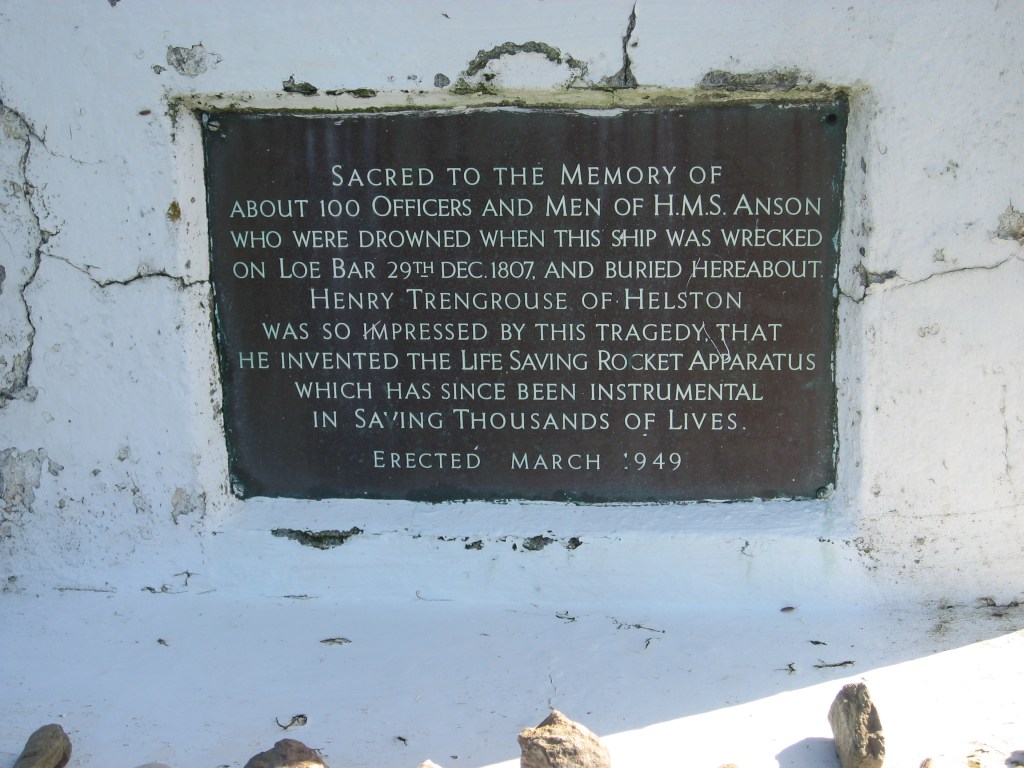
The bar is still hazardous today!

By midday we were walking into Porthleven. The tower with a small spire on top is not a church but the Bickford-Smith Institute. It features in some of the most dramatic photos of the storm in February 2014. Unfortunately they are mostly covered by copyright. On Sunday 1 September it felt peaceful.

We walked up to the head of Porthleven Harbour which is massively constructed of heavy blocks of stone. It is an impressive structure which must have been very expensive to build, although the use of French prisoners during the Napoleonic war would have helped.
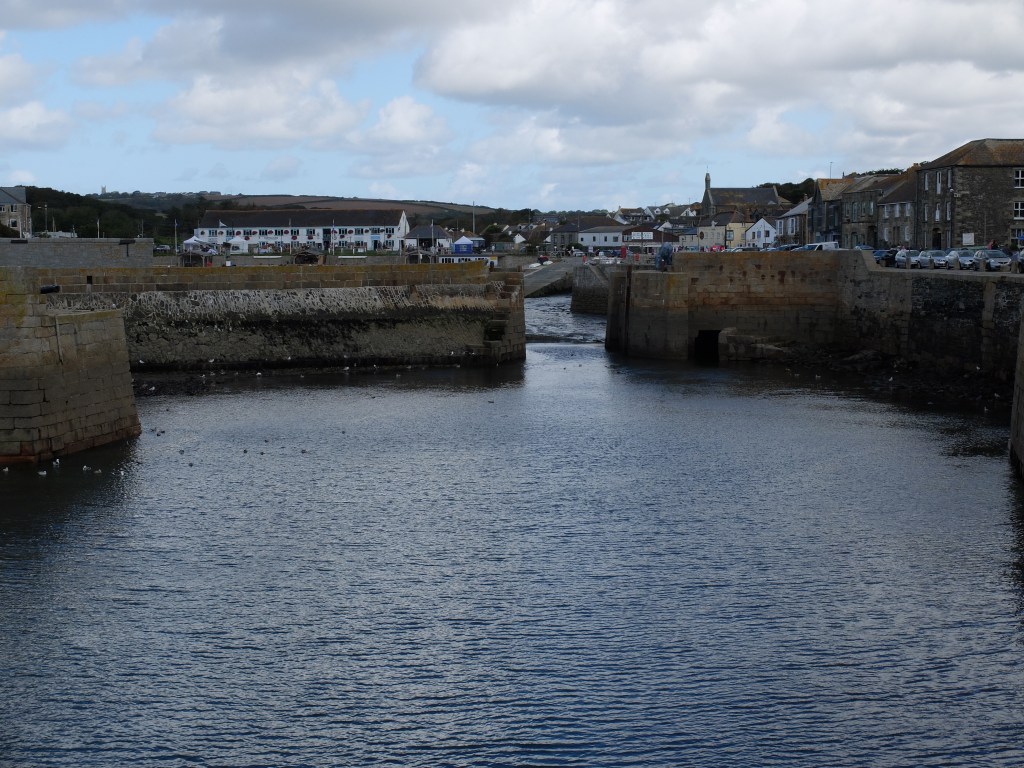


On the west bank we passed the Sunday market. Martin was rather dismissive of it. Leaving Porthleven we were about to enter mining country – cue of course Poldark.
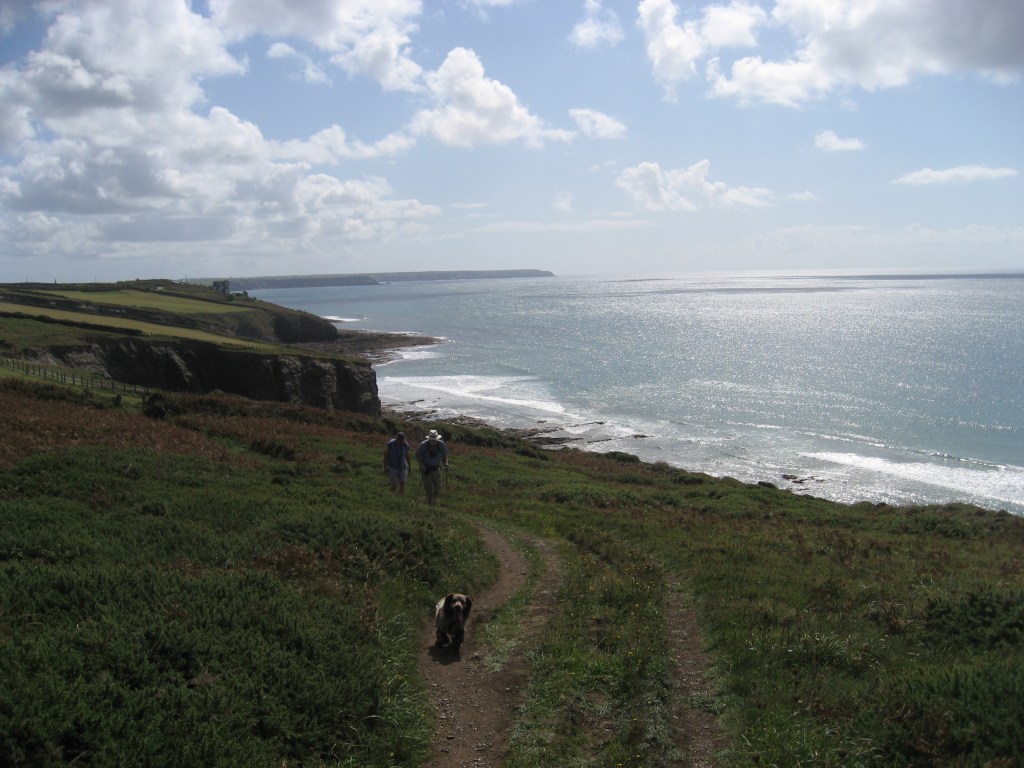
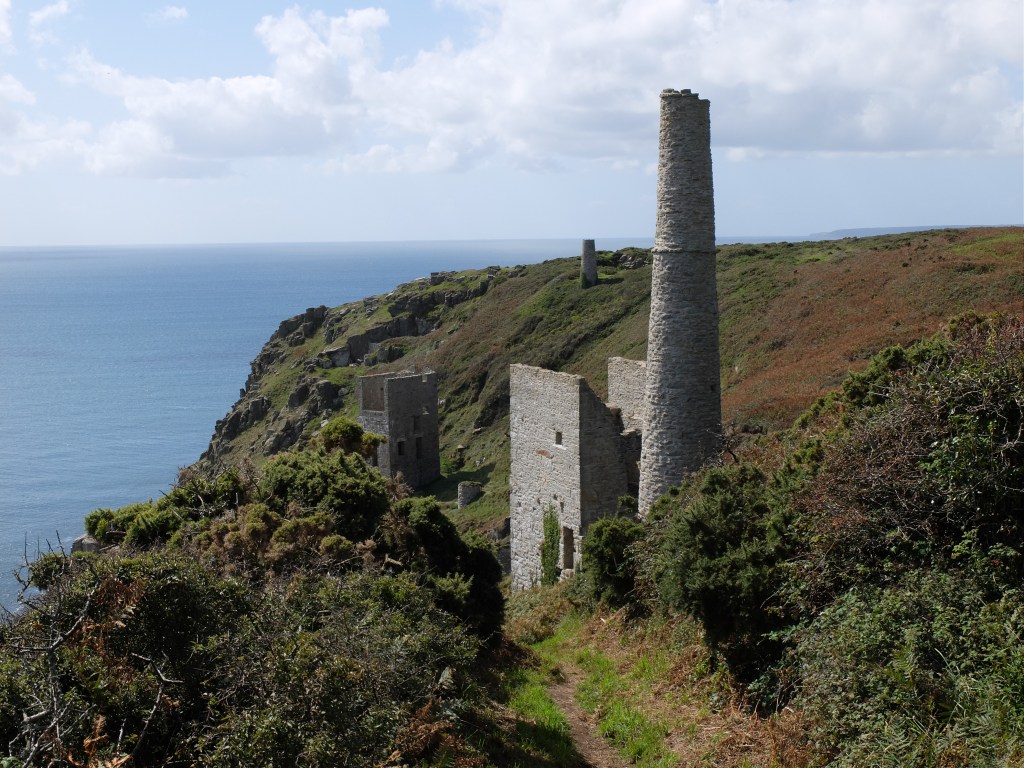
After lunch we passed the first of the mining buildings.
From here to Prussia Cove we were on low cliffs above long stretches of beach. We were having it easy for the second day.


In Prussia Cove we were in the land of the ‘King of Prussia’. John Carter, a prominent smuggler during the Napoleonic Wars, was an admirer of Frederick the Great and styled himself accordingly. He held sway in the area. The Revenue were frustrated by his exploits and built a line of cottages for customs officers nearby. Imagine the conversation when the first unfortunate revenue man set foot in the local bar.
A steep climb out of the village took us to the car park where Wendy and Anne were waiting for us.
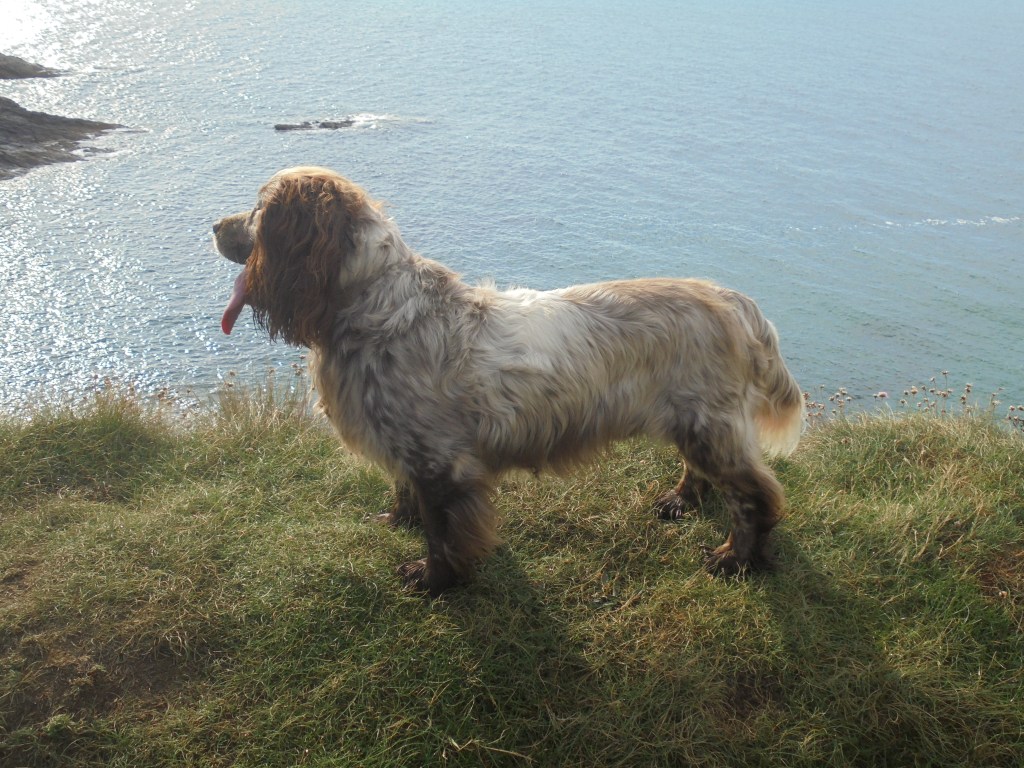
Back there the next morning it was a sunny day with lots of swallows flying low. Milo looked ready for action.
Walking out of the cove buildings and equipment seemed to be for fishing rather than smuggling.
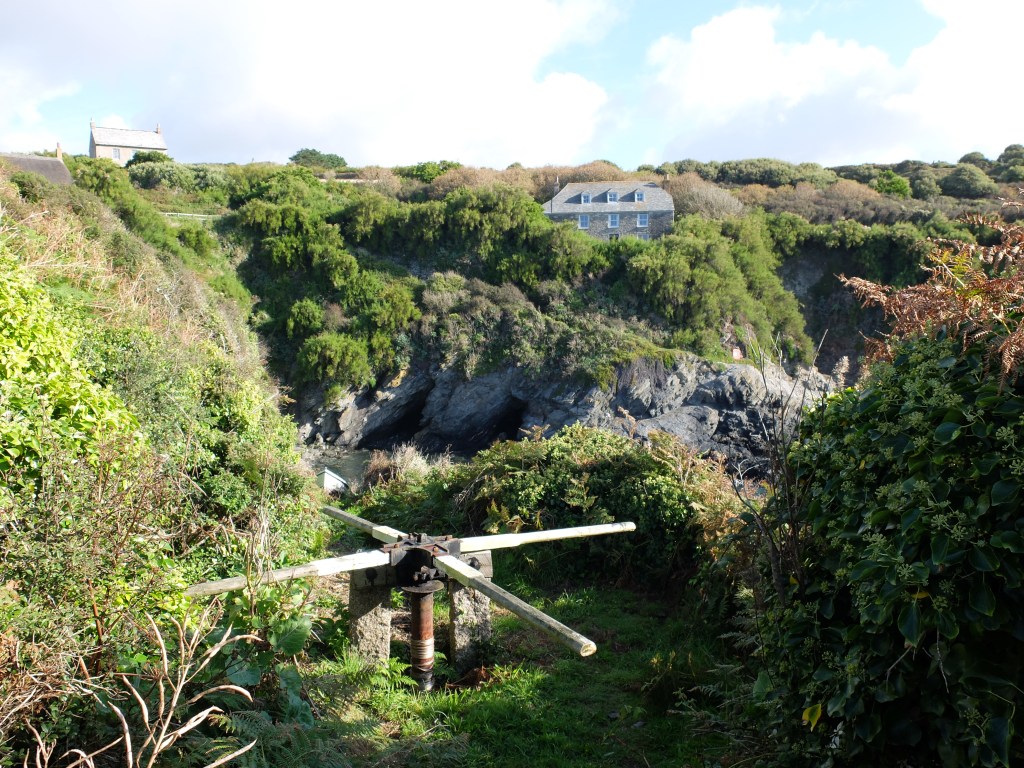
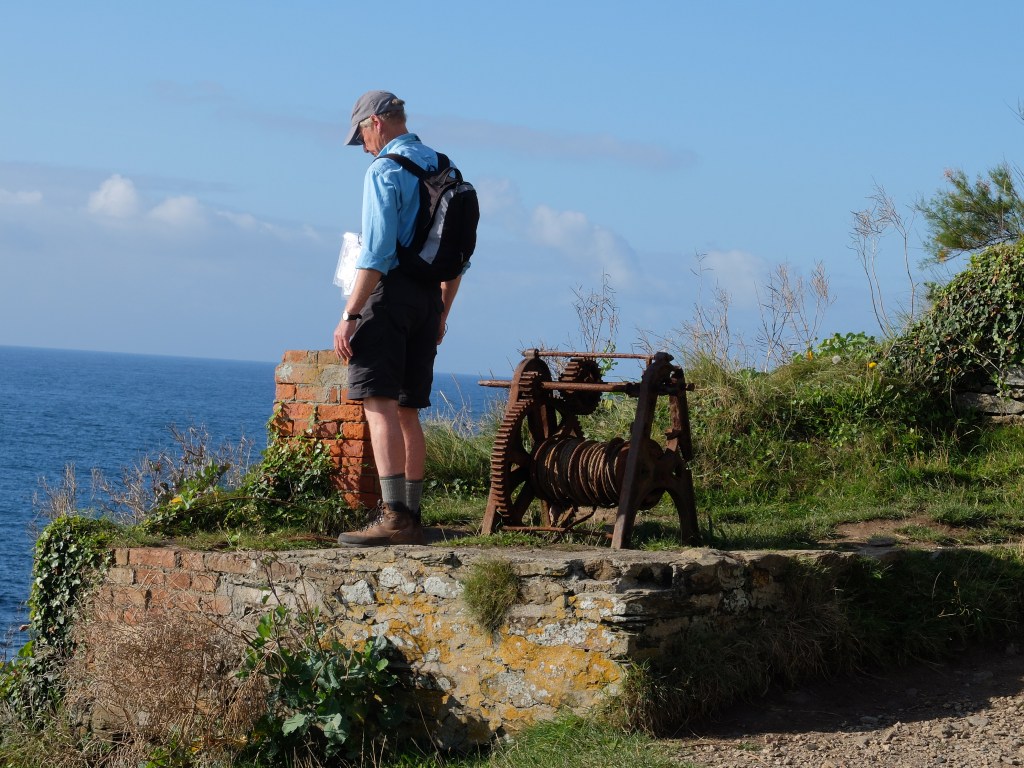

Further on we looked at a stout wooden post reinforced with iron to which HMS Warspite was moored in 1947. Having survived two world wars the battleship was at the start of her voyage under tow from Portsmouth to the Clyde. In heavy weather she broke away from one of the tugs and ended up on the rocks. She was never refloated and was eventually broken up on the beach.


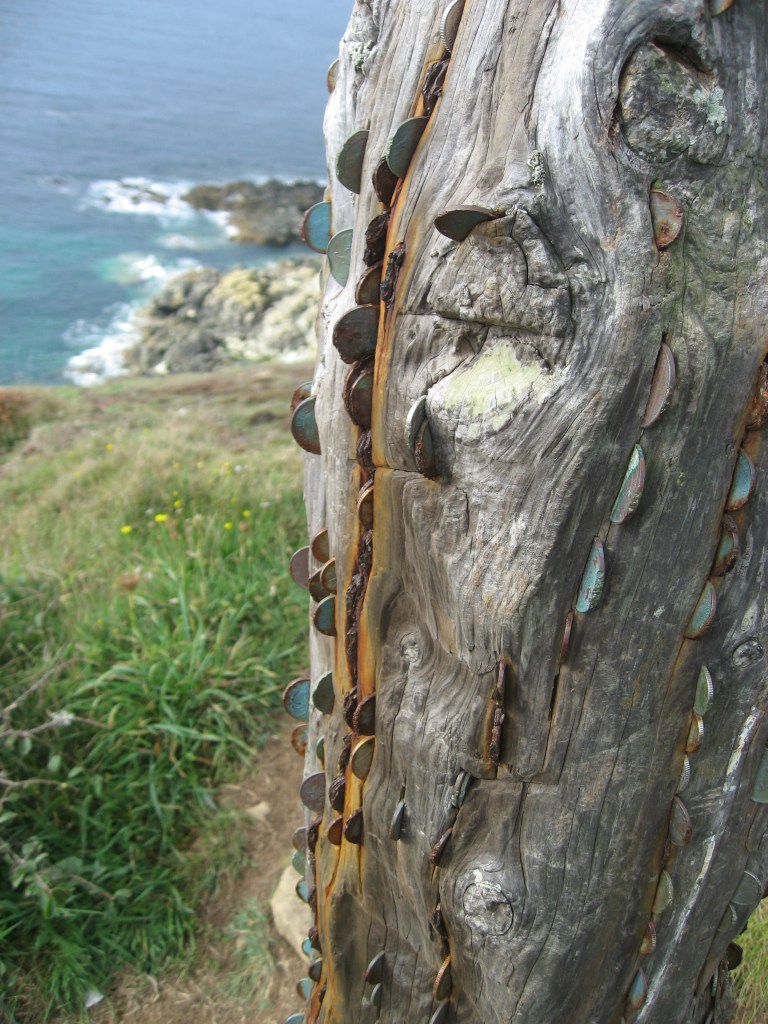
Further on a different type of post – two of them embedded with coins.

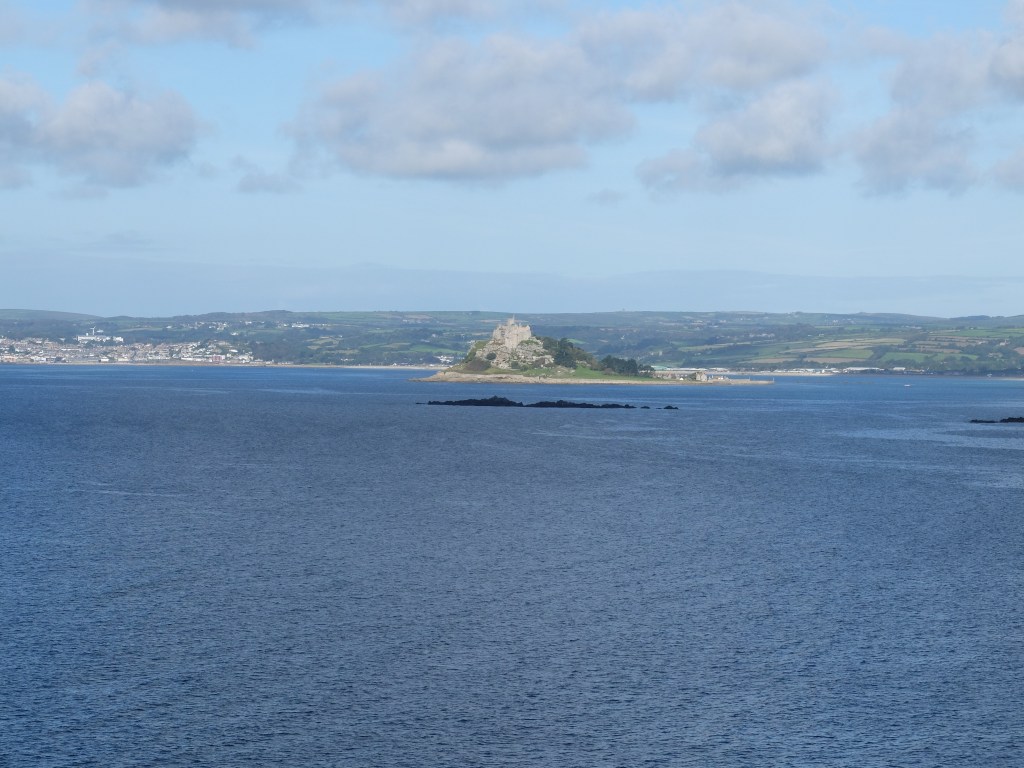
From Cudden Point St Michael’s Mount stood out in the sun.
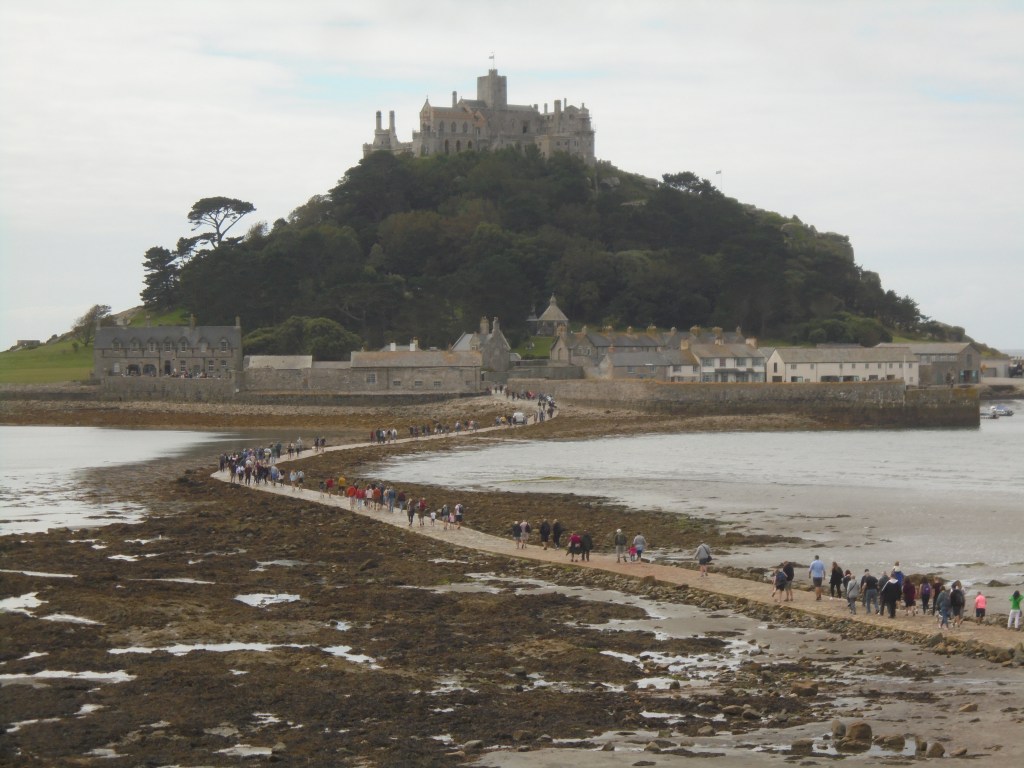
In Perranuthnoe were small fields of spring greens growing strongly. Interestingly there were very few Cabbage Whites bothering them. We passed the cottage where Dugald and Wendy stayed at in the late ‘70s when Perran and Jane lived in the village. Then on to Marazion and a long stretch on the road. Swarms of people were heading for the causeway to St Michael’s Mount.
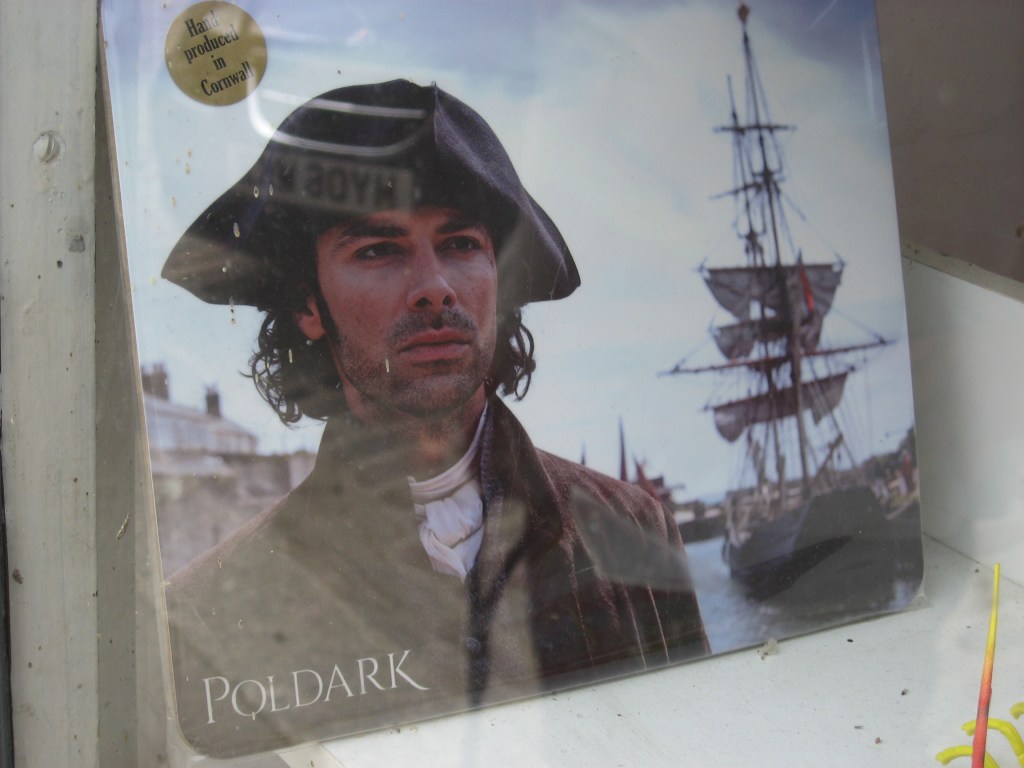
Poldark reared his head again – in case we had forgotten.
Half an hour later we were outside our blue house with Wendy and Anne viewing us.


With a long road walk ahead Milo was taken home by Wendy. He kept looking back wondering what he had done to deserve this.
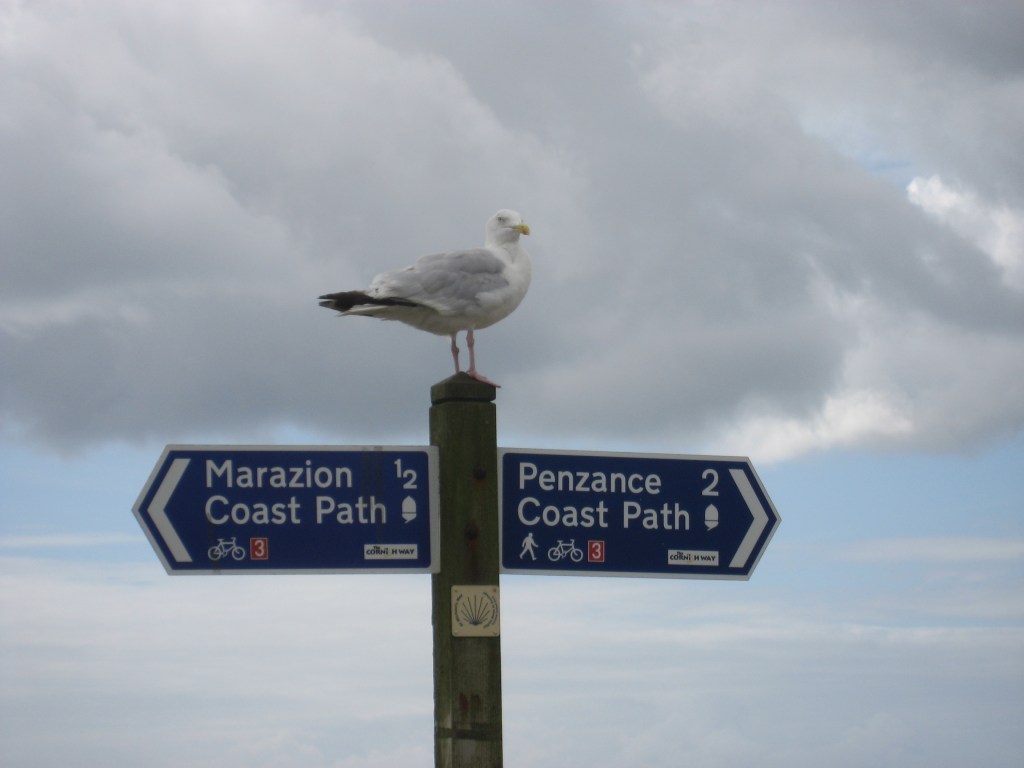
In early afternoon we passed Penzance Station the westernmost point of the Great Western Railway.
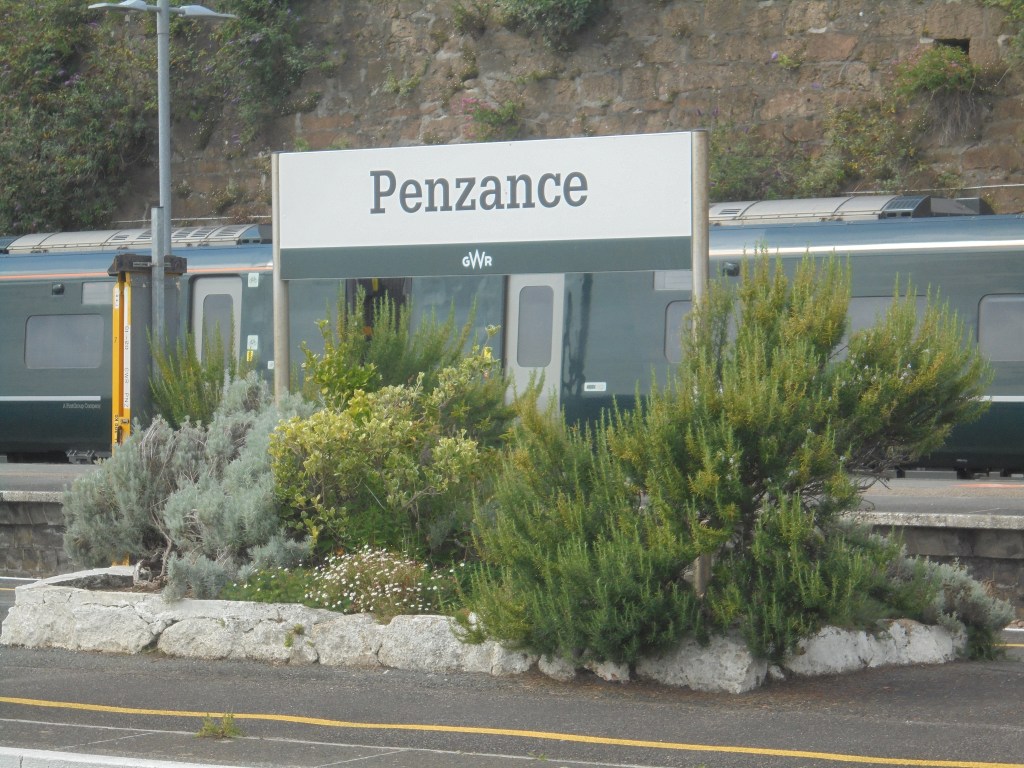
We paused by the Newlyn Fisherman by local sculptor Tom Leaper, unveiled by Princess Anne in 2007.
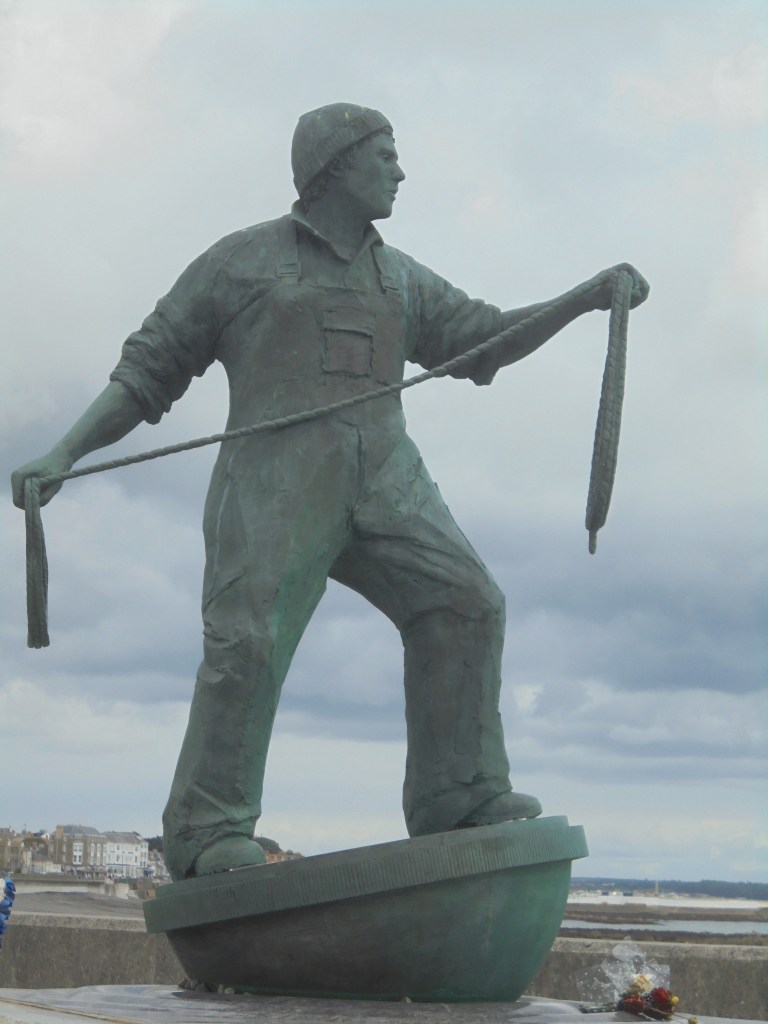
Then a short inland diversion to buy ice creams at Jelberts, flagged by the guide as Cornwall’s best. It was very good indeed. Martin described it as “Ice cream as it used to be”. He’s a ‘50s man at heart. We realised we were sitting on a bridge outside the Mackerel Sky, a small fish restaurant strongly recommended by Dominique Mann. We were already planning to eat there that evening.
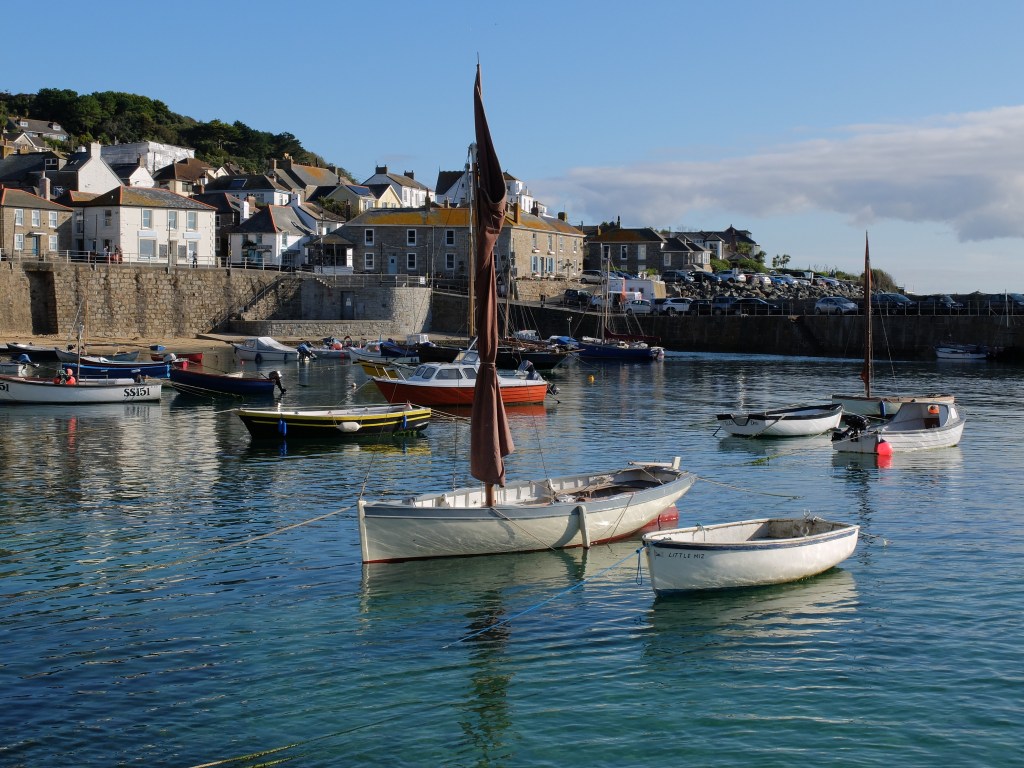
Newlyn Harbour felt energetic and busy with bright coloured boats.
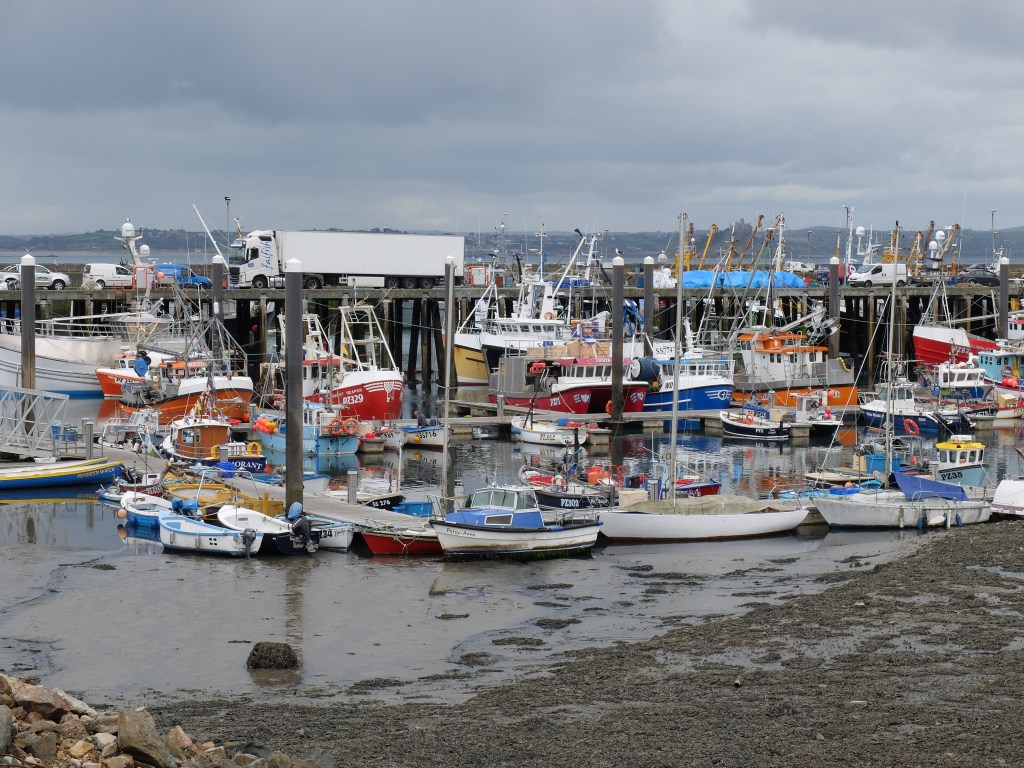
At the end of the harbour Ravessa IV was getting some new paint.

Our aim for the day was to get to Mousehole. On the way we got some encouragement.

In Mousehole the Ship Inn offered a very pleasant glass of beer.
That evening we had an excellent meal at the Mackerel Sky. There are no reservations so you need to time your arrival with care, but it is well worth the effort. Thank you for the recommendation Dominique.
The guide made clear that we had done the easy bit of the week and that it would get more difficult from here on. We walked down into Mousehole, passing a time warp Rover garage on the way. The harbour looked glorious in the morning sun.

The climb out of the town was steep and we then had a view of the Scilllonian heading off for the Scillies.
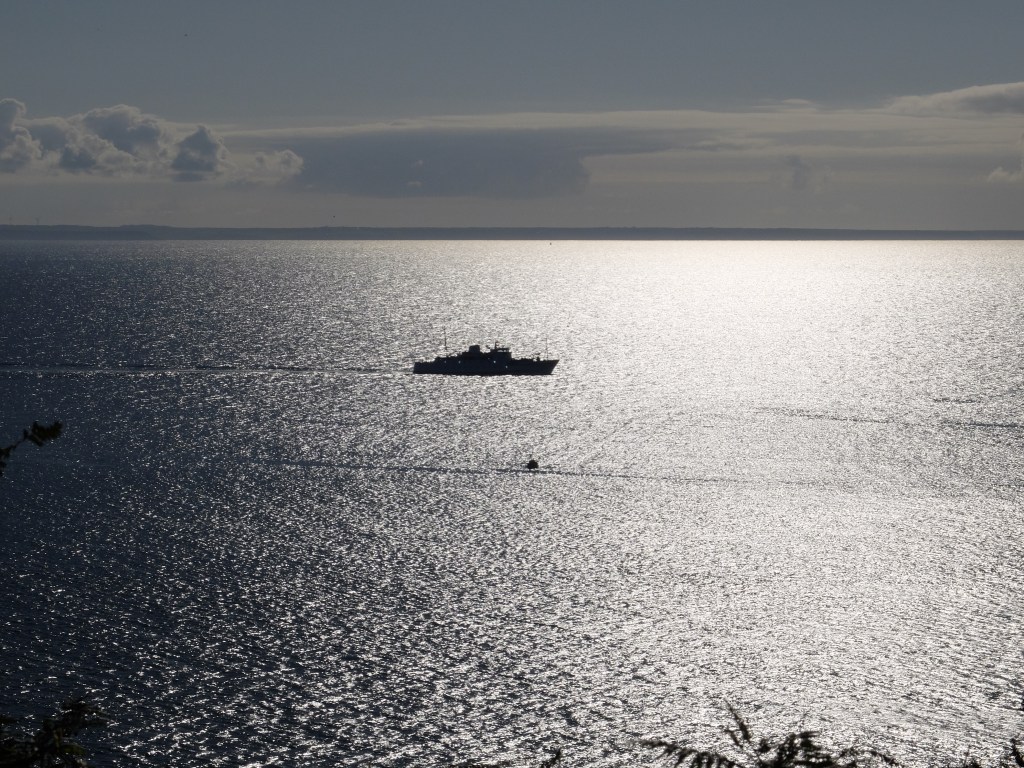
The going was getting harder and ground stony and uneven.

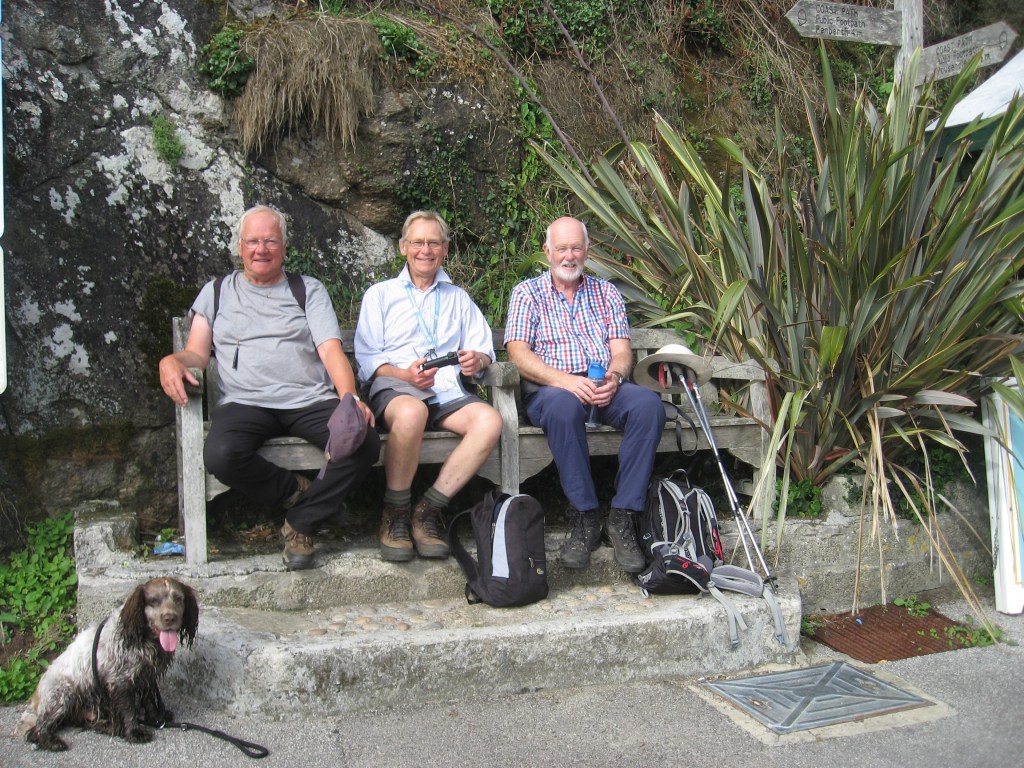
Lamorna Cove had a comfortable bench and a beautiful view.
But Martin was displeased by a large sign that listed the many things one should not do in the cove, without any hint of welcome or the word please. It’s becoming clear that he is not keen on being governed – by anyone.
It also had an ominous sign.
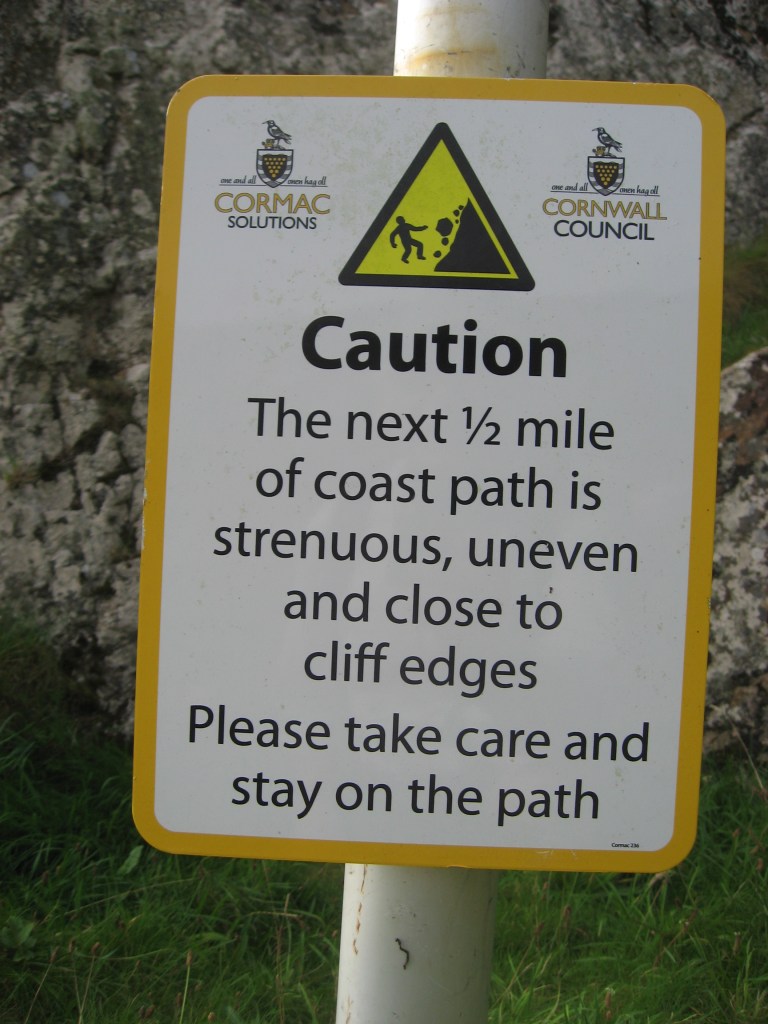
This section was very popular with other walkers and we must have passed twenty-five or more, many of them foreign visitors. At Boscawen Point there was great excitement when we saw five Painted Ladies and a Red Admiral. In between easy sections were some savage rocks. Martin tried to break his ankle on one of these.


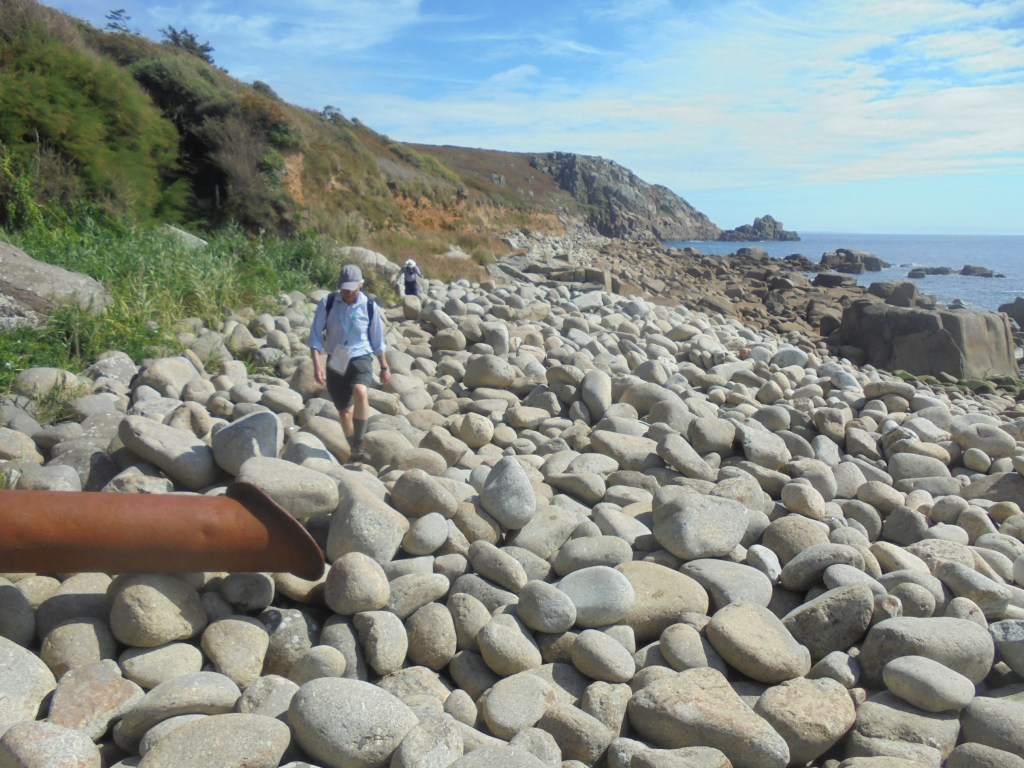
We came down for a short section on St Loys Beach. It was littered with enormous boulders and a weird metal structure, probably an abandoned space vessel. Walking was difficult so it was a relief that this transit only lasted a couple of hundred yards.
Walking up from the beach we went past a delightful wild garden which was exuberant and lush. A lovely place to relax and enjoy.

By early afternoon we had passed Penberth Cove which involved a steep descent followed by a steep climb.

We did not walk out to the Logan Rock – the going was hard enough without diversions. But the story of the cocky young naval Lieutenant, Hugh Goldsmith is worth telling. In 1824 he thought it would be fun to topple the rock that had balanced for hundreds of years and rocked on its base. The locals were understandably furious and he was ordered to replace it – at a cost of £130. But it doesn’t rock any more.
Soon we were looking over the beach at Porthcurno and towards the Minack Theatre.

We opted to skirt round the beach and climb up the path alongside the theatre. Easily said but the theatre route has a short but very hazardous climb up to the car park. This was harder work than we expected so an ice cream at the top was an essential. That gave us time to read about Rowena Cade’s extraordinary achievement in building the theatre.
Our objective for the day was Porthgwarra, one of the Poldark filming sites. As we headed for it an excited cry of “Choughs!” went up. Martin and Richard set off to view them.

We got to Porthgwarra not long afterwards and two of the choughs flew in to cavort on the water’s edge.
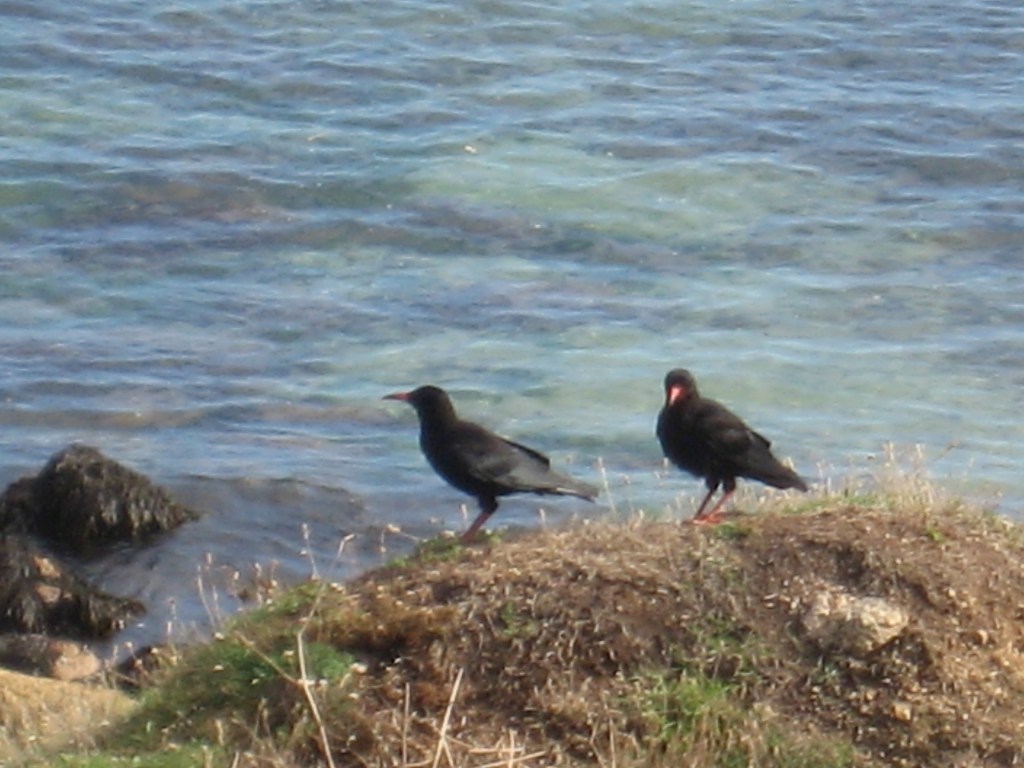
Martin was ecstatic and after conversing with them did a little celebration dance, much to the amusement of a group of young hikers. Five ice creams later we were back in the car heading home. We agreed that after three relatively easy days, the fourth had been much harder. But for Martin the choughs and a galaxy of butterflies were ample reward. The day’s butterfly sightings were Red Admiral, Painted Lady, Small Copper, Small Tortoiseshell and Clouded Yellow.

The next day we were on the way to Land’s End – to turn the corner from south to north. A sharp breeze was blowing in from the sea. Round Gwenapp Head was broad heathland with an attractive mix of heathers. Two leading marks warn of a rock beyond the head.


A seal surfaced at the Lion’s Den just for Martin. No-one else saw it. It defied photography so perhaps it was a Martin mirage. Approaching Land’s End there were some striking views out to sea, including the Longships Lighthouse.


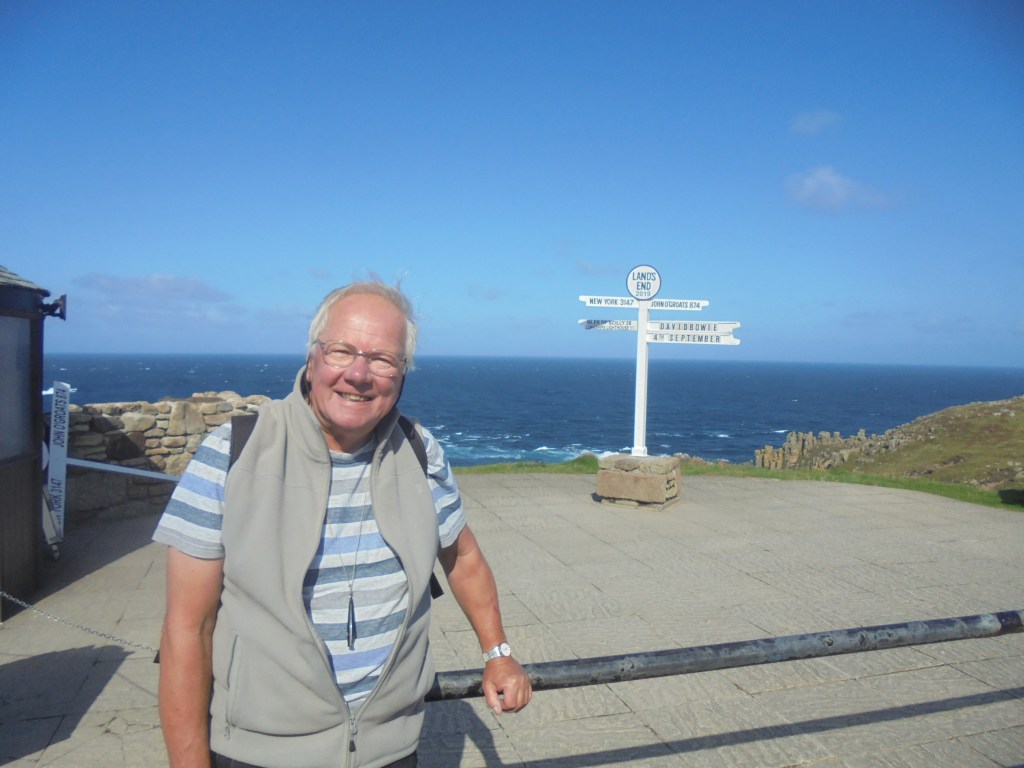
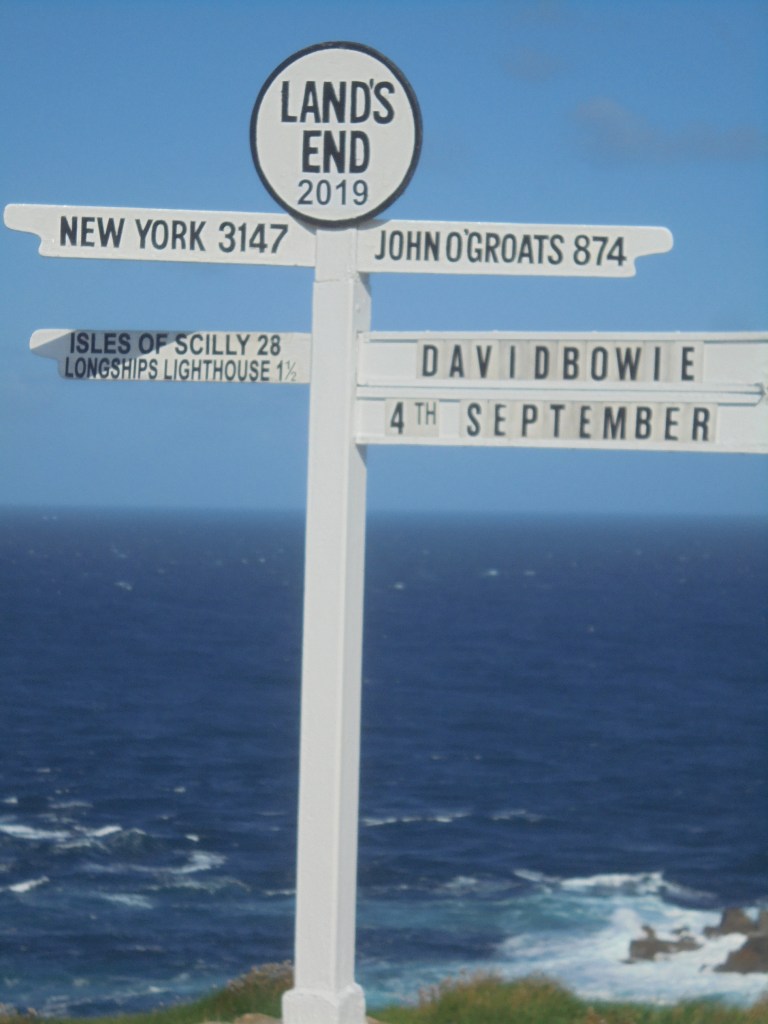
Land’s End itself was less of a tourist trap than we expected. We had a break for coffee and some posing.
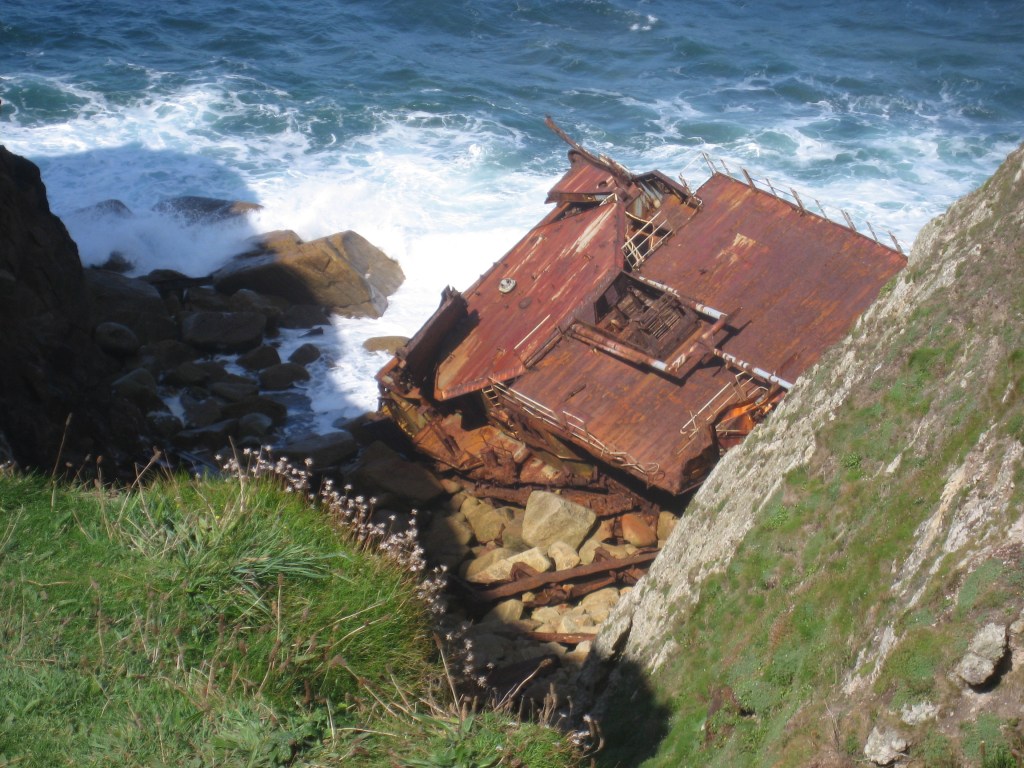
A few minutes later we were looking at the remains of a German freighter, the Mulheim, wrecked on the shore in 2003. Apparently the first officer tripped over his trousers and knocked himself out; he came round as the ship got to the rocks. It would be interesting to know what the insurers made of this story.
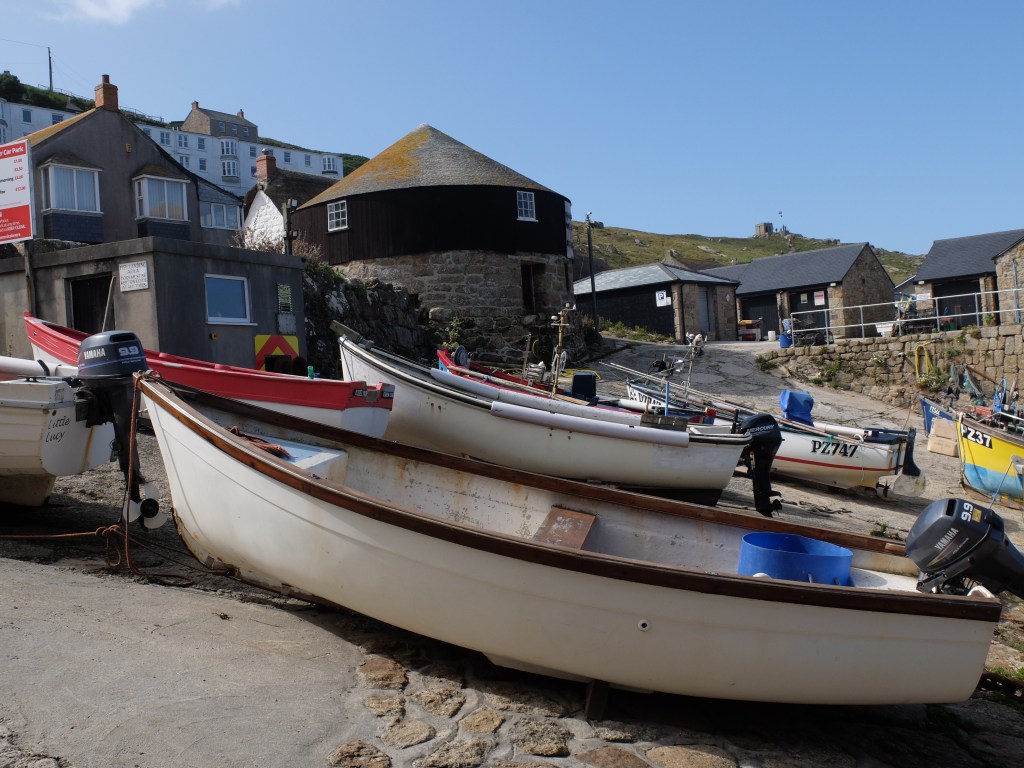
Sennen Cove was our first town on the north coast. We admired the circular capstan house in the middle of the town.
Beyond the town a mile or more of glorious beach stretched out. This contrasted with our expectation of rough and rugged territory as soon as we got to the north coast. We walked along the edge watching apprentice surfers and groups of people doing military gymnastics.

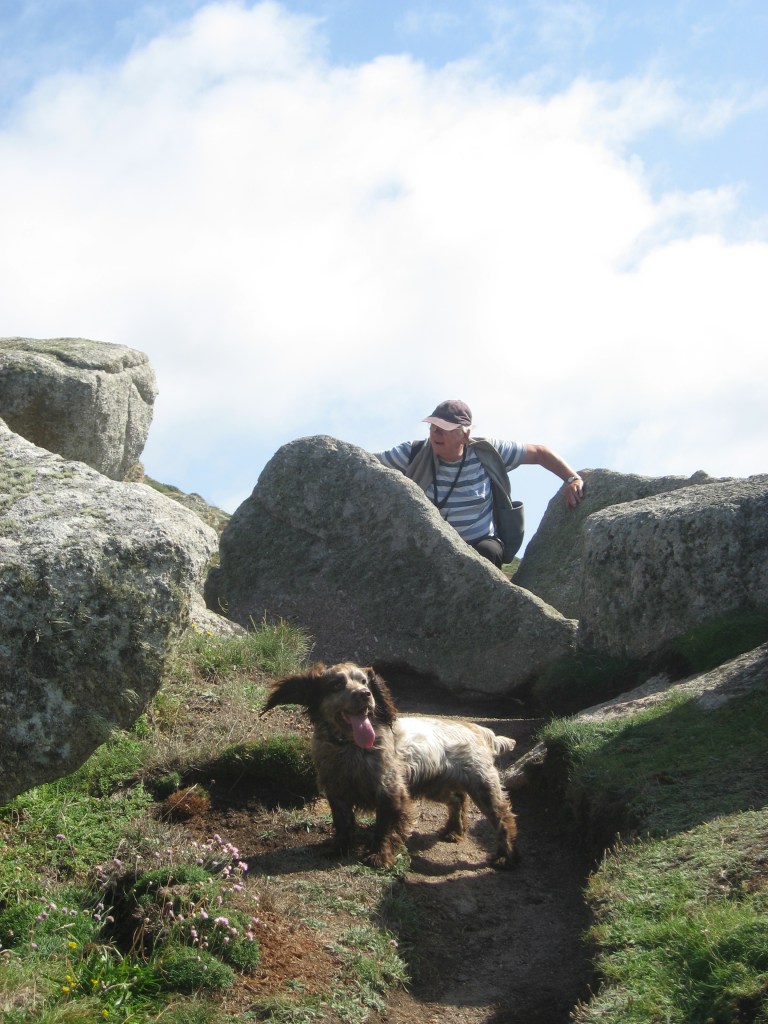
We got back to the rocks at Aire Head which was a very difficult passage. Not so much a path, more a short piece of mountaineering.

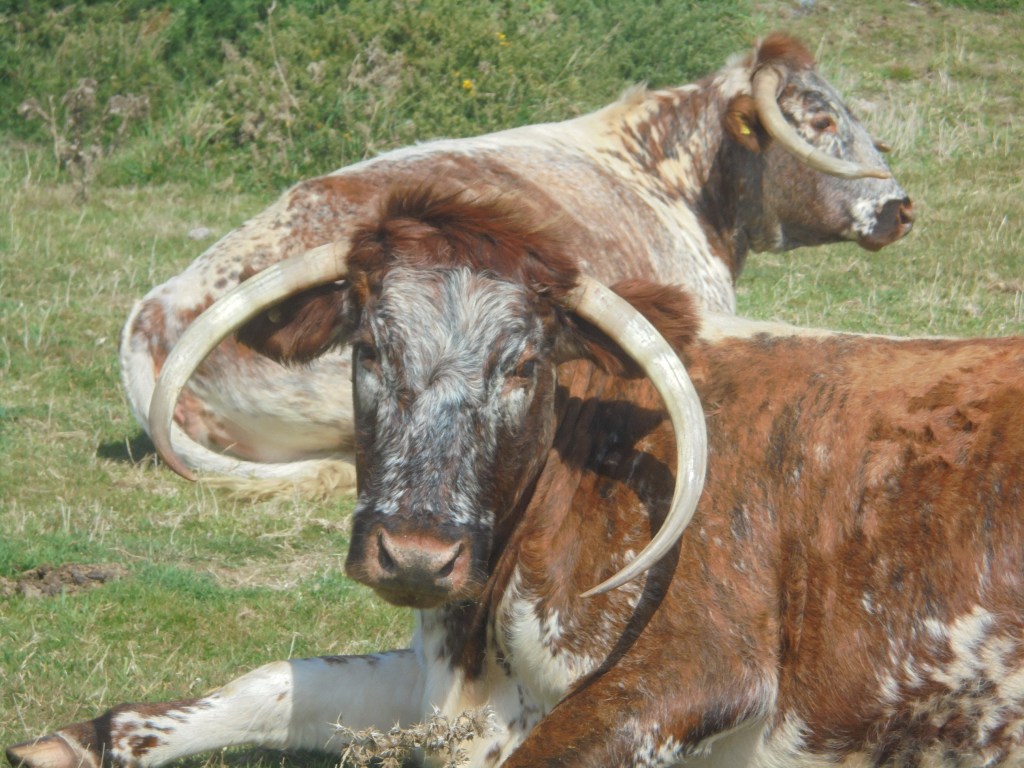
We then ran into some enchanting English Longhorn cattle. The National Trust uses them because of their ability to live on rough grazing. They looked pretty happy with the deal. For Martin they fell into the category of wildlife.

We were beginning to pass old mineshafts and the remains of their buildings. We were pleased to arrive at Cape Cornwall car park near an old burial barrow. There was no sign of Anne and Wendy. A phone call established that they were – or thought they were – at Cape Cornwall. A re-examination of the map suggested they were right and that we were in fact at Carn Gloose.
On our last day we had to make up lost ground by getting first to Cape Cornwall. There was a strong northerly blowing. The cape is the point at which the Atlantic currents divide. The only other cape in Britain is Cape Wrath. The two create an altogether more demanding walk than the SW Coast Path being a walk of over 1,000 miles. Perhaps that’s the next challenge. In the meantime the views from Cape Cornwall were spectacular.
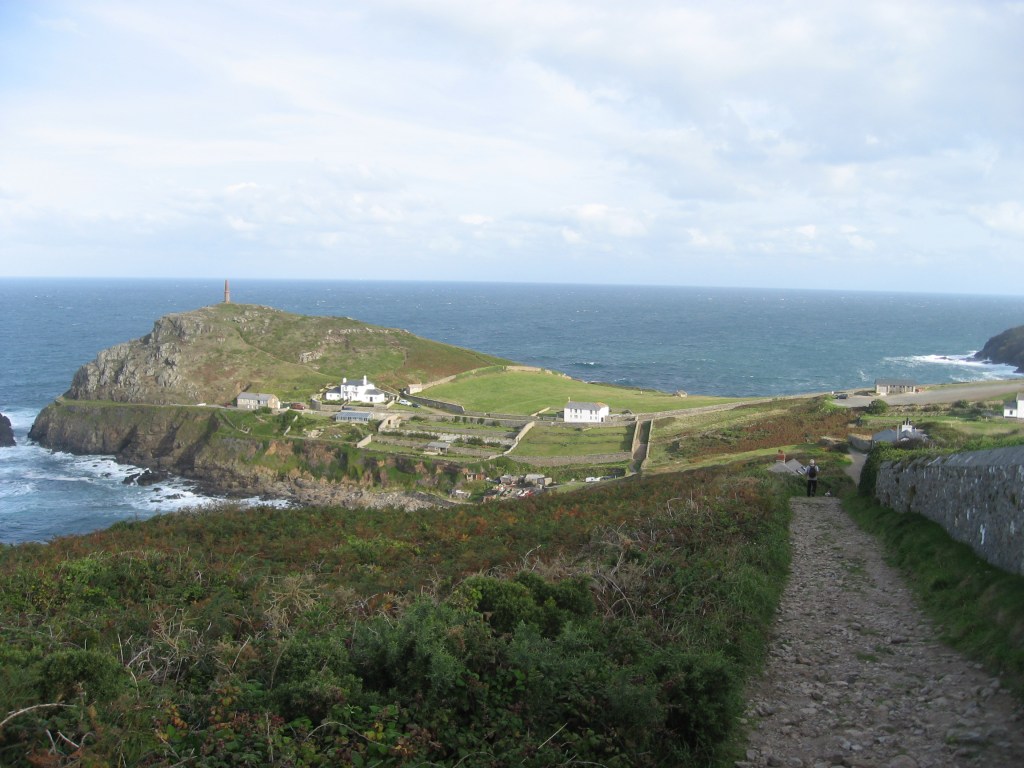
Heading east mining ruins began to dominate the landscape.

At the bottom of the valley near the mine was a very friendly mule.


Climbing out of the valley Martin had an altercation. He told a persistently barking dog where to go and this unleashed a stream of abuse from the owner. As a result of this excitement we missed the path and had to retrace our steps – not clear what the moral of the story is. Perhaps to avoid distractions!
Walking along the cliff top there were increasing numbers of abandoned mining buildings. They created an eerie atmosphere of their lost world.


Two choughs flew past in a romantic swirling flight. Martin was moved to call them “the spirit of Cornwall”. Stopping at a trig point on the cliff we could just see the Scilly Isles twenty five miles to the west.
Then we were in the Levant Mine. The buildings here are used as a museum and give a clearer picture of a working mine than others. In 1836 320 men, 44 women and 186 children were employed on the site. The mining work took men a mile under the sea. In 1919 the lifting gear failed and 31 men died in the accident. The mine closed ten years later.

Just beyond Levant we were surprised to see the arsenic works that had processed this by-product of tin. The panels described the dangerous conditions of the work and the very poor protection workers had against them.
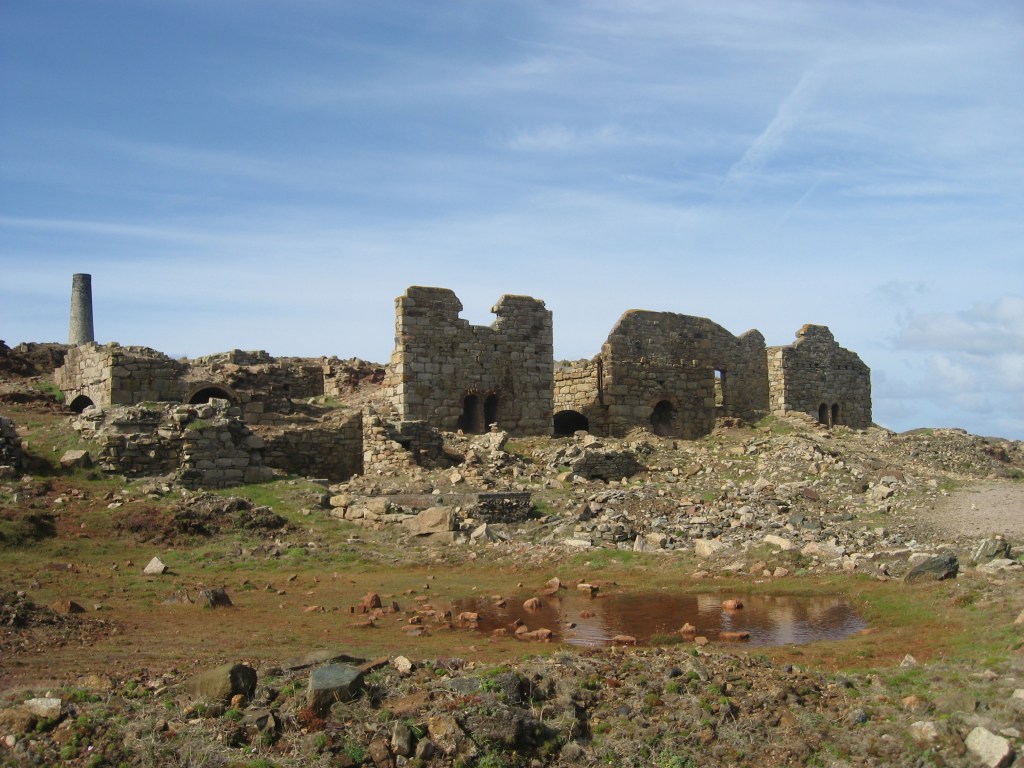
Just inland of Levant we could see the more modern buildings of the Geevor tin mine which was operational until 1990. Like the Levant it is now a mining museum. For us, outsiders to Cornwall, this was all a salutary education. The loss of mining in Cornwall must have been just as dramatic a blow in the nineteenth century as was the loss of coal mining and shipbuilding in the twentieth. Going from a world leader to a museum is a shocking change. But Cornwall exported its skills and people. Cornish miners were very highly rated in the Nevada silver mines and in building the Central Pacific Railroad. But that cannot have been much of a consolation to those left in Cornwall:
“Well Cornish lads are fishermen, and Cornish lads are miners too, but when the fish and tin are gone, what are the Cornish boys to do?”
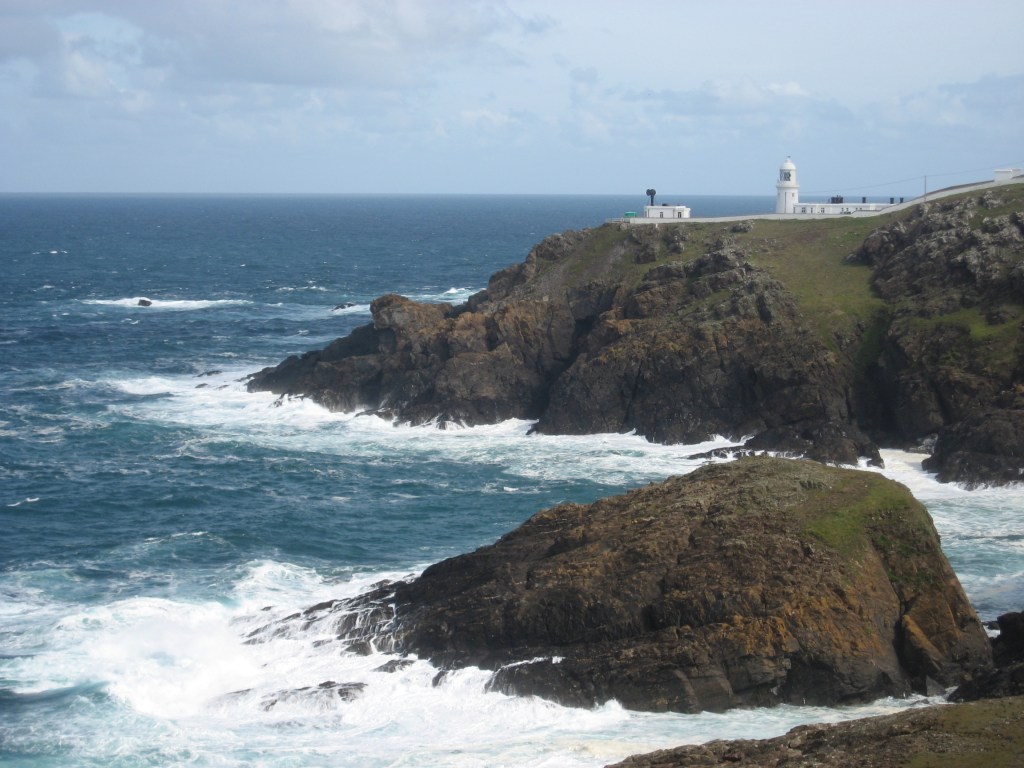
By midday we were at Pendeen Watch.
We had lunch in an old mine building with the tops of shafts all around us. From there we headed for the road to meet our car. Wendy had beer to celebrate the end of our third Cornish week. The walk from Pendeen Watch to St Ives is graded as severe in the guide. We had just done about two and a half miles of it. It didn’t seem too bad. What’s the rest like? We are going to find out at the end of October.
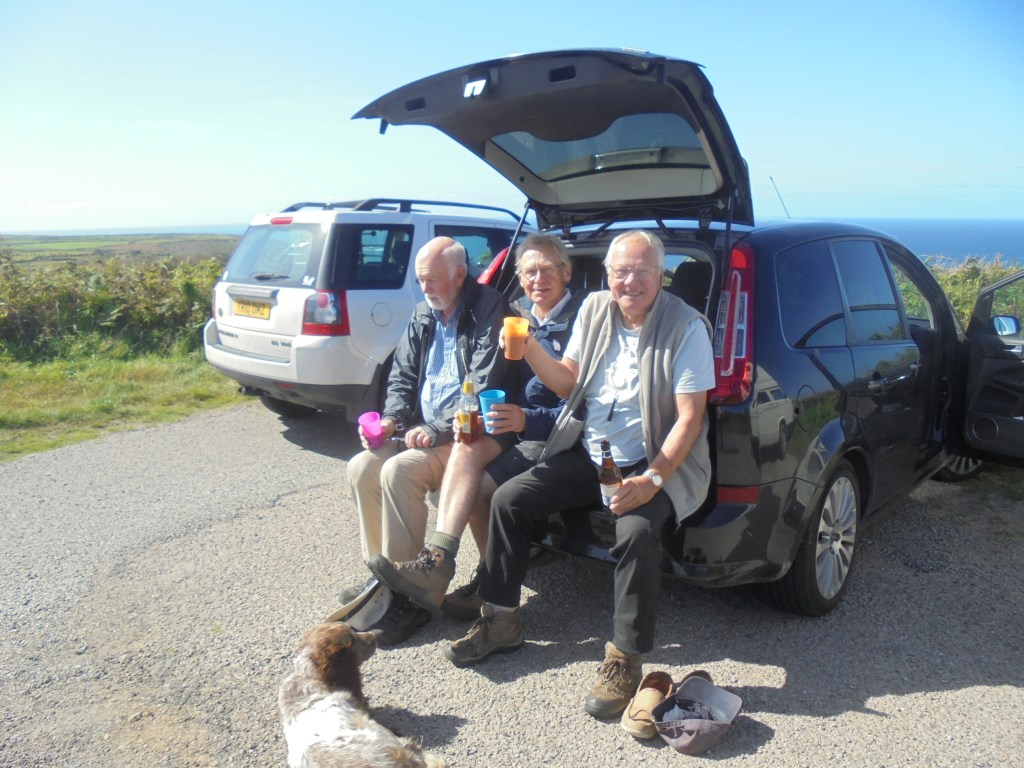
In this week we covered 58 miles and enjoyed the change from the south coast of Cornwall to the north. It’s just under 250 miles to Minehead. Cornwall gave us magnificent scenery, sobering history and great walking in another week of good weather. It delivered choughs and endless reminders of Poldark. It gave Martin a memorable blister. It confirmed the running order: Martin accelerating ahead and falling back on the hills; Richard as the (reliable?) middle marker and Dugald as back marker, described by Richard as a trusty steam engine. Wendy was named the Sherpa.


 Pensioners on The Path