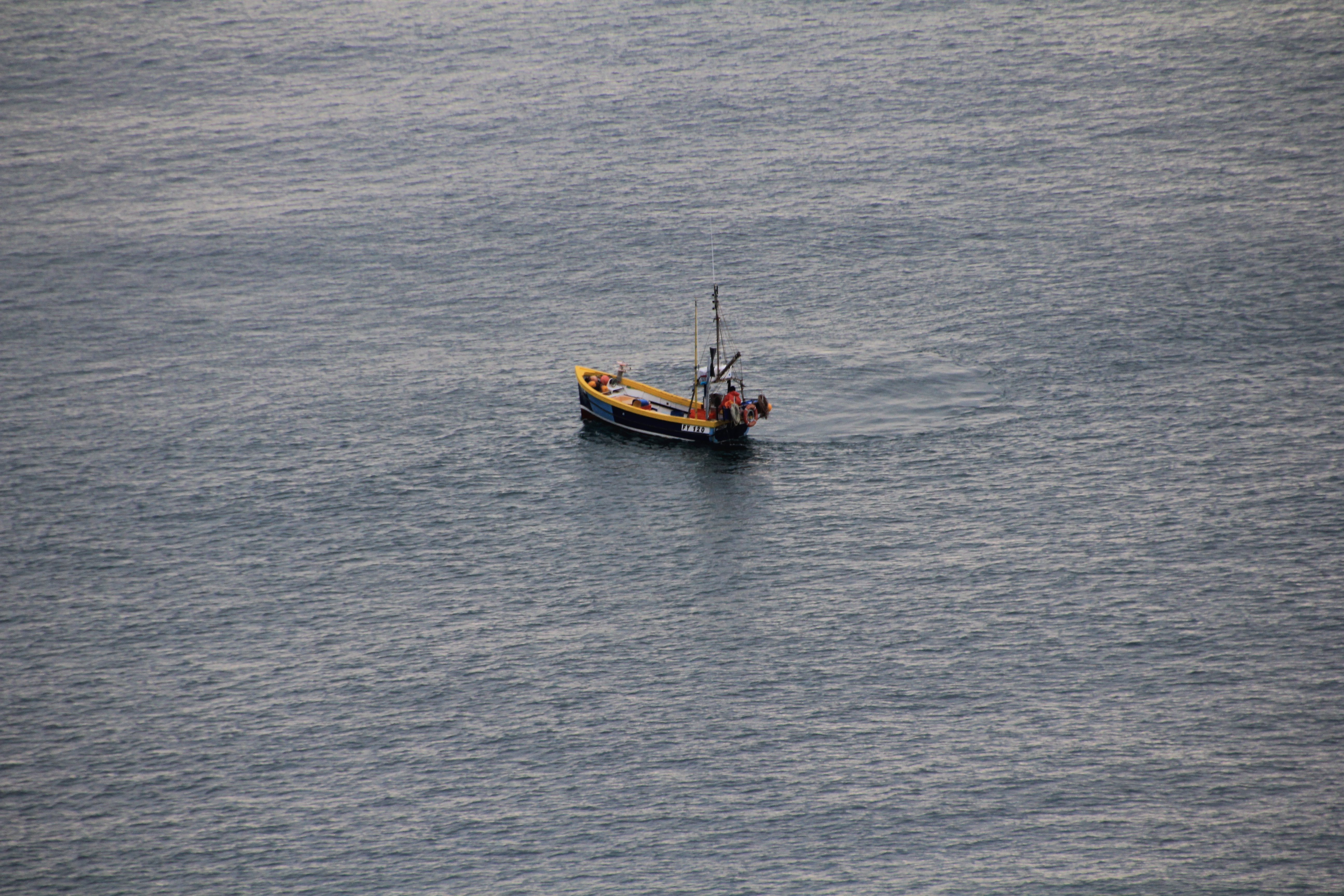
Our Cornish walk continued from Polperro. Walking down into the town we were able to look again at its buildings. There is a particular local style of painting over rough render which still reveals the contours of the stone. The streets of Polperro provided good examples. The narrow stream running by the main street was quiet and well mannered, but it was easy to see how it could become raucous after heavy rain.


All this took our minds off the assertion that the next section was “one of the toughest in South Cornwall”. But as before when the writers of the guides reach for the adjective tin the reality is more nuanced than the description. Or perhaps we’re getting fitter and better at it. Once we had done our architectural survey of Polperro we were back at the Blue Peter where the path takes off out of the town. Another magic day of sun lit up the town and its morning work.

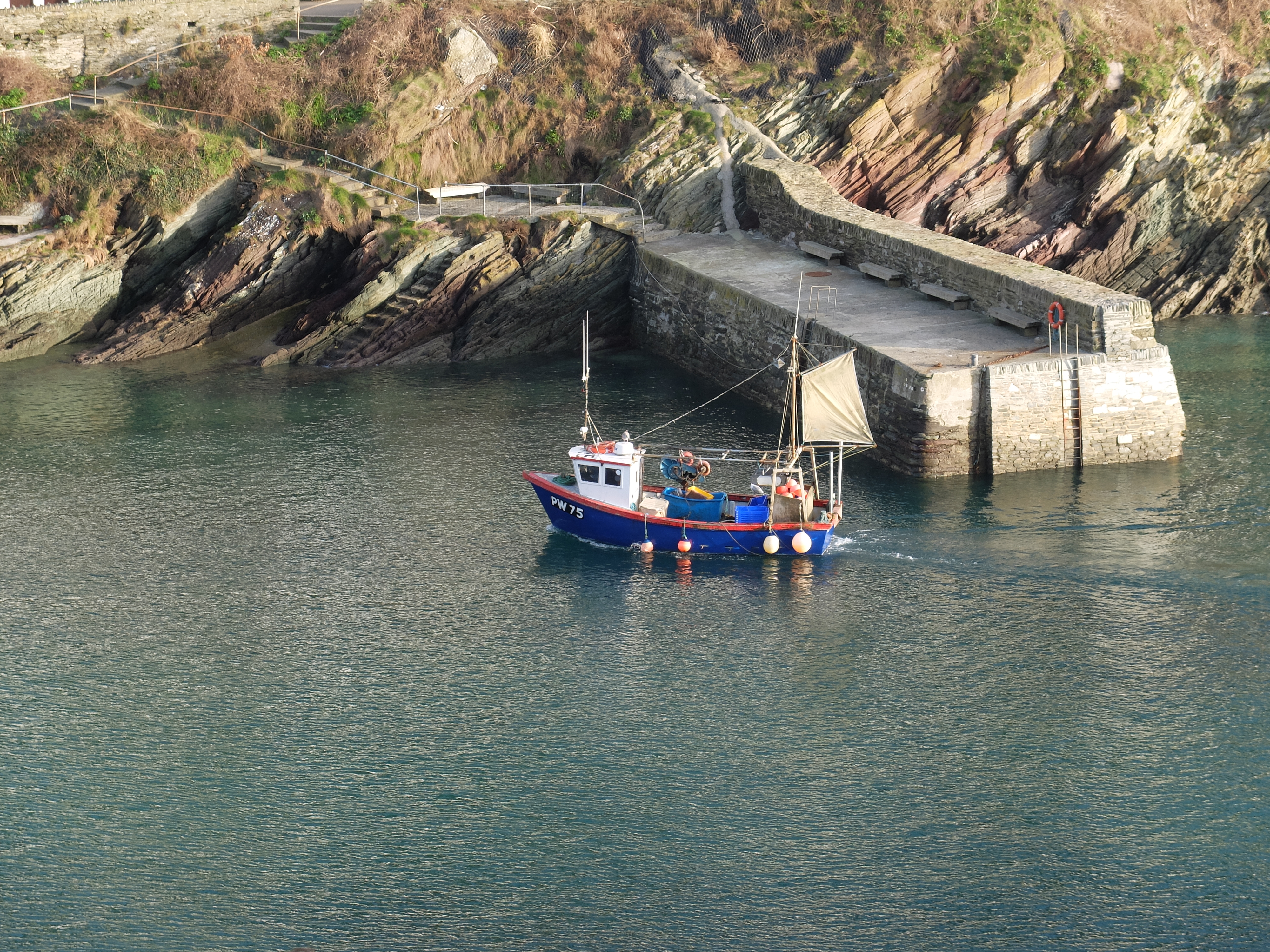
The toughness of this walk lay in the roller coaster nature of the path, constantly rising and falling with long flights of steps thrown into the mix. At one stage there were 500 steps in less than a mile.
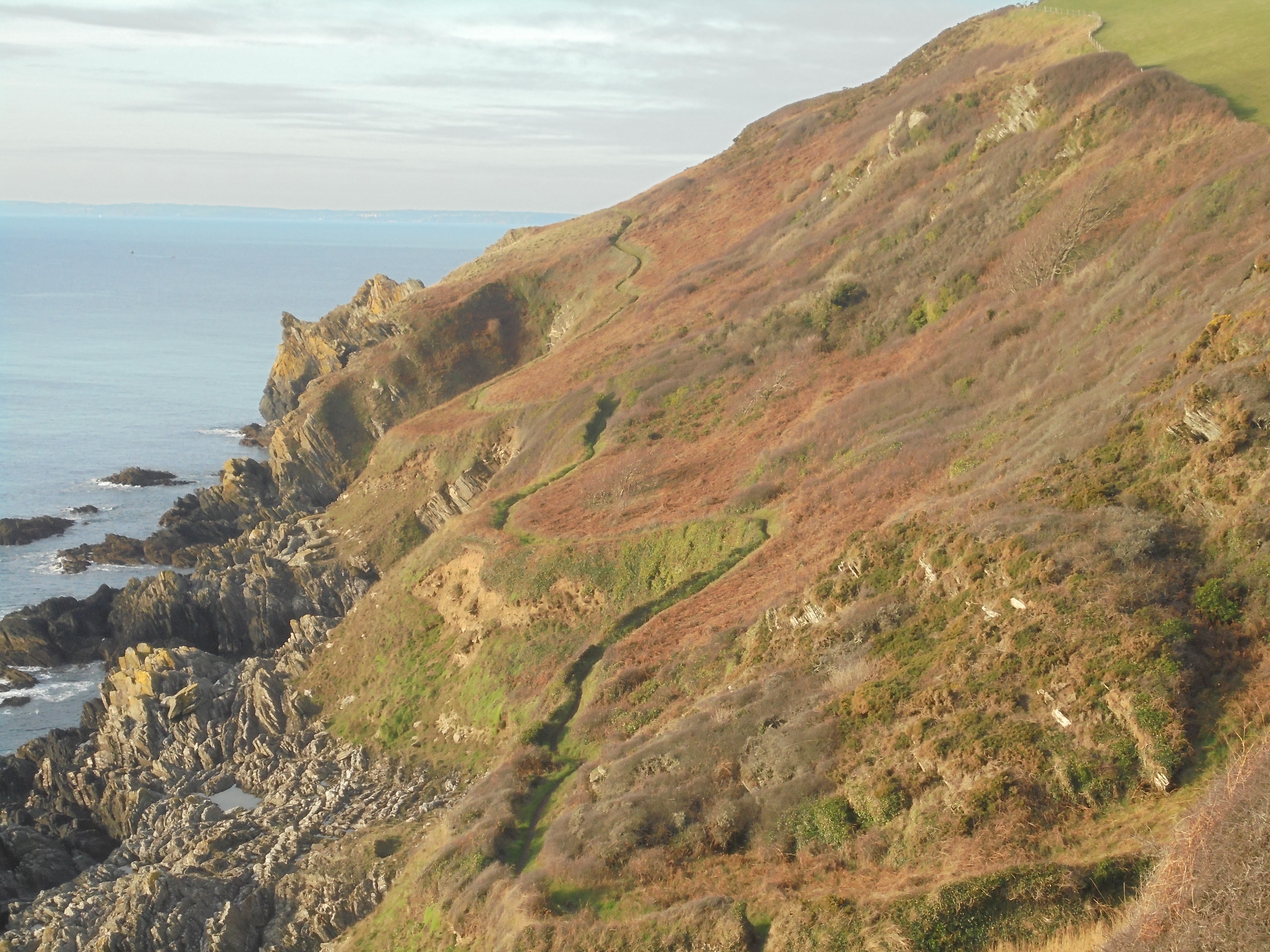
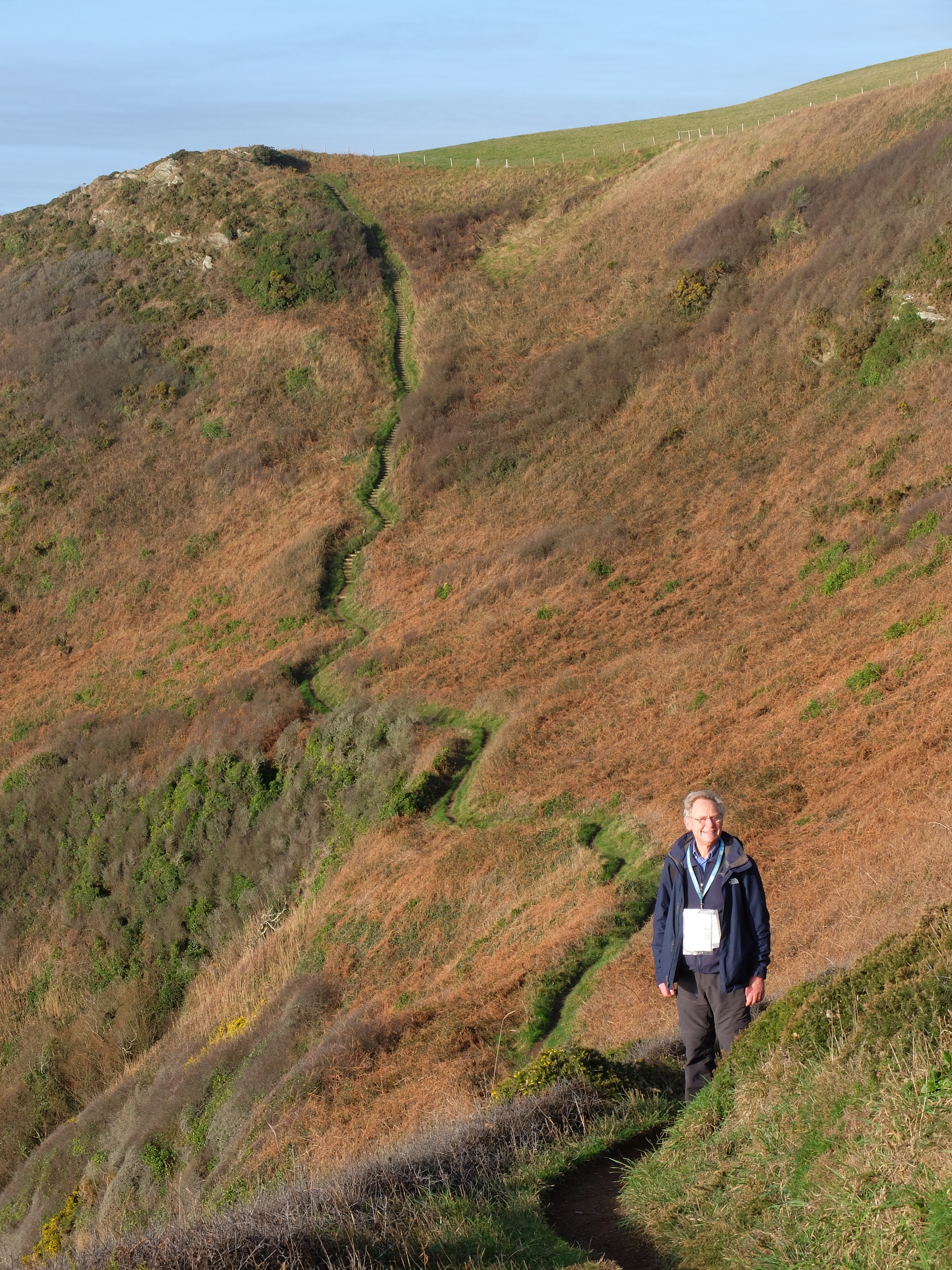
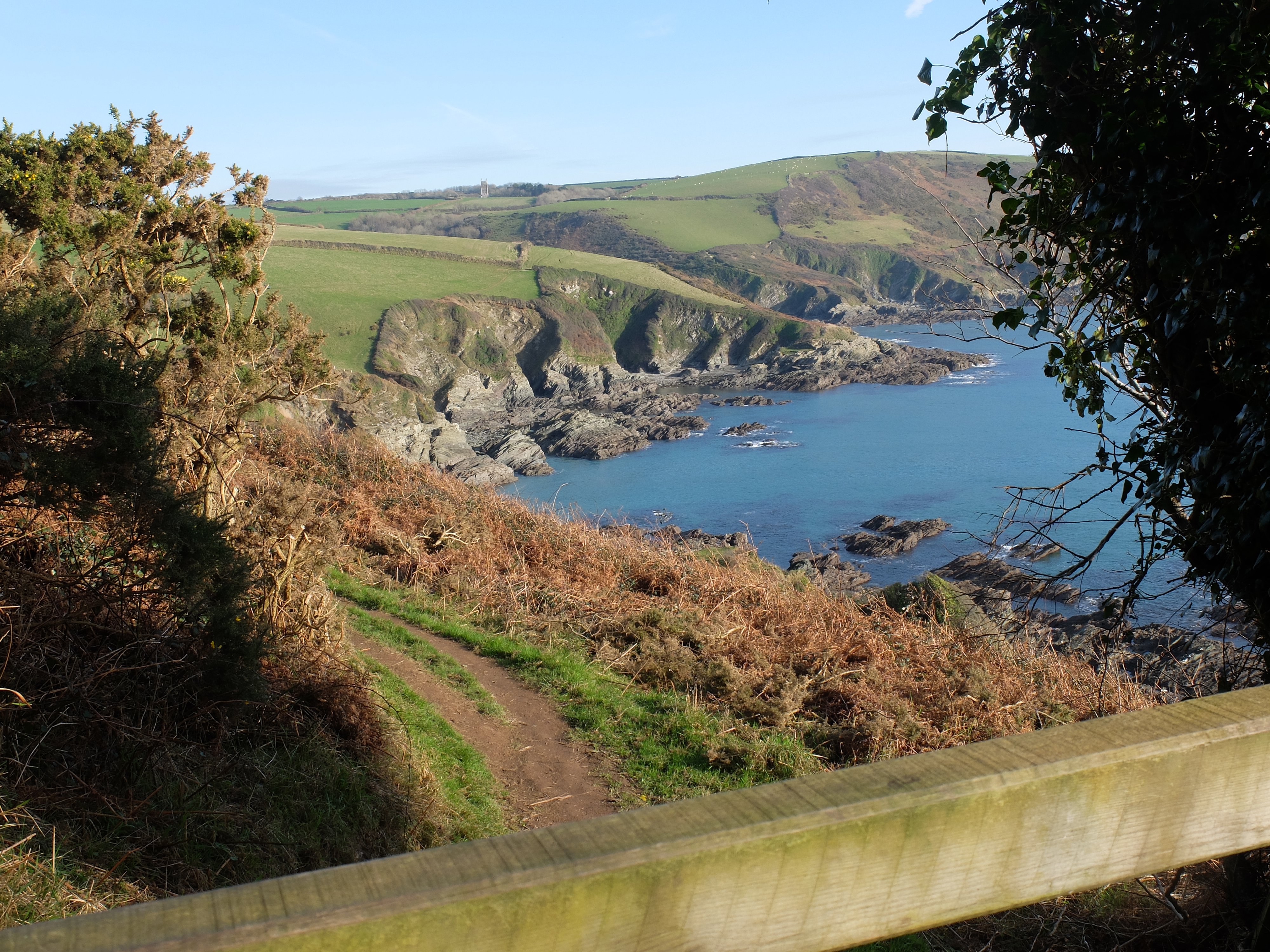
By mid morning we had a wonderful view looking west. There was a striking contrast between the well cultivated and rich brown soil running up to the cliff edge and the scrub below. At its foot the rocky outcrops seemed to get wilder as we went on. There were fewer smaller beaches.
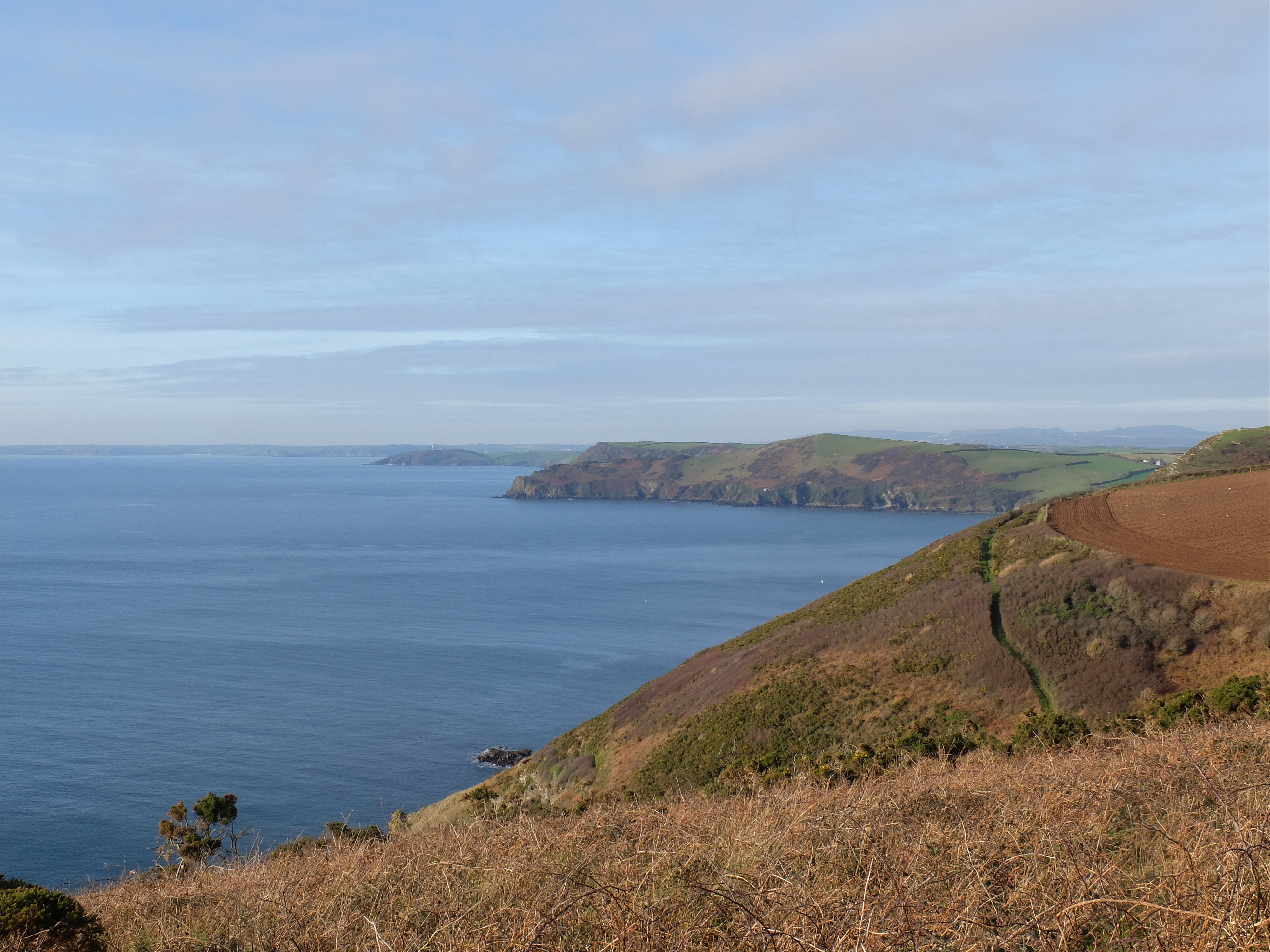
The roller coasters eased a bit as the day progressed. Wildlife had been pretty sparse so far so Martin had to make do with a casual conversation with a small group of Angus heifers and steers.

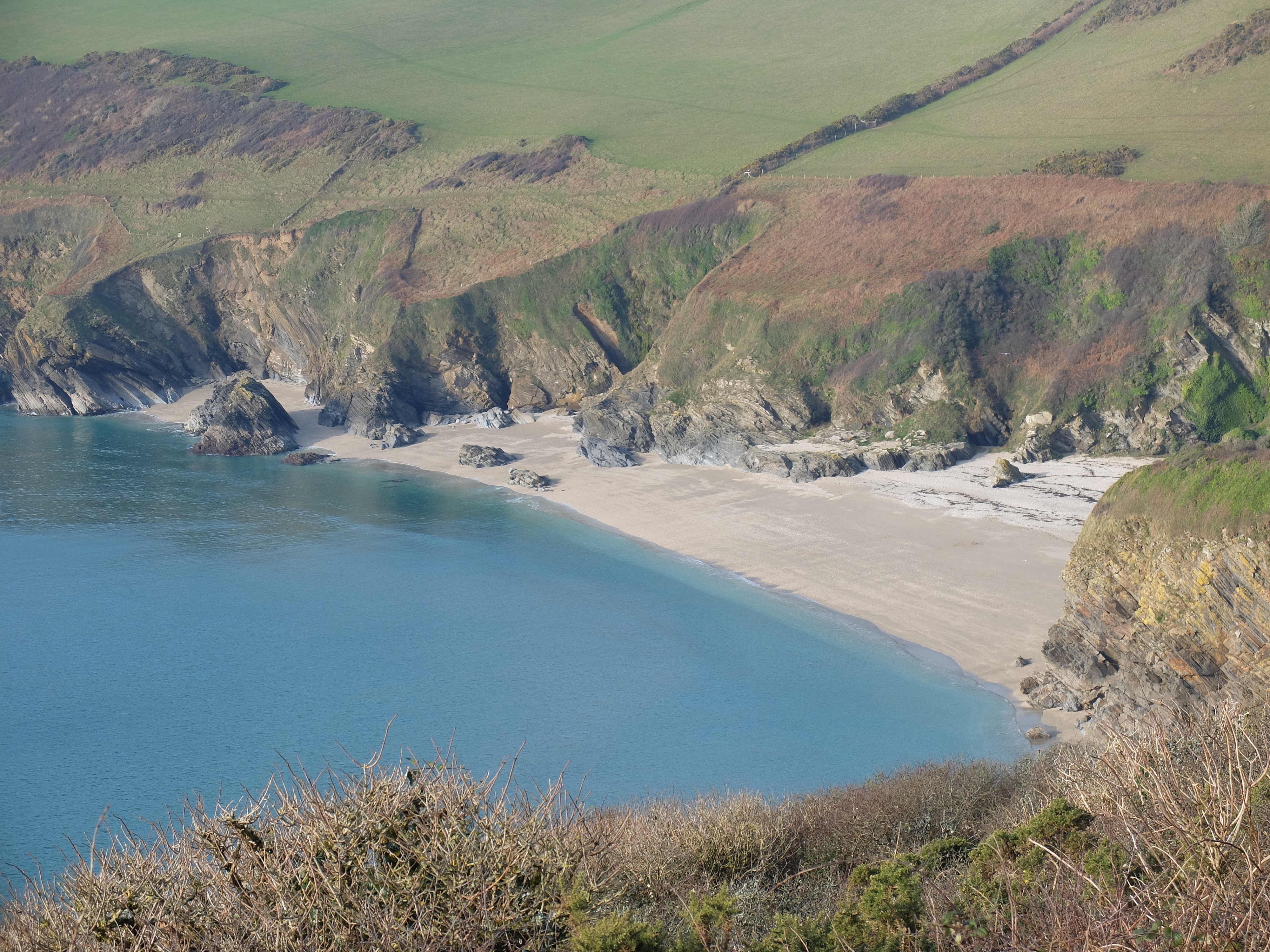
Beyond Pencarrow Head the beaches of Lantic Bay opened up and a bench for lunch beckoned. The sun was pleasant but once we sat down the cold got to us quite quickly. Lunch was brief, but with a great view. The beaches look inviting, but presumably don’t look as empty in July and August.
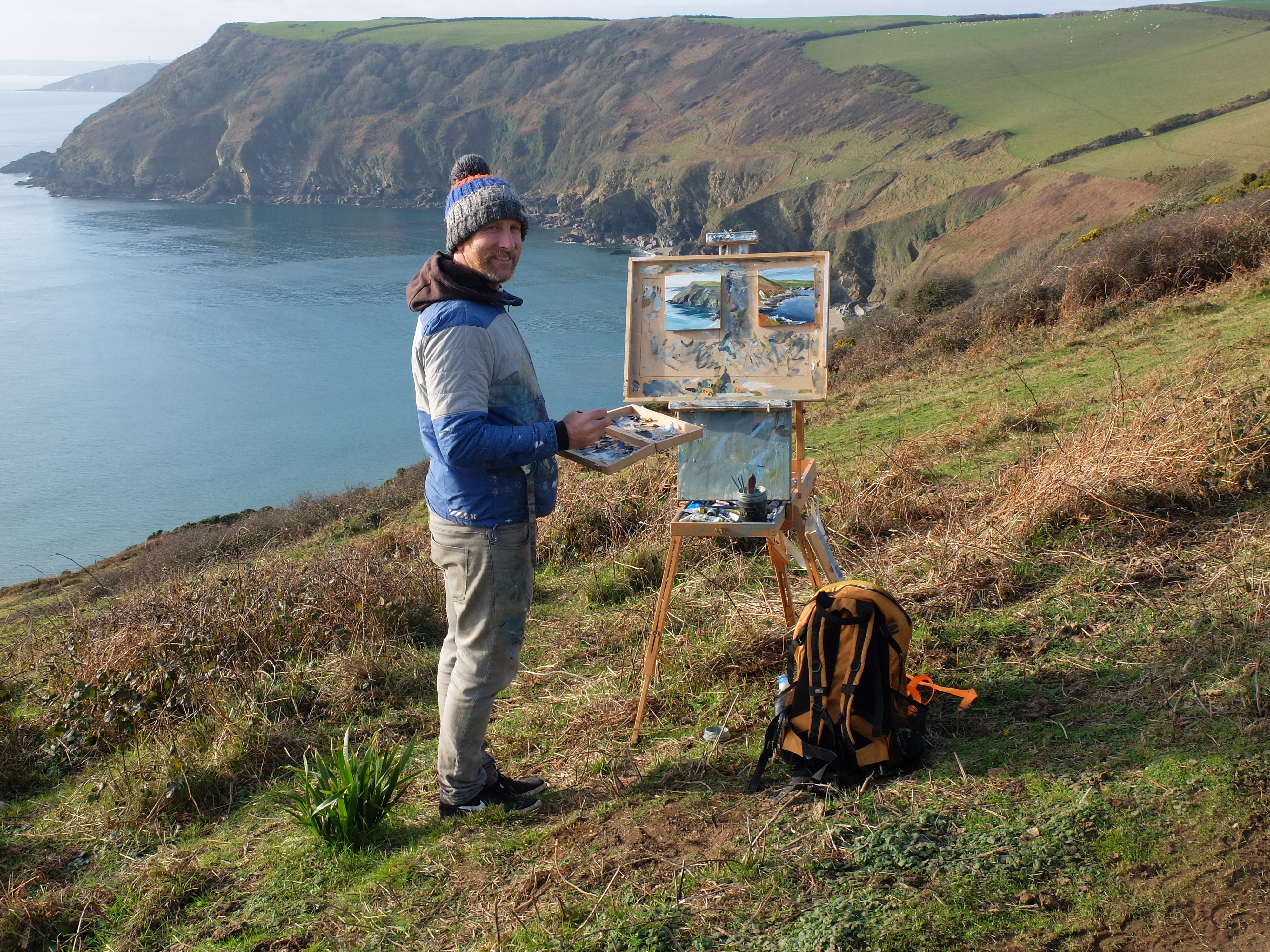
Hurrying on again we ran into Toby Ray busy at work on a painting of Blackbottle Rock. He looked quite relaxed in the cold, when less hardy artists might have retreated to the studio with a photo. Even in the gusty conditions his oils had an alluring smell. More of his work can be found at www.tobyray.co.uk. He is clearly an outdoor man. We bid him goodbye and moved on.
Another bench at the other end of the bay offered a rest and an opportunity for Dugald to put his glasses down. We admired the view and worried about a family on the beach that seemed to have disappeared. Happily they re-emerged safely, unaware of our neurosis on their behalf. The access to these beaches is not for the faint-hearted: very steep paths lead down to them, so perhaps they select fit visitors as a result. We moved on.
Half an hour later we met Wendy and Sally who had set off for Polruan to join us. This was a pleasant near-end-of-walk meeting until Dugald realised he had lost his glasses. He set off towards the last bench.
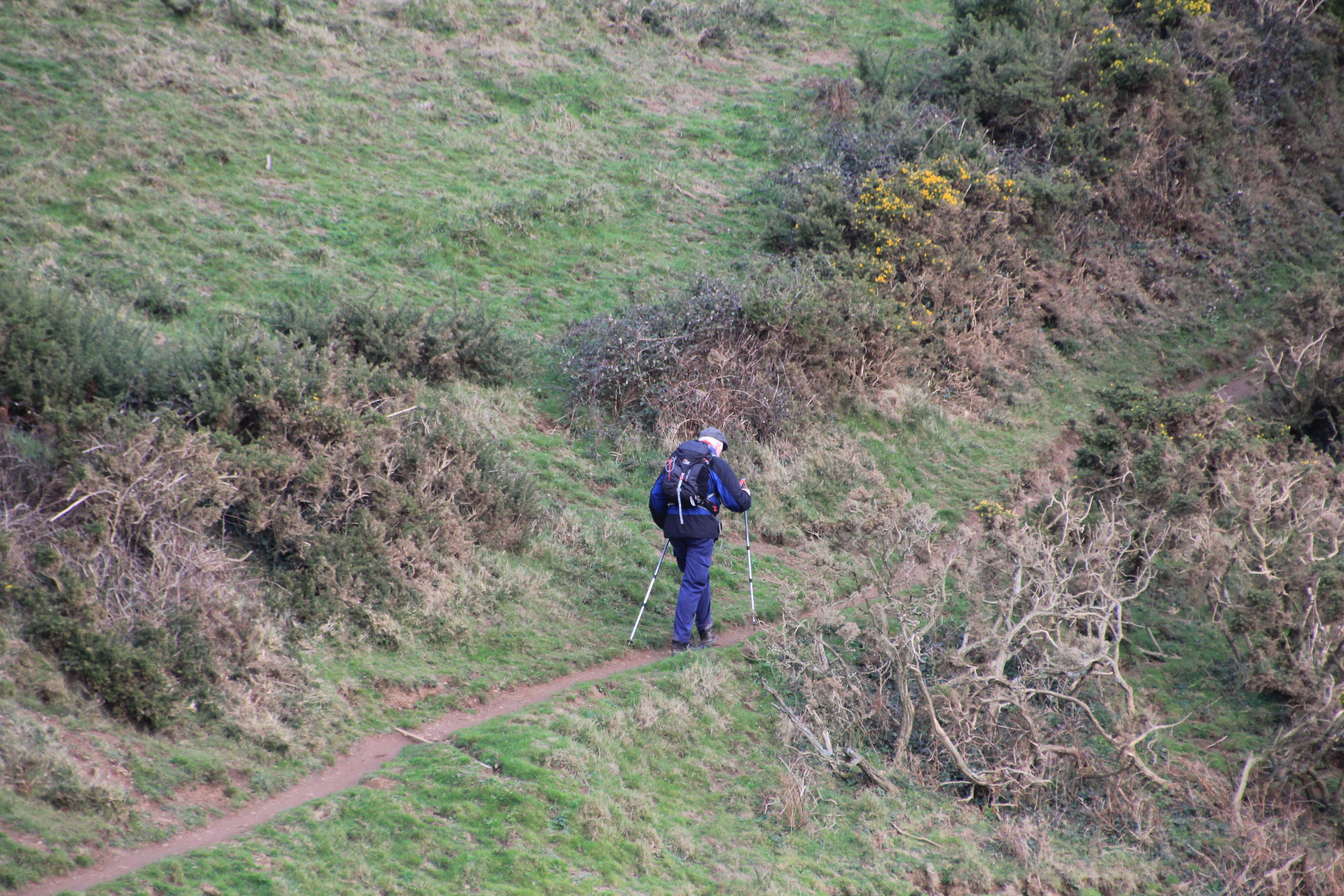
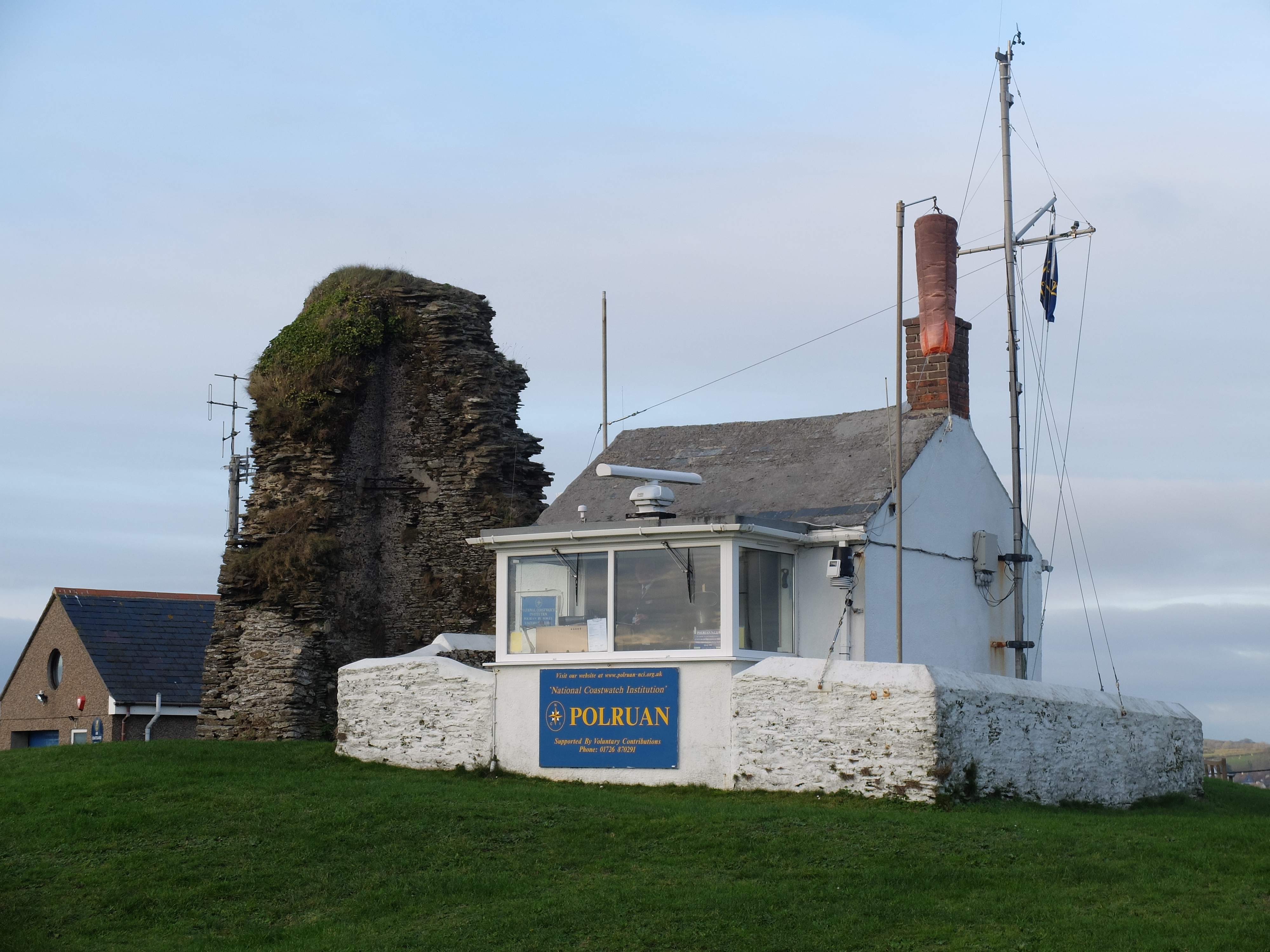
Not long after Richard set off obviously concerned that an additional mile might be too much for Dugald. Richard started at a trot but admitted that he slowed down once out of sight of the group. In the meantime Dugald had retrieved his glasses which were being looked after by a couple on the bench. The group reassembled for the walk down into Polruan. The estuary between Polruan and Fowey is of a similar scale to Dartmouth and Salcombe, much larger than the recent Cornish ports. A small coast watch station stands next to the ruins of St Saviour’s chapel, built in the 8th or 9th century.
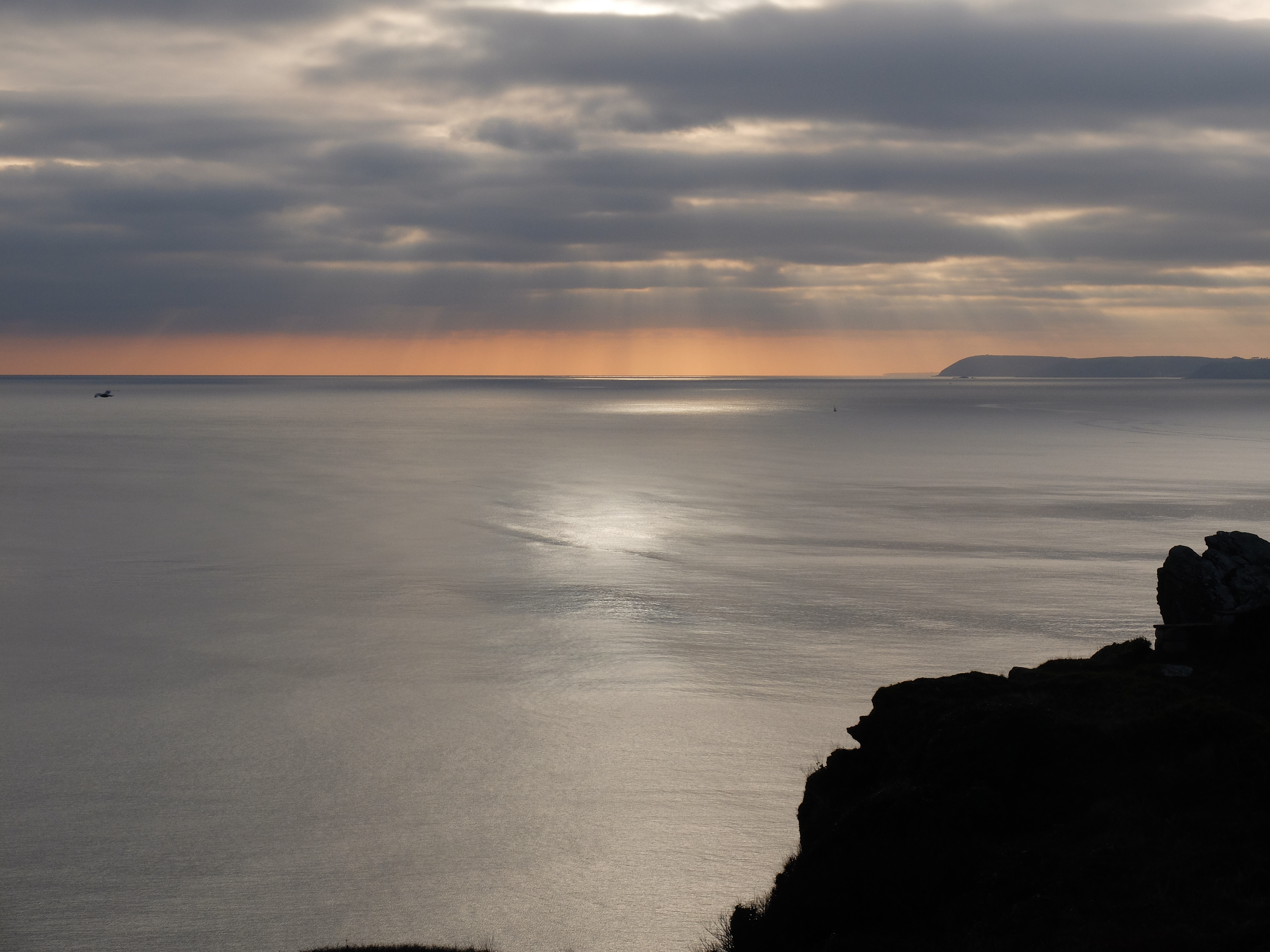
As we walked from there into the town the January sun was still lighting up the sea and the headlands to the west. There was lots of debate about whether we could see the Lizard or not.
We were heading for the ferry crossing point. On the way we were drawn to a Brixham trawler Leader hauled up on the hard. She is one of the largest of the type and was built in 1892. She fished off the Devon coast until 1907, and was then in Sweden until the 1980s. She is now owned by the Trinity Sailing Foundation whose aims include helping the personal development of disadvantaged young people. Their boats also operate commercially for holidays and other options – www.trinitysailing.org. We watched the slow and patient work of recaulking her.


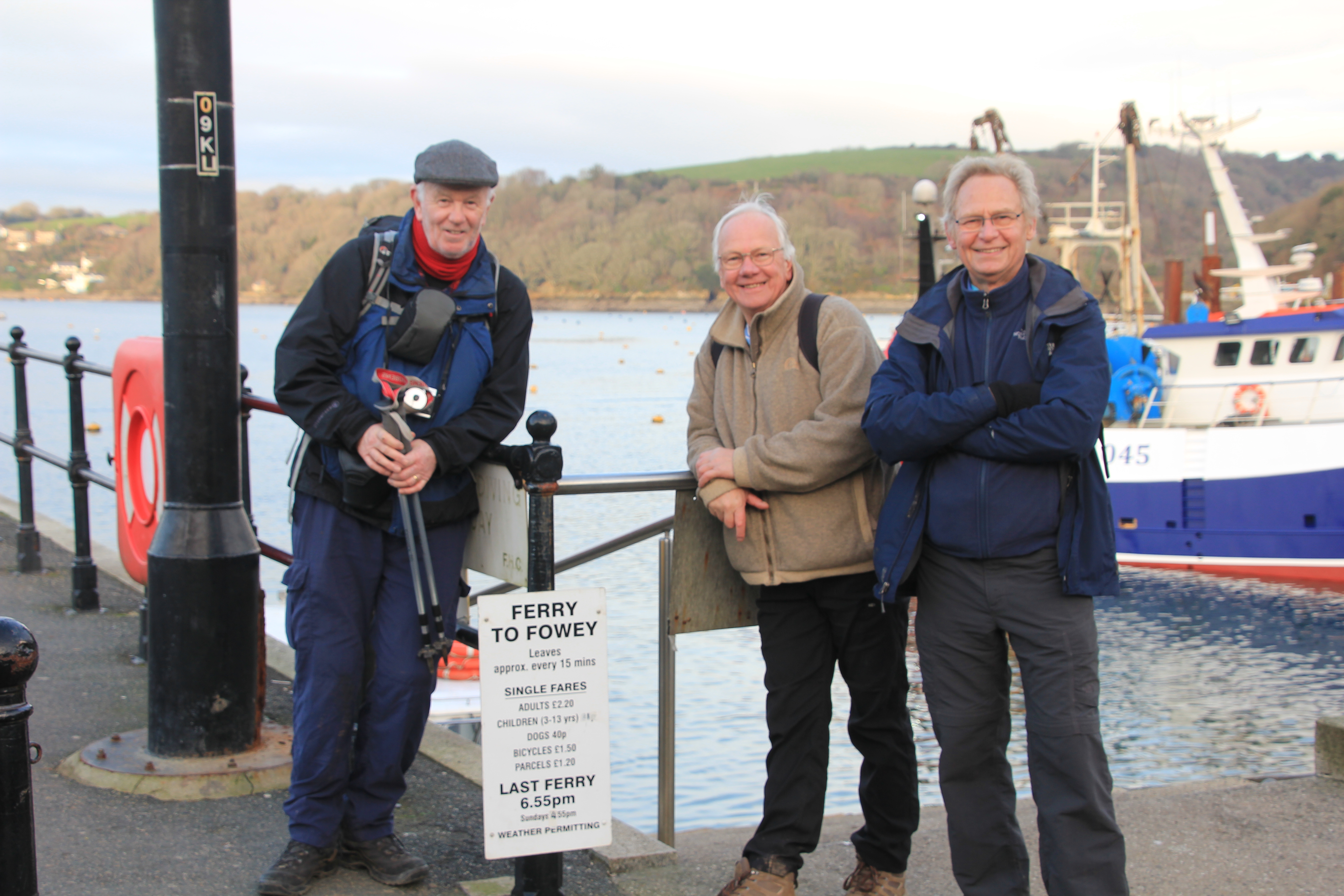
When we got to the departure point for the ferry we had completed the day’s walk. Our start the next day would be the other side of the estuary. The tough section had been demanding but not overwhelming.
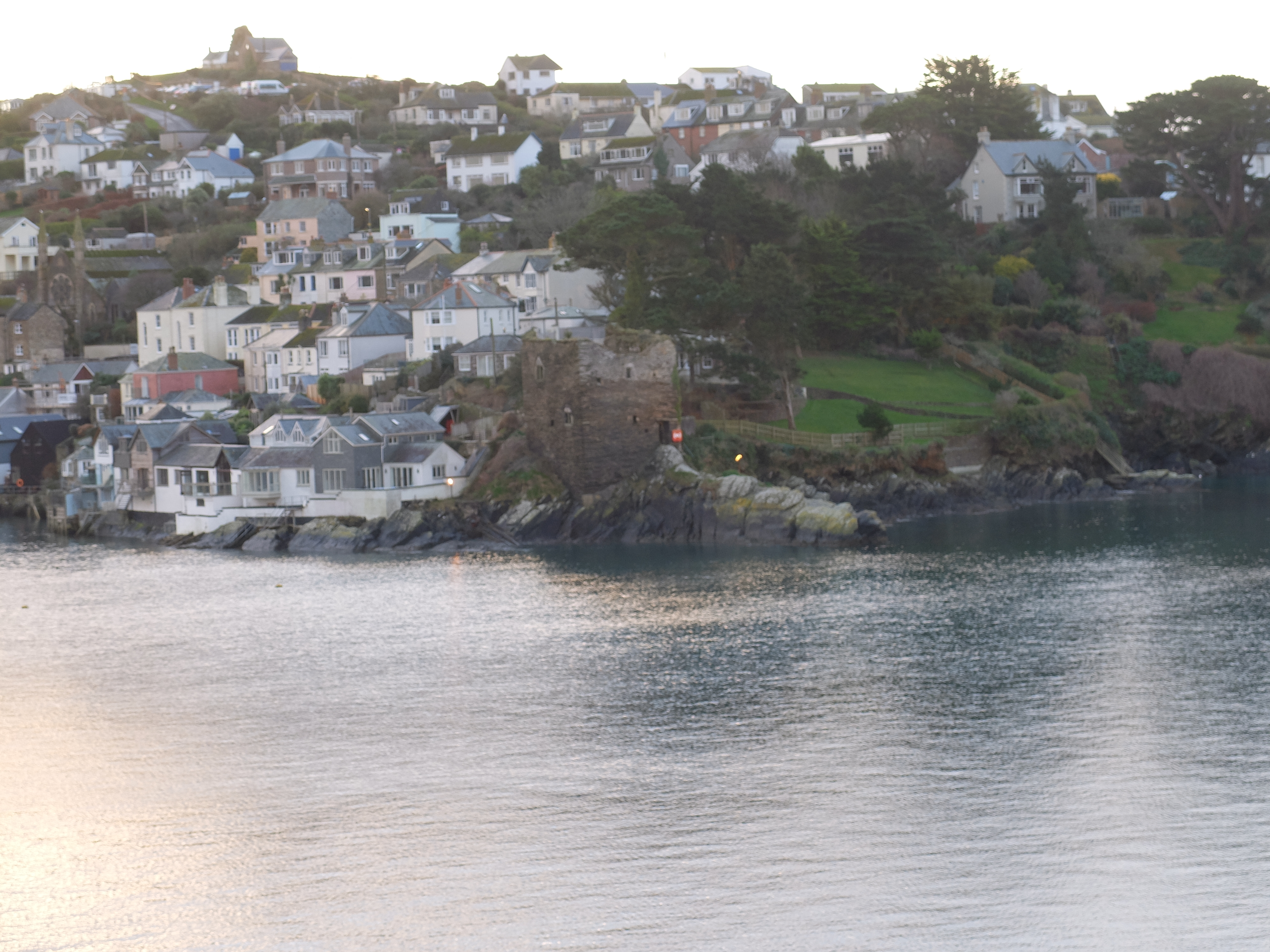
We made an earlier start the next day for an easier but longer stretch. Walking down the west side of the estuary from Fowey we could see the blockhouse on the Polruan side more clearly. This was built in 1380 and held one end of a chain that could be raised to close the harbour to undesirables. The chain is said to have been 16 inches thick (?): whether that refers to the width of the links or, rather less likely, to the calibre of the iron making up the chain, it must have been a very heavy chain indeed. Reports do not record what was used to raise it but perhaps a heavy windlass powered by a large number of men is the most likely – thirsty work.
Beyond the town is a tiny beach called Readymoney, an attractive and sheltered place. Sadly the notion that the name might be connected with successful piracy is wrong and the name has a more prosaic origin. From here the Saint’s Way sets off for Padstow on the north coast of Cornwall – just 29 miles. It is thought to have been the route for pilgrims travelling from Ireland to the continent. Beyond Readymoney is a more modern castle built in 1530.

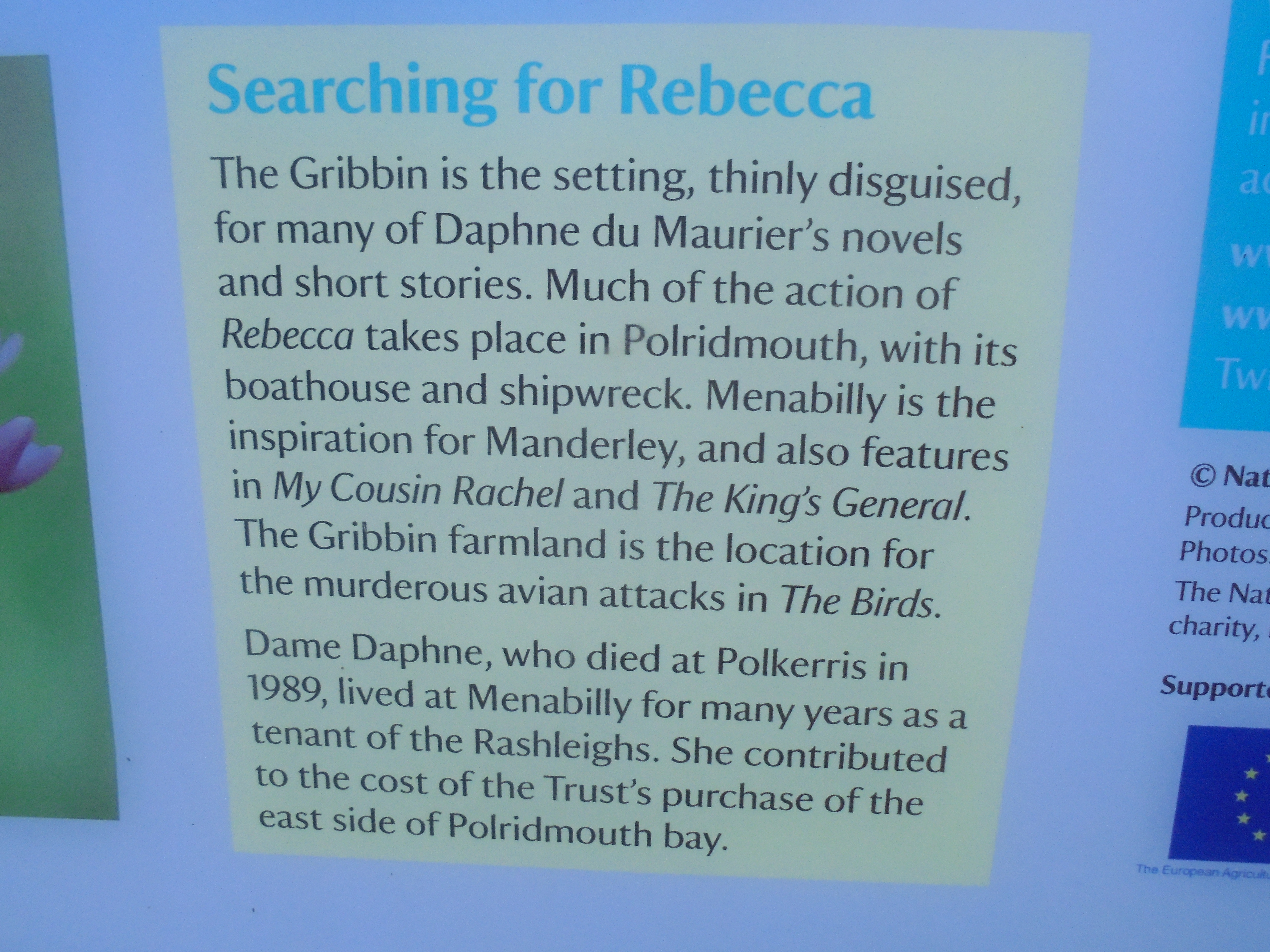
Half an hour later we were entering the domain of Daphne du Maurier. A delightful stone house at Polridmouth sat close to the water and looked an ideal hideout. But it is also said to mark the spot where Rebecca died. Menabilly, the country house Daphne du Maurier lived in with her family for many years was the inspiration for Mandalay and is directly up the valley from Polridmouth. The area is heavily wooded and the team’s speculation over the next half hour or so failed to pin point it accurately – or more accurately than “somewhere over there in the woods”. Not definitive.

The most promising view of the area was from Gribbin Head dominated by the red and white striped daymark. This was built in 1832 on land donated by William Rashleigh, the owner of Menabilly. He wanted the navigation mark to be an enhancement of his estate so Trinity House built a “handsome greco-gothic square tower”. We thought the red and white stripes must have been a later addition – they don’t look very “greco-gothic”.

At the foot of the daymark the connections with Daphne du Maurier are set out on a panel.
Walking north towards Par Martin enunciated his first law of walking: the easier the walking route the more boring it is. This seemed a bit ungracious as we were having an easier time. He was then shaken out of this by the sight of four porpoises playing off the coast. Too far for our cameras but very clear to the eye. Martin told us he had never seen cetaceans off the British coast before. Dugald was for once ahead of him, citing a porpoise taking part in a Weymouth Sailing Club race years earlier: it made the race more interesting for those at the back of the fleet.
As our wildlife tally had been sparse so far in Cornwall this raised Martin’s spirits a lot. A short coffee stop in Polkerris was broken up by the first rain of the week – indeed the first rain for a long time. Half a mile of beach at Par was a dog walker’s paradise. A troop of twenty dogs included nine collies being walked by two women, two labradoodles and an Alsatian. Richard was fast making friends with one of the labradoodles. Perhaps a cat isn’t enough after all. In the background was the large china clay works we had to go round to reach the path the other side.
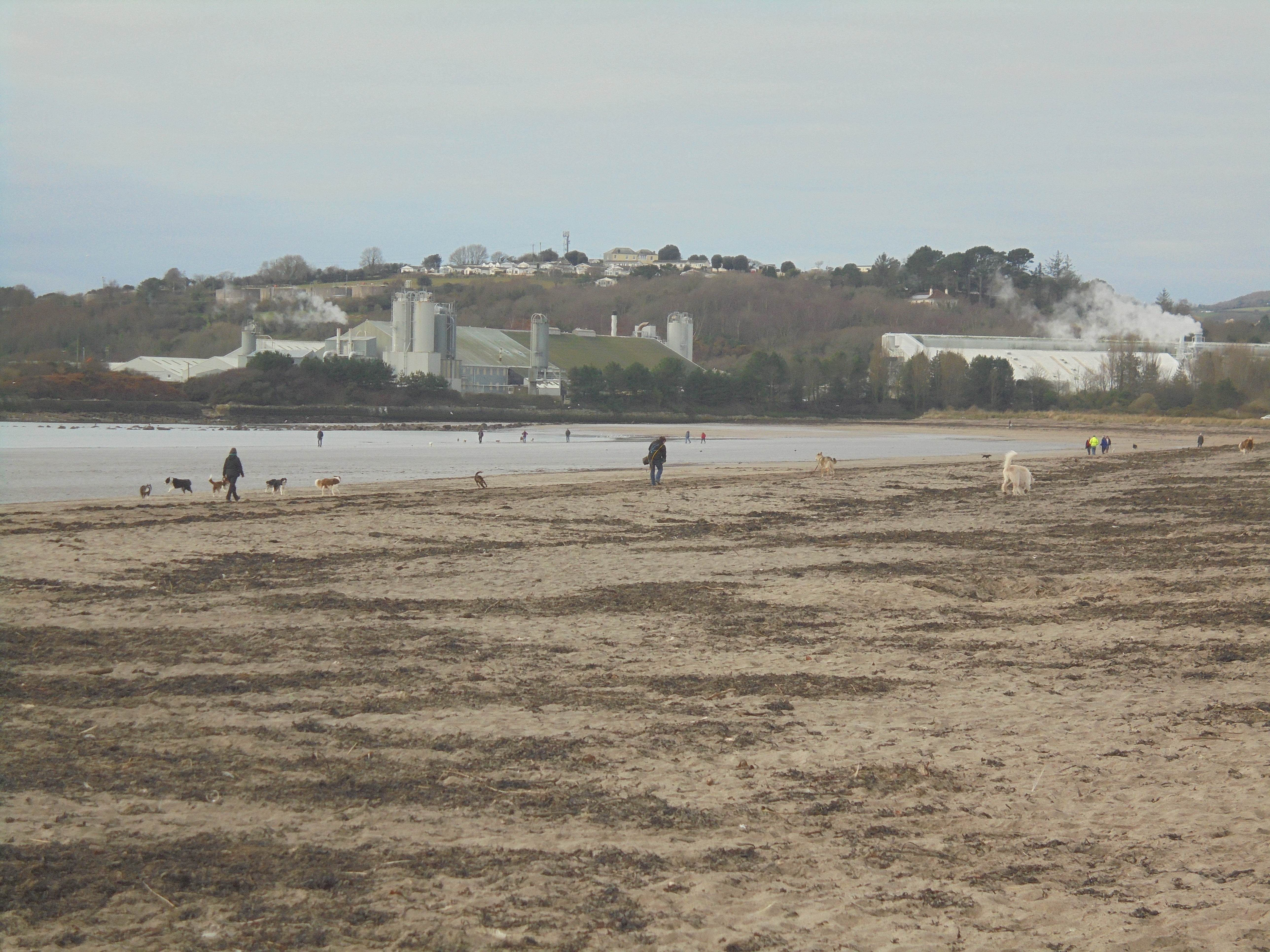
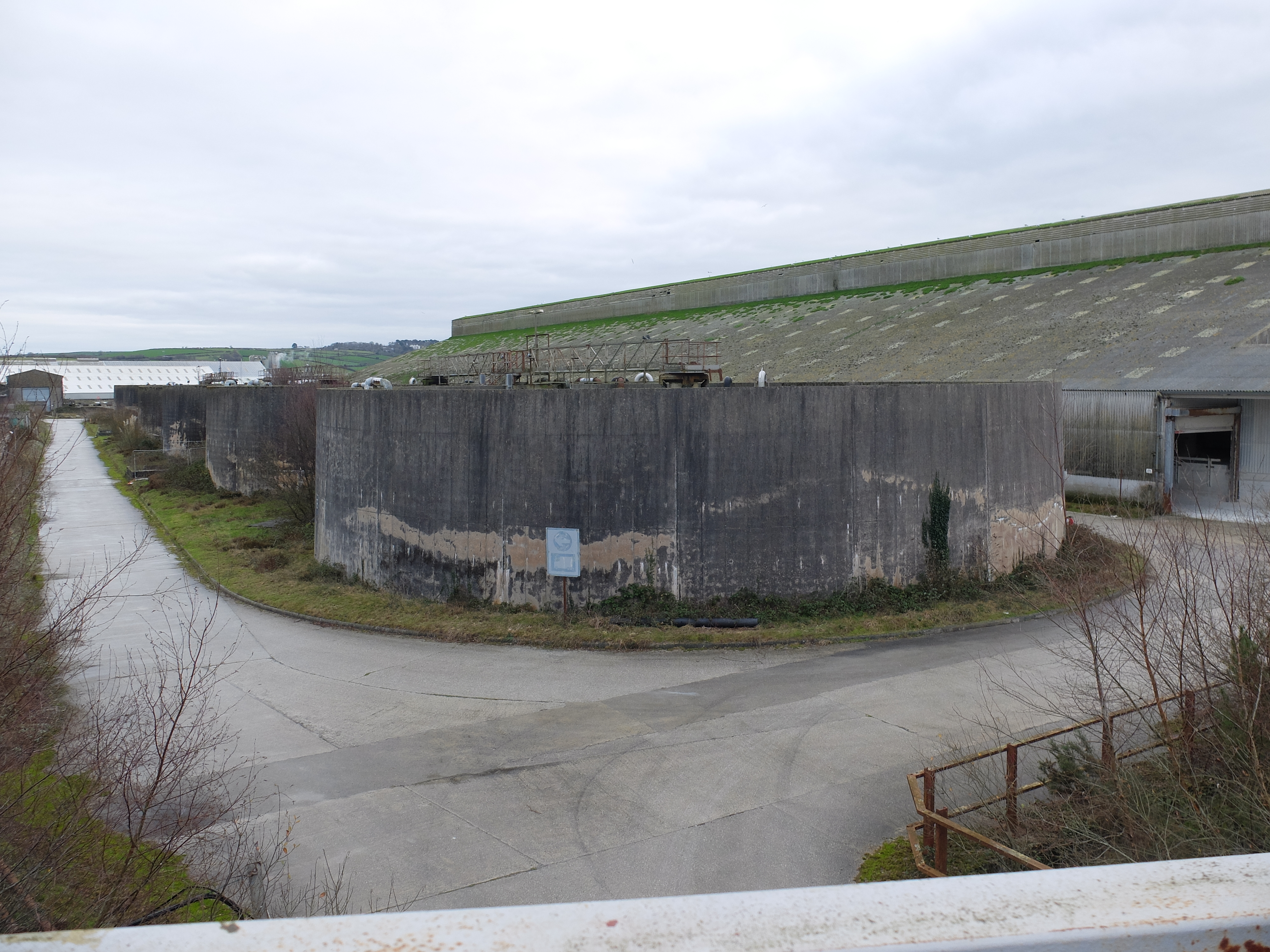
A diversion of over a mile took us round the rather unattractive buildings that now work under the name of Imerys the French company that swallowed up English China Clay. Walking round much of the site looked desolate and it wasn’t clear how much of it is still in use.
Back on the coast we were soon on the edge of the Carlyon Bay Hotel golf course. It ran for a long way along the coast with some eccentric tees almost on the cliff. There was no need for a contrived rough: there were small quarry like bunkers which must have swallowed generations of balls. We sat on a rather rotten bench facing the course against our best instincts as coast walkers. We managed not to break it and thus avoided the headline “Elderly walkers vandalise golf course”. It was getting colder and Charlestown beckoned. We got there early in the afternoon and enjoyed the combination of the old town and its current film set prominence. Most of the harbour scenes in Poldark are filmed here. The harbour was built as an export harbour for copper and clay by Charles Rashleigh at the end of the eighteenth century and it carries his name. It is more clearly designed than other small ports on the coast: its designer was John Smeaton of Eddystone Rock fame.

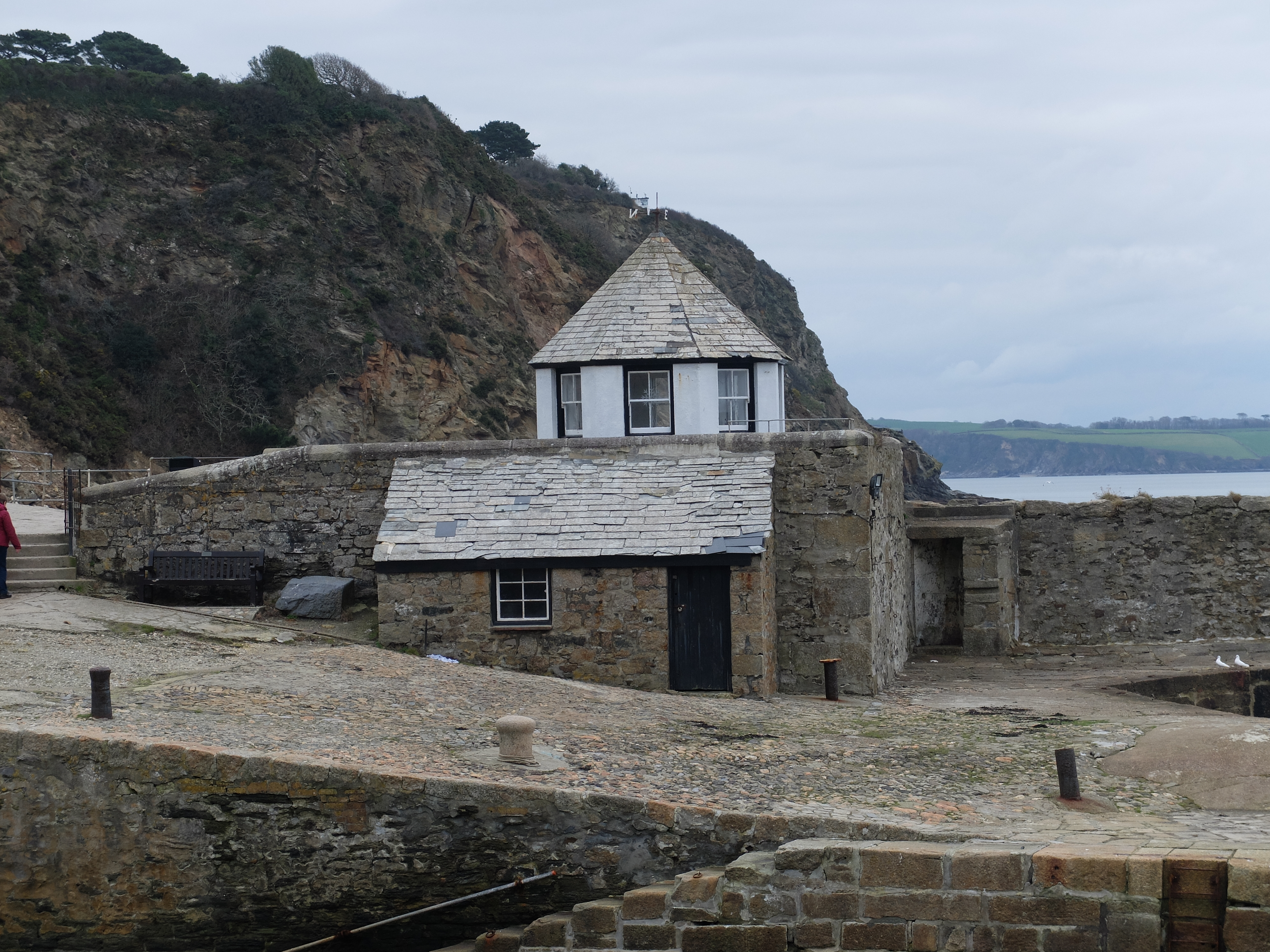
There is an interesting selection of small sailing ships there with accompanying barrels, barrows and so on to give atmosphere.

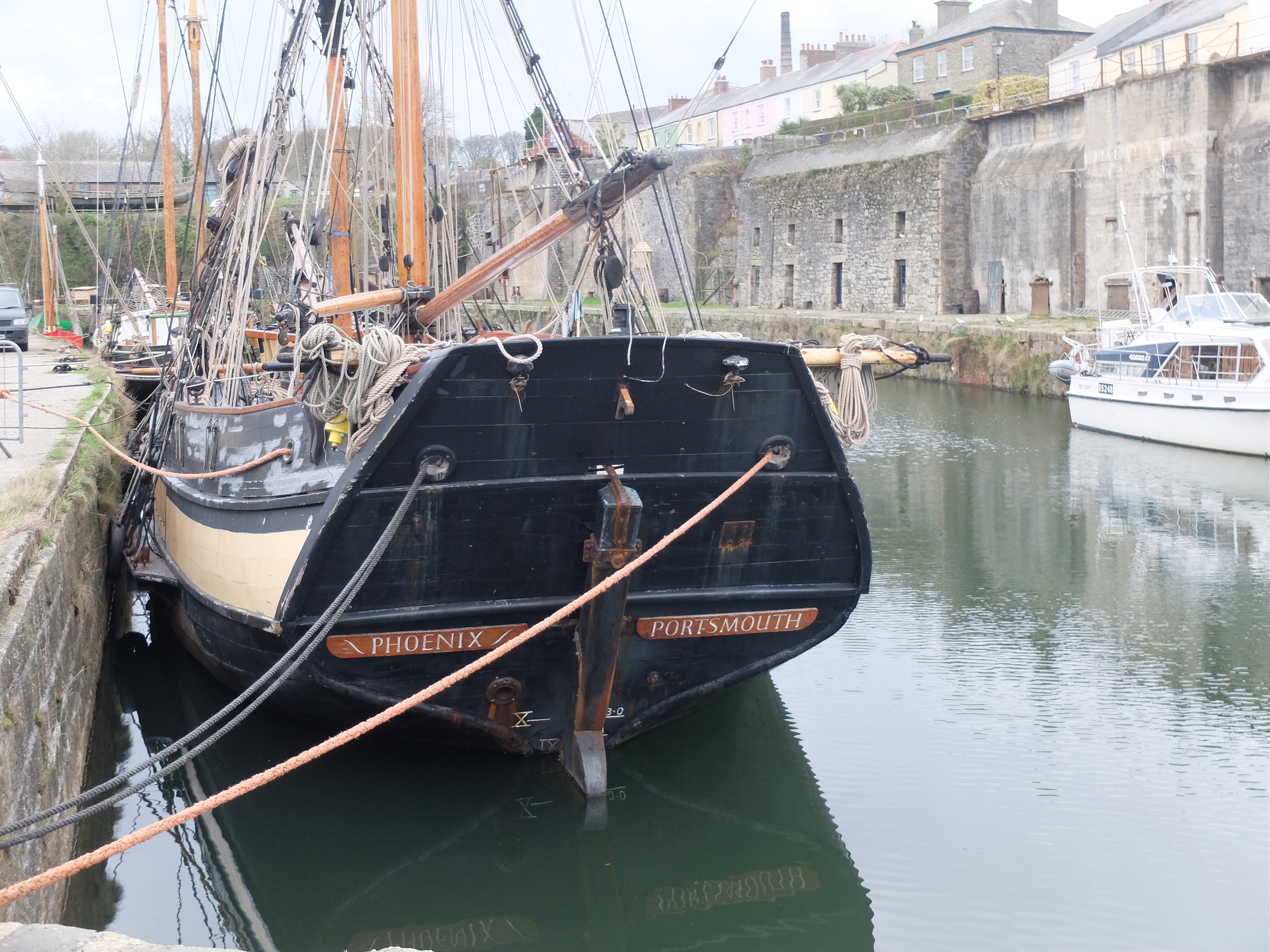

An enjoyable end to the day and an eleven mile walk. It all looked a lot less friendly when we arrived the next morning for our sixth and last day. It was drizzly, misty, damp and overcast, but not raining heavily. It was also Martin’s birthday so we had hoped for a rather better day for him; but he’s a philosopher so was not put out.
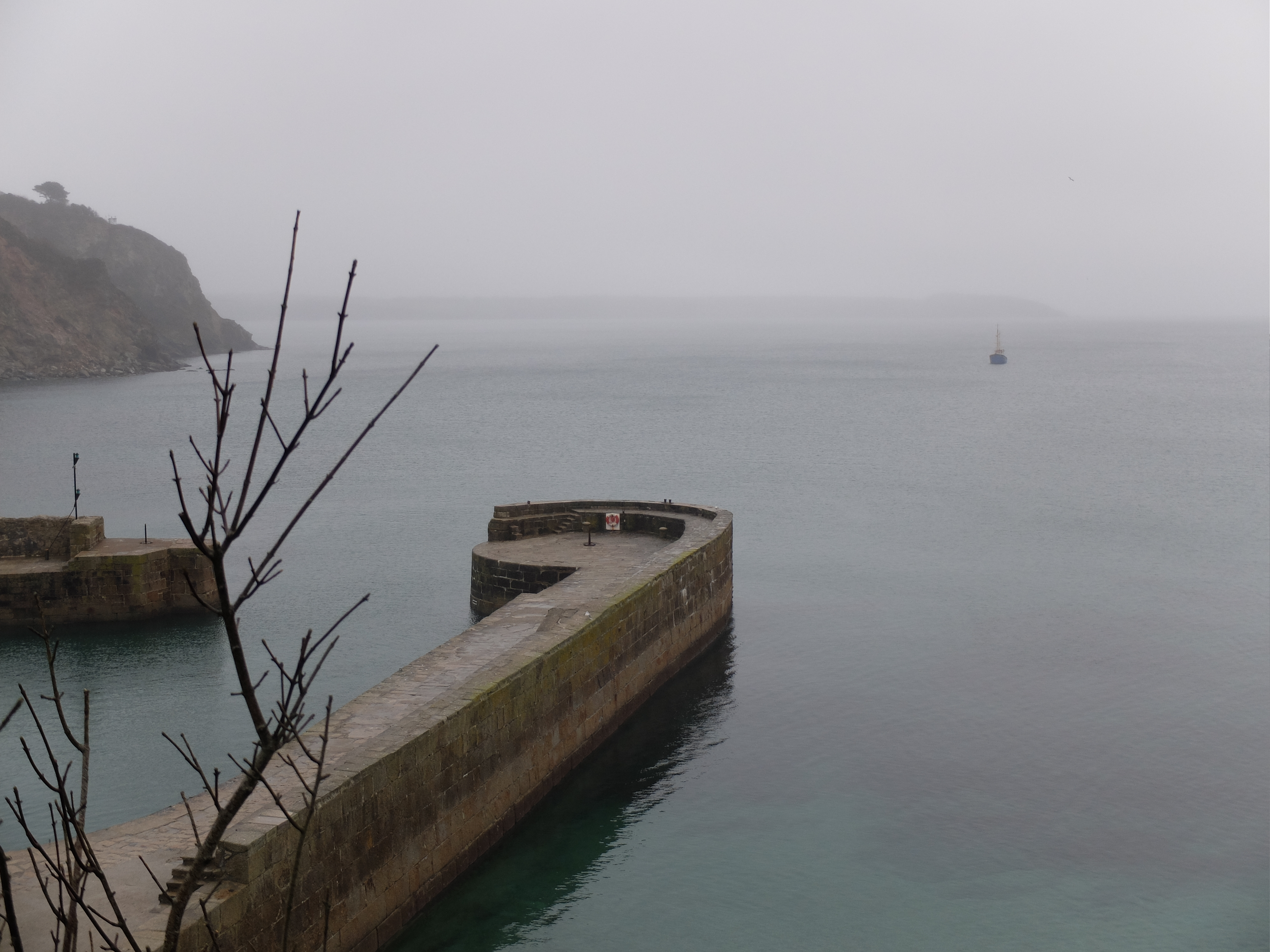

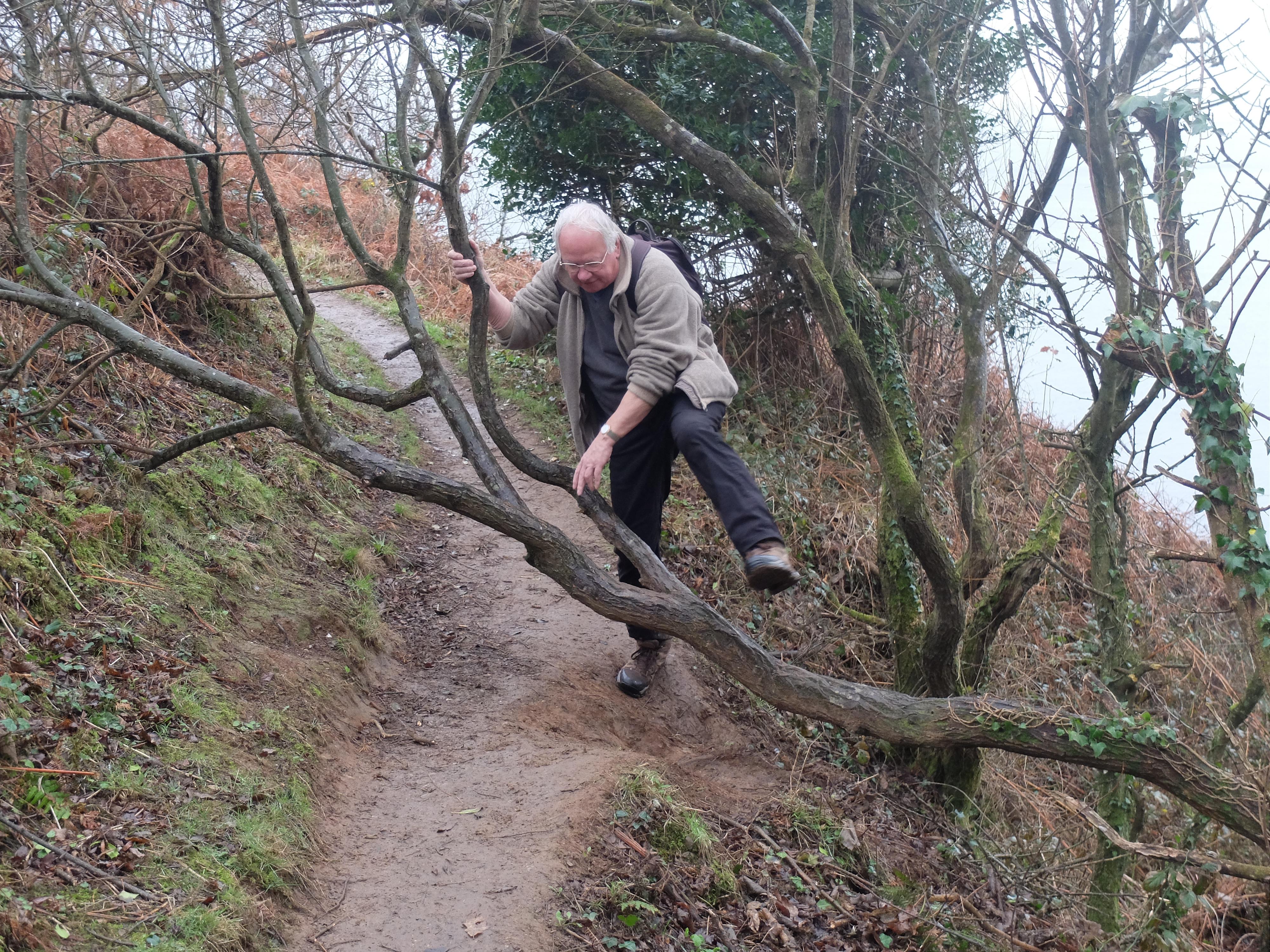
After the beach at Porthpean we watched an interesting display of surface fishing by cormorants. They looked like holidaymakers snorkelling in a relaxed way. Then we were back on more roller coaster country with new obstacles thrown in. For a long time we had had gates on the path, but suddenly stiles were thrown in as additional obstacles, along with fallen trees. Martin showed us how it’s done.
A sharp climb followed with 178 steps taking us out of Silvermine Valley. More of the same followed and we wondered whether this wasn’t harder than the acclaimed tough section two days earlier. Pointless to speculate really as it doesn’t help you get up the hill. In the midst of this Richard spotted a single seal watching us with amusement, bobbing up and down gently offshore. We enjoyed watching it and then enjoyed Martin’s attempt to whistle it in. The seal shook its head (are we sure?) and swam slowly away.
Coming down into Pentewan we saw out first daffodils in flower. This felt early even for Cornwall. The attractive harbour basin which is sadly out of use, but has not yet fallen victim to a marina. Further on at Portgiskey Cove are the ruins of fish cellars.

Getting to Mevagissey was quite different. The four basin harbour is active and filled with fishing boats and leisure craft.
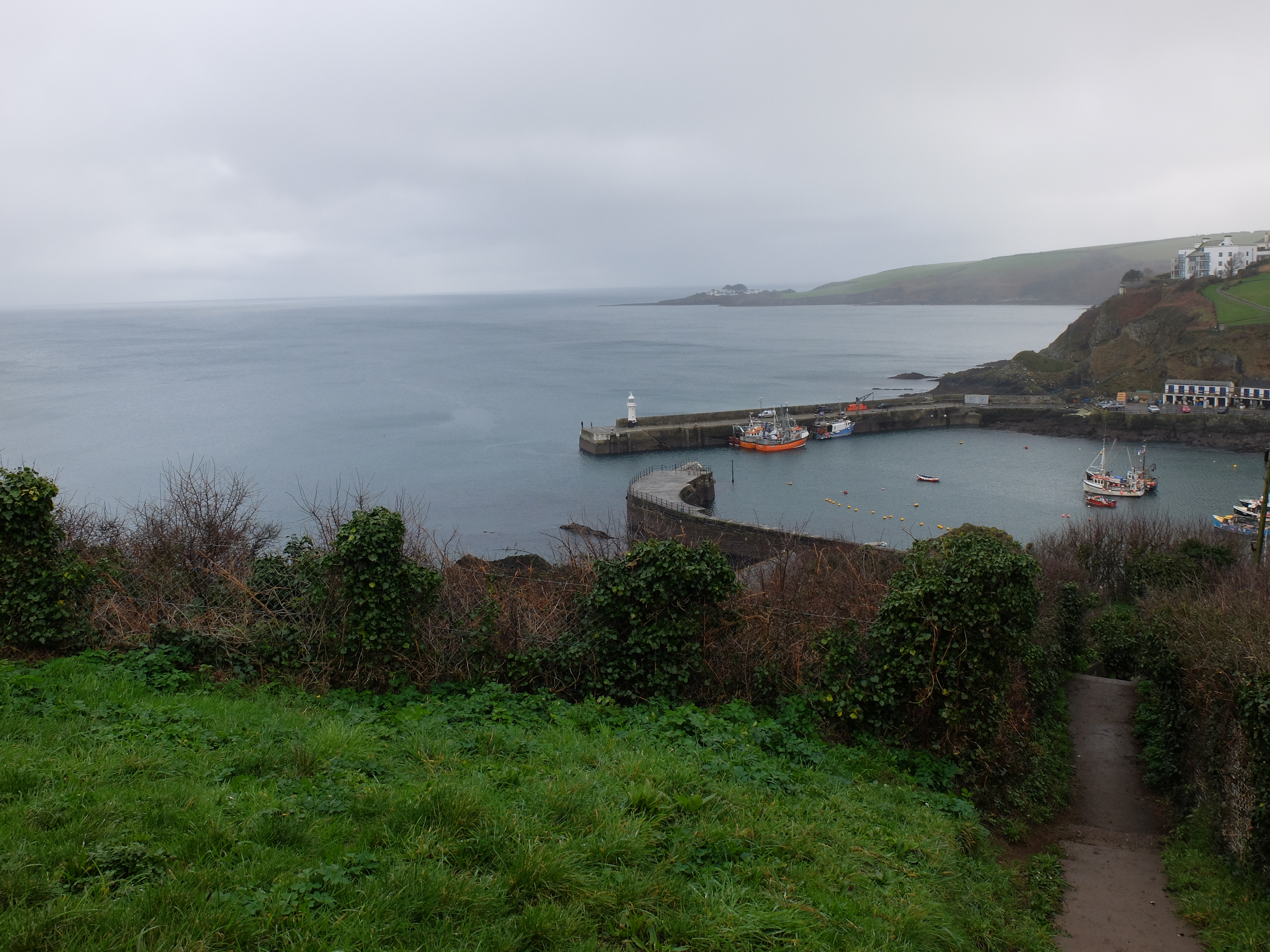
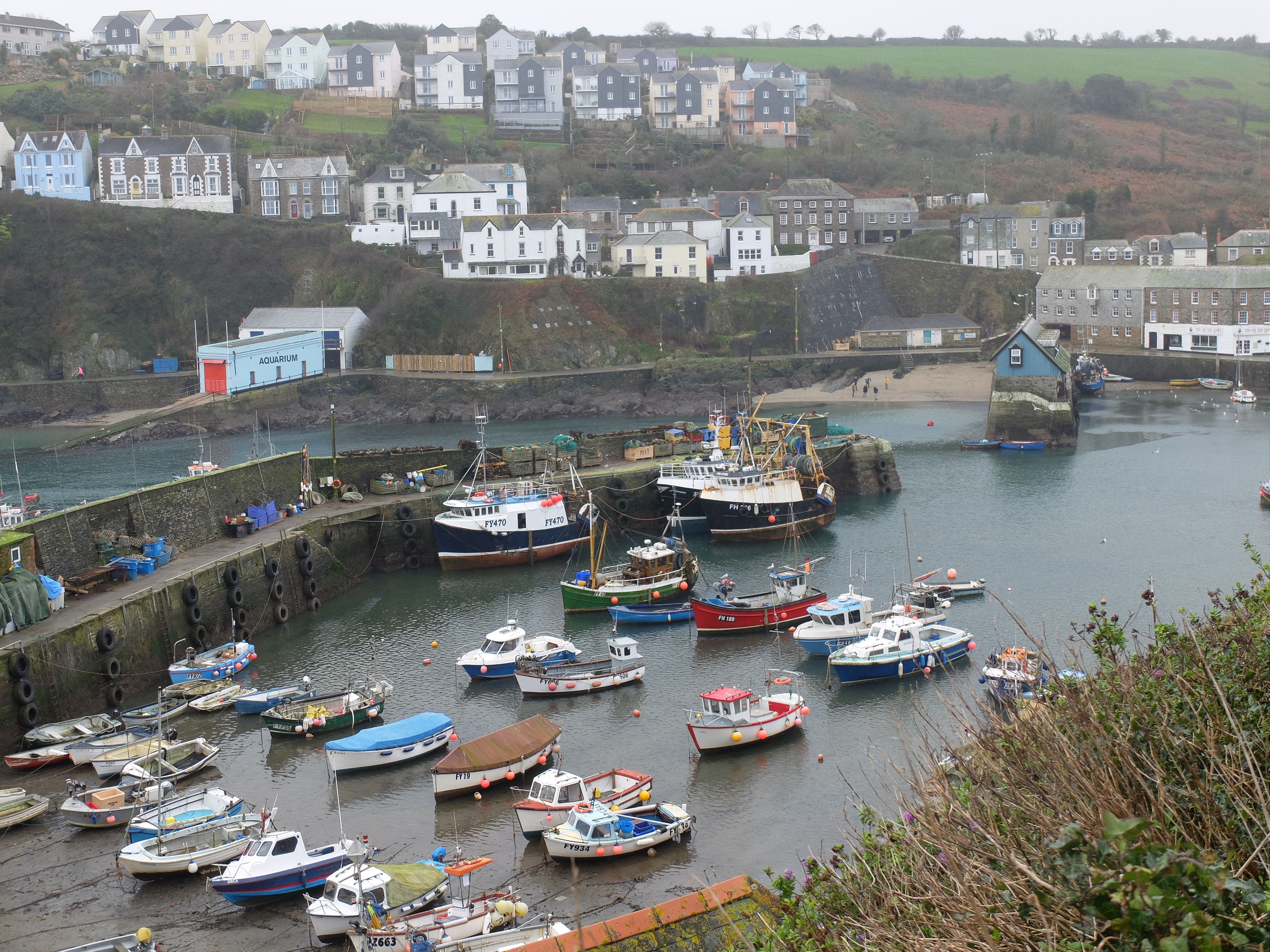
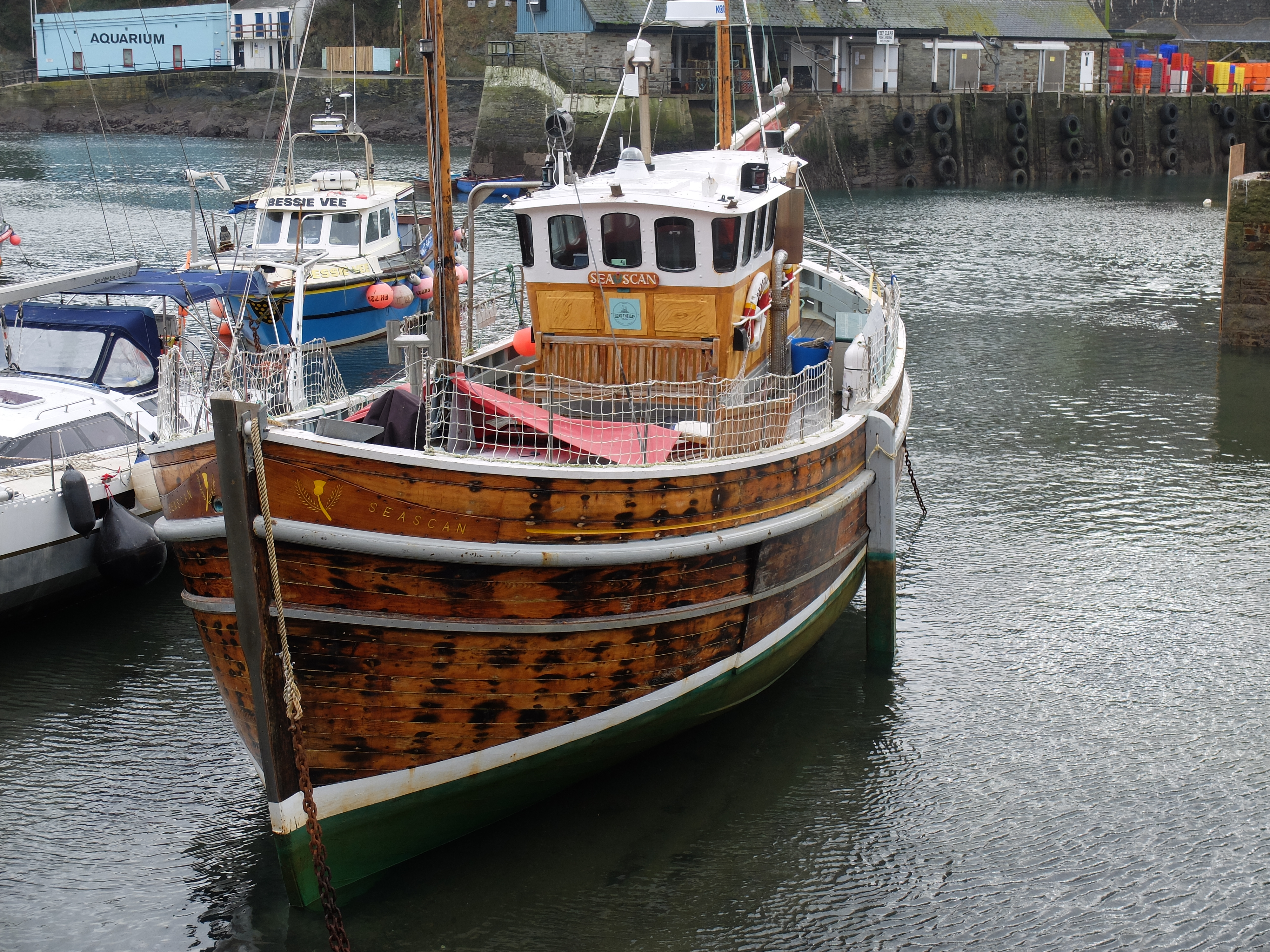
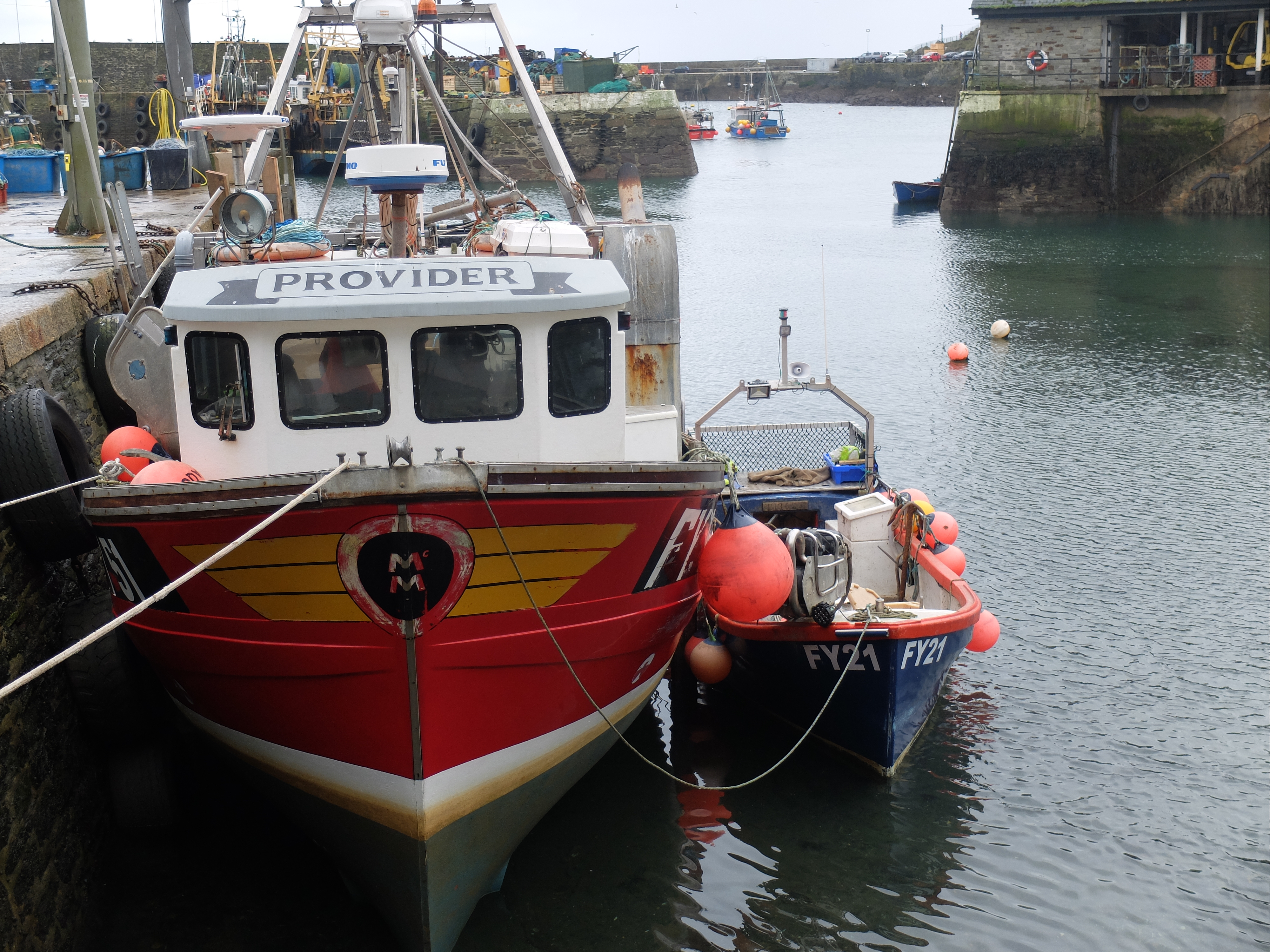
Like all the other Cornish towns we visited Mevagissey is attractive and full of its own life. We thought it benefited from the absence of tourists, with an honourable exception for us of course. A good lunch at the Ship Inn marked the end of our walk.
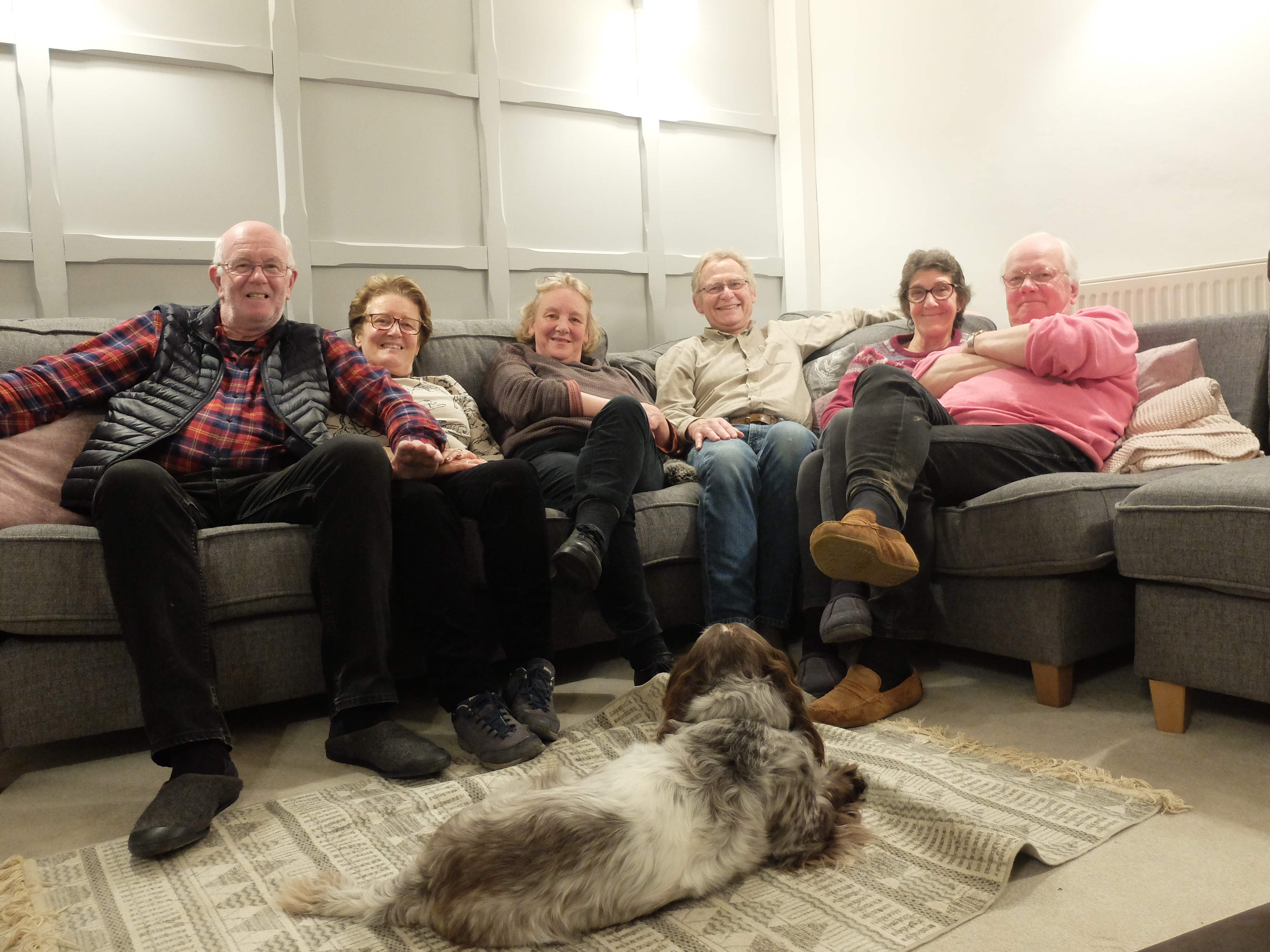
We celebrated a successful week of walking and Martin’s birthday that evening. We had extraordinary weather with sunshine at least half the time and a minimum of rain, balmy conditions for walking. We all survived six days’ walking in a row which we hadn’t tried before. We had covered the next 50 miles of our walk, so we have now achieved 42% of the SW Coast Path. Not a speed record but very satisfying. We enjoyed a harmonious stay in a warm and welcoming house and loved Cornwall .

 Pensioners on The Path