
Our November plan was modest – to get from Salcombe to Bantham. When we set off in January we did not carefully review where the “seasonal ferries” are. Well lots of them are in Devon and November is definitely not seasonal in their terms. So it looked as though we would only manage 13 miles before we were stopped by the River Avon. The good news was that we were going to stay the night again at Kathryn’s excellent Airbnb. Martin was going to stay an extra night, in part because we had not allowed him enough time with his beloved cirl buntings on the previous outing. He had obviously felt deprived when he was pulled away from them after a mere twenty minutes of worship.
The forecast for 12th and 13th November was not good – rain and some very high winds. At Salcombe the sea was looking wild as it broke over the bar at the entrance to the harbour, a truly autumn day. As we zig-zagged down to the path from the top road we were surprised to see a derelict house in the middle of Salcombe’s affluent housing.

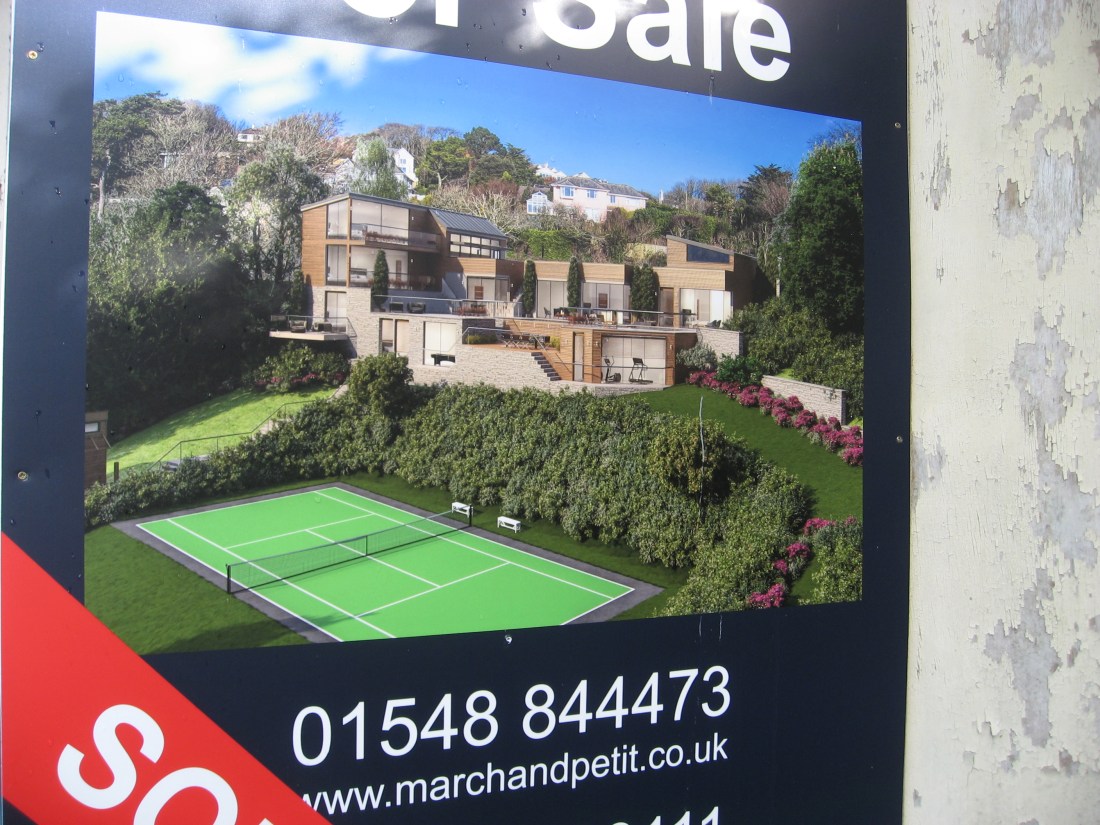
When we got to the bottom we found out that there were plans for the site – an enormous development which looked like a large cuckoo in a modest nest. But the views will be great and perhaps the tennis will be too.
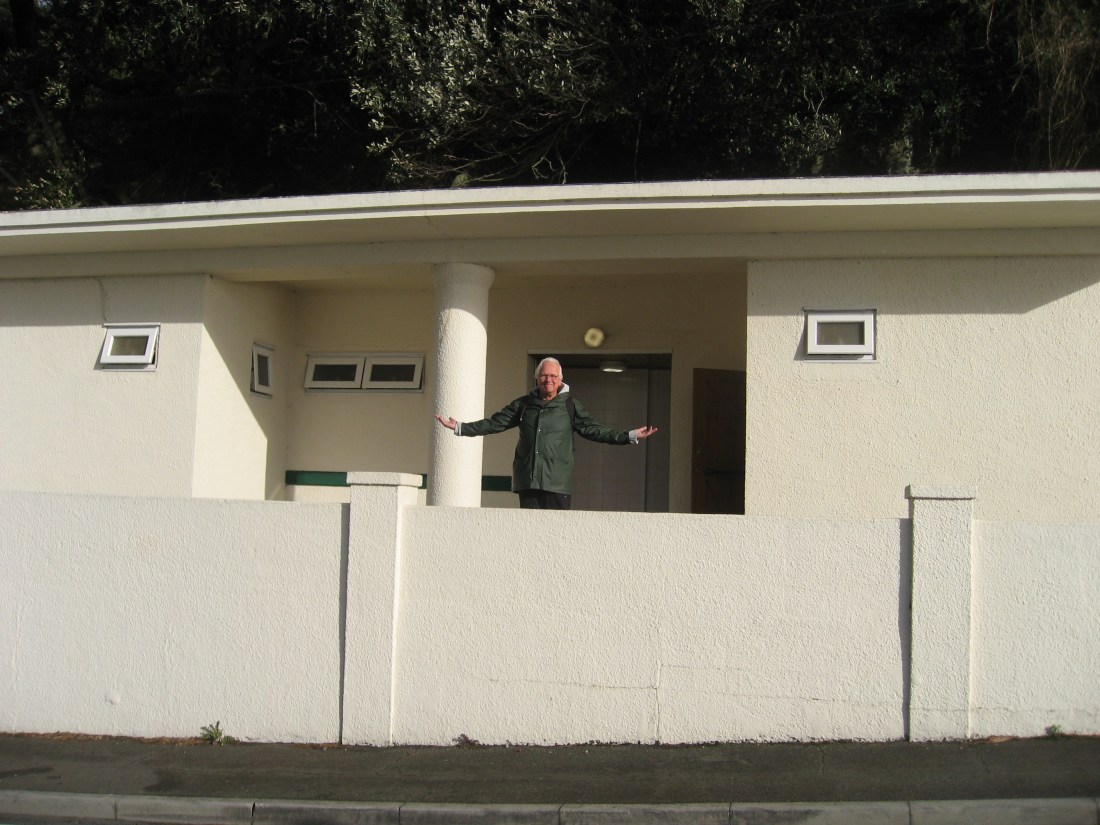
Still with a focus on architecture Martin was pleased by an art deco public loo adjacent to the oddly named Winking Prawn.
At the end of South Sands we could see the remnants of the castle held by Royalists in the Civil War, which was apparently the last Royalist stronghold in the country to surrender in May 1646. The commander, Sir Edward Fortescue, must have felt increasingly beleaguered as the news filtered through to him that the Royalist cause was faltering. He must eventually have decided that he was not a victim of fake news and surrendered the garrison honourably. His Parliamentarian adversaries were so impressed by the garrison’s resilience that they were allowed to leave with their colours flying. Having left Sir Edward refused to hand over the keys which remained with his family thereafter. A Pyrrhic victory as the castle was slighted in 1647.

Looking the other way the old lifeboat house looked more like a chapel than a boat store. It operated from 1868 to 1922. In 1916 the lifeboat William and Emma, a rowing lifeboat, capsized near the Bar on the way back from a rescue attempt with the loss of 13 of the 15 crew. The accident could be seen by many of the men’s relatives as they waited for the boat to come back. In 2016 commemorative stones were placed on either side of the estuary in memory of the crew.


As we got to Sharp Tor we could look back up the estuary which looked so much wilder and more threatening than when we arrived here two and a half weeks earlier. No boats to be seen out today.
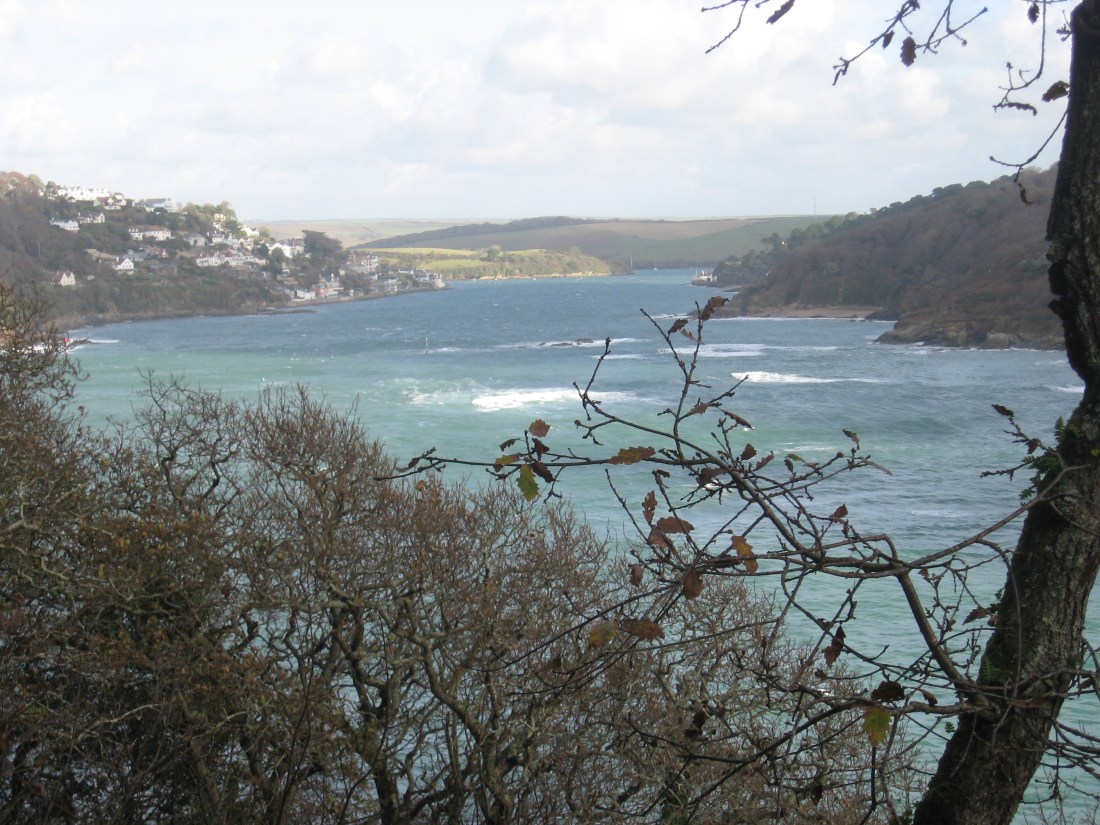
Heading round Starehole Bay we began to see striking rock formations. Coming out of strata at 45 degrees to the horizontal they looked eerie and fragile.
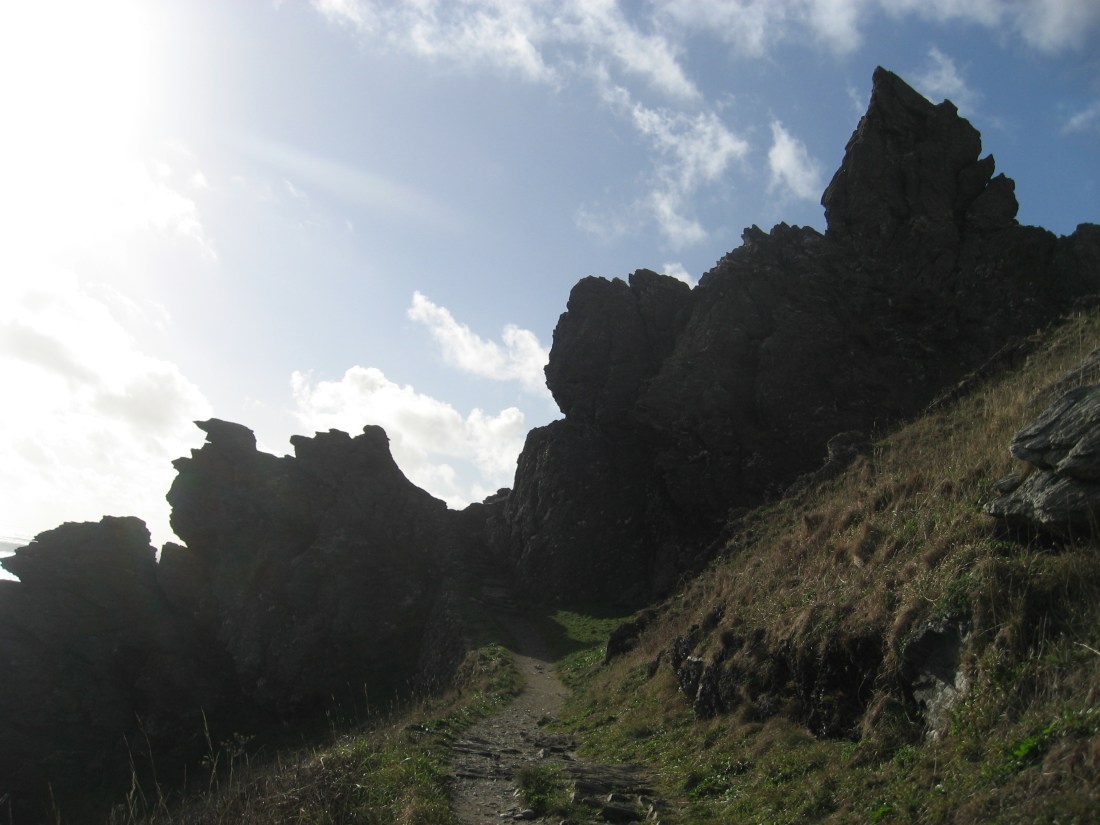

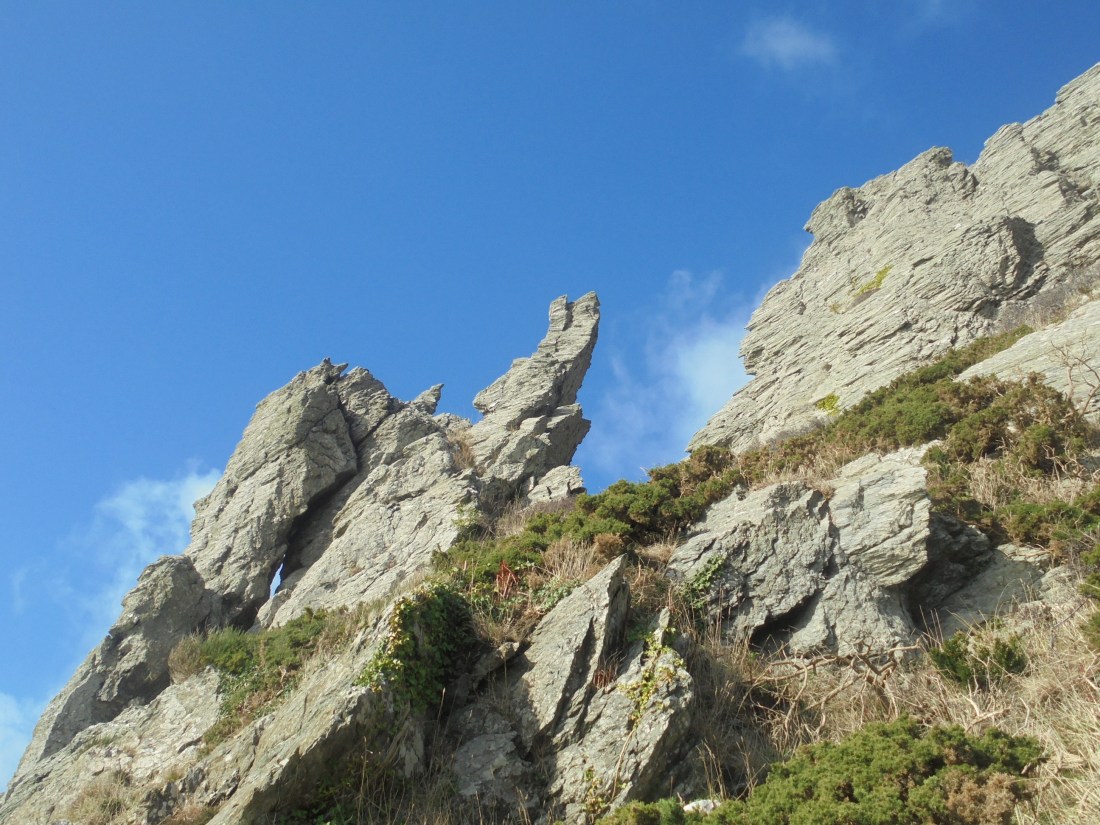
In one of the most dramatic periods in politics in our lives the sight of Donald Trump’s profile was an unwelcome reminder of the world beyond South Devon.
At Bolt Head the bench was a stylish marble rather than the normal gnarled wood. It would have been churlish not to sit on it.
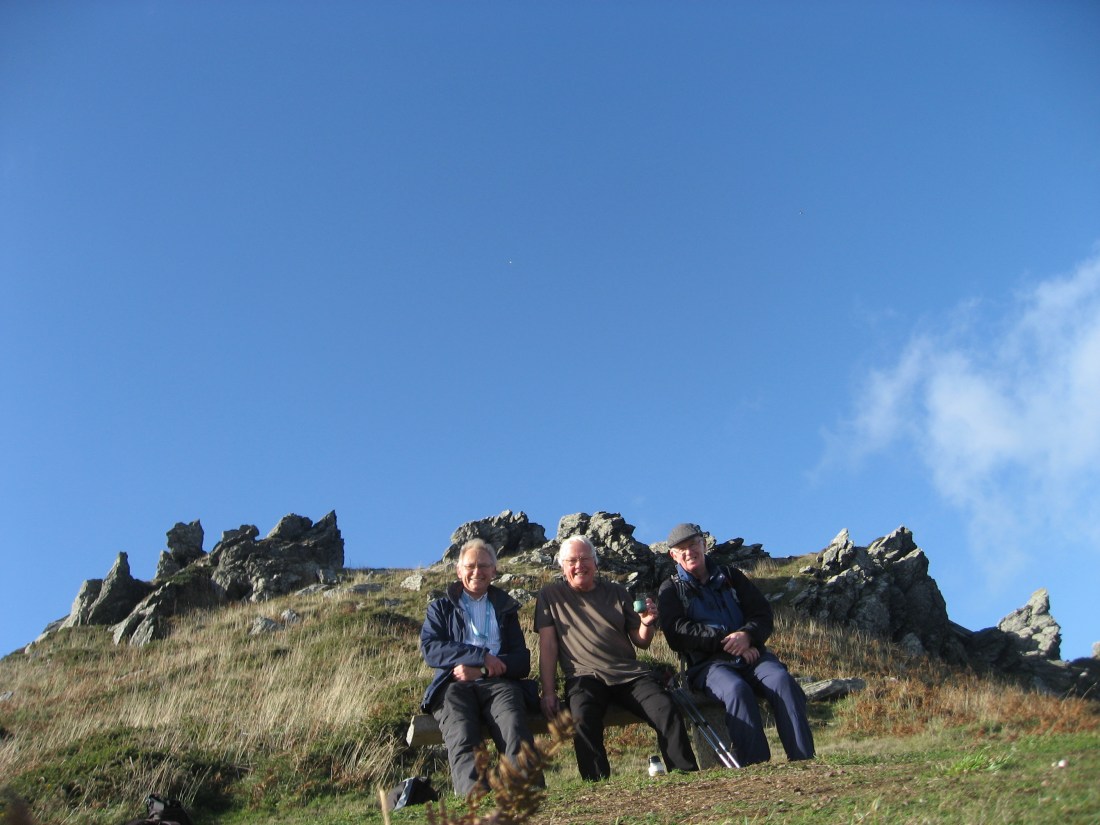
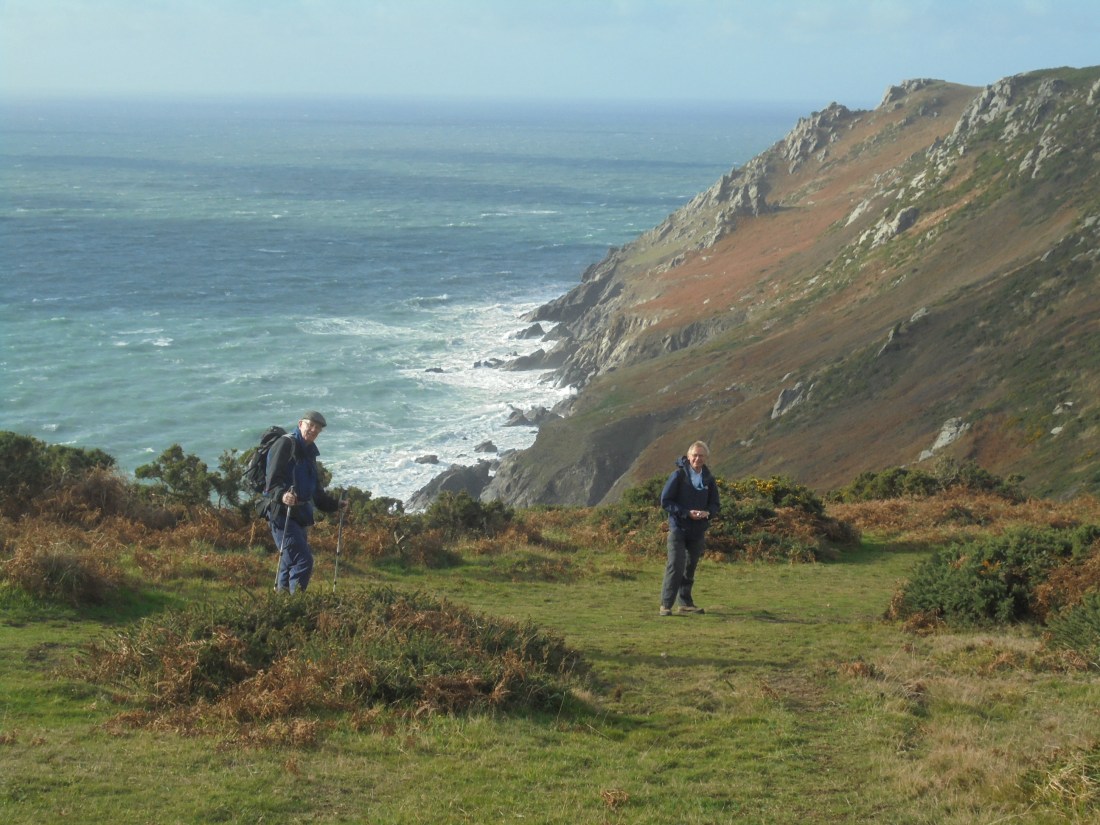
From Bolt Head we were walking West with wonderful views opening up. The path is so variable: here the walking was easy mainly on grazed grass with less drama than usual. But every turn gave us a fresh horizon. By now the wind had strengthened and at one stage it was blowing us up the hill, the only time it was completely benign.
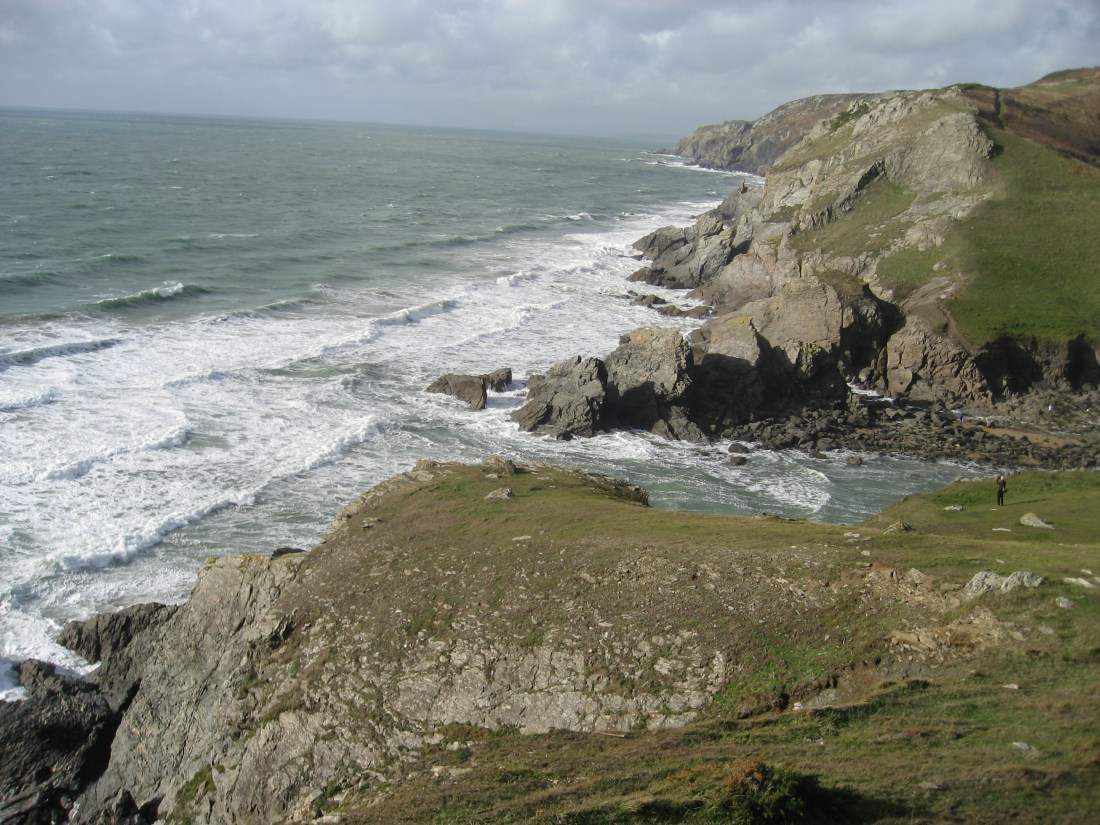
We came over a rise and in front of us was a tight cove with a small beach, Soar Mill Cove, the ideal place for a quick and sheltered lunch.


We came out of the cove into the full force of the increasing wind. The forecast gusts of 40 mph arrived to entertain us as we climbed to the top of Cathole Cliff. There was a debate but no conclusion about whether this slope was on a par with Warbarrow Bay in Dorset.
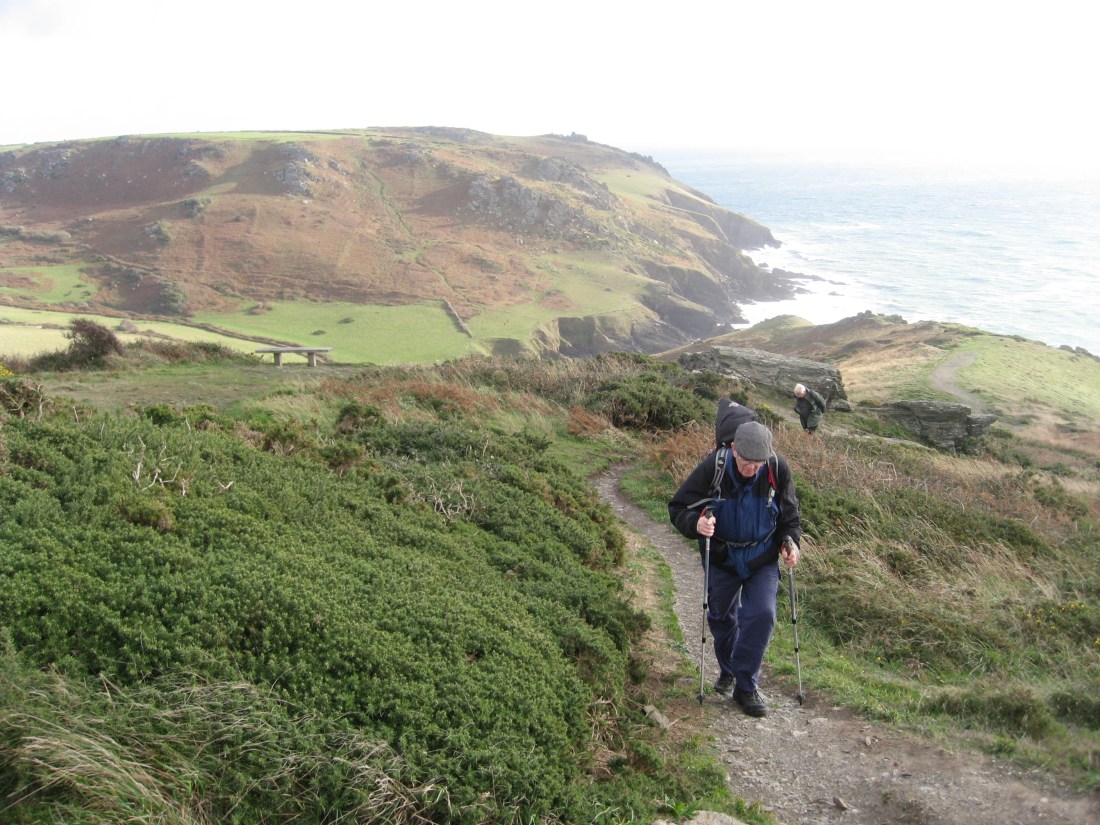
One effect of the wind was that all the birds had wisely stayed at home, but the plants stayed in place so we were able to review what we thought was Sea Pink.


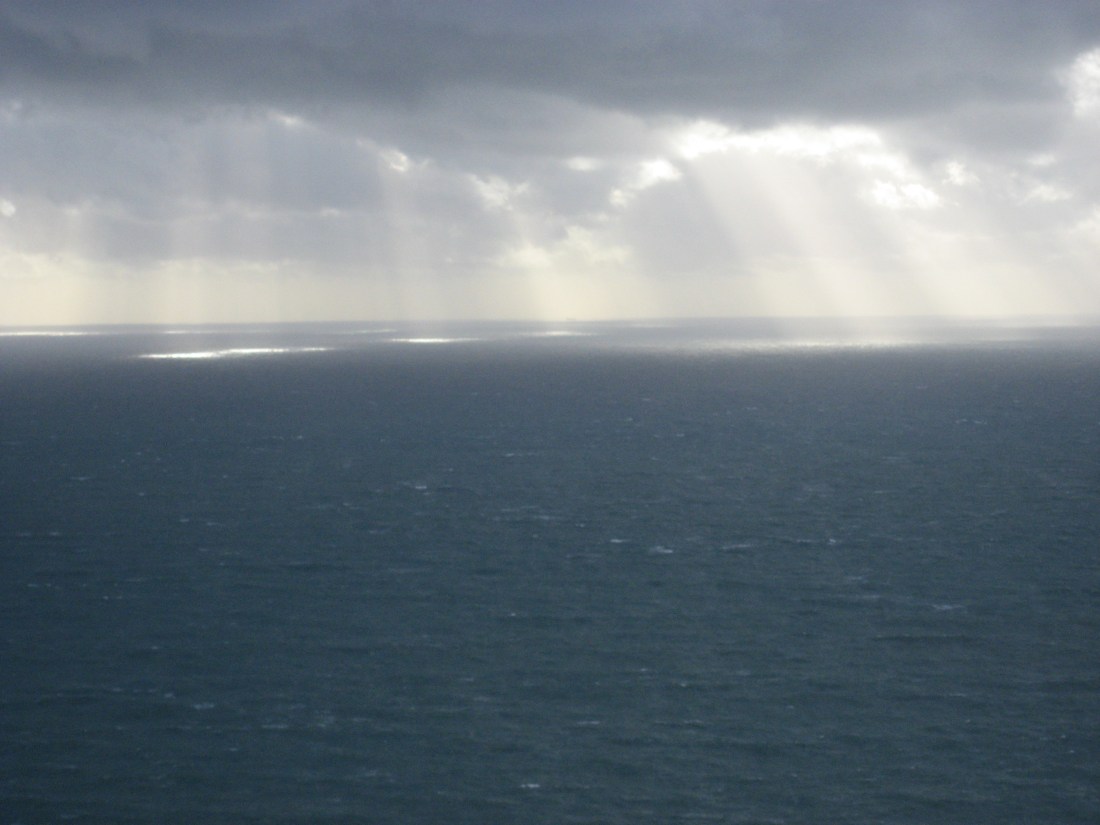
Getting to Bolberry Down gave us more springy grass to walk on. As we came over the top we could suddenly see Hope Cove to our right; ahead of us in the distance was Burgh Island beloved of Agatha Christie; to our left shafts of sunlight broke through the cloud and lit up the sea. It was a brilliant vista on a windy November afternoon.
By the time we got to Bolt Tail the wind was blowing sharp shards of rain so that we managed to miss the Iron Age fort altogether. However, we thought we had identified Yeovil Rock which was a surprise for Richard and Dugald. Dugald surmised that the rock had been responsible for a number of shipwrecks, an assertion Martin accepted without question – unusual for such an analytical person.
Notable shipwrecks included the sinking of the San Pedro el Mayor, a hospital ship from the Spanish Armada: apparently this was the only landing in England from the Armada. Nearly two hundred years later HMS Ramillies sank off Bolt Tail with the loss of 700 lives. Twenty of the crew survived by clambering onto the rocks. Would the appalling loss of life have been reduced if the crew had all been able to swim?
Hope Cove is home to a delightful small village and we were glad to be there in the middle of the afternoon. We had enjoyed a day of good walking and great views taking in the rolling landscape of South Hams. In spite of the forecast we had mainly stayed dry albeit somewhat blown about.

After collecting cars we were off to Kathryn’s Airbnb where we were made very welcome. But there had been some arguments triggered in the family by the last blog. They related to whether the estuary embracing Salcombe and Kingsbridge was indeed a ria. We had relied on Wikipedia for this information so we needed to dig deeper for an authoritative definition of a ria – and indeed the status of the estuary/ria. Both Devon County Council and the website for the South Devon AONB think the estuary is a ria so we rest our case until the next discussion.
We went to the Ring of Bells in West Alvington again and had good fish and chips. Lightning took the power out occasionally and the rain tested the flat roof, but the fish was good. Refreshed by this and a good sleep totally uninterrupted by snoring, we had another brilliant cooked breakfast the next morning. We said goodbye to Kathryn and were off to the fray again.
As soon as we set off from Hope Cove again Martin met a very chirpy robin which seemed quite happy to talk to him for the rest of the morning.

But we had to say goodbye and move on. Immediately after the robin we saw a very high risk project extending one of the local hotels. It did look as though one loud sneeze would bring the whole lot down.

The village is small and attractive with small houses rising from the harbour, and there’s a large anchor for Martin to lean on.


An hour later we were coming into Thurslestone with its signature keyhole rock.

Dugald reminisced about holidays here as a child staying with the Straton family. The breakers and the wide bay looked exactly the same. We could now see Burgh Island more clearly with the tractor ferry plying its trade to and from the island at high tide. One of Agatha Christie’s Poirot novels was set on the island and it was probably the inspiration for And then there were none. Other famous visitors included Sir Winston Churchill and Noel Coward. The tractor can be seen ploughing across if you look carefully.

In the middle of Thurlestone Sand a large area of reedbeds nudged the beach without directly joining it. This is the second largest “ley” in Devon and a well-protected haven for birds. Even in this haven the birds were keeping their heads down in the blustery weather.
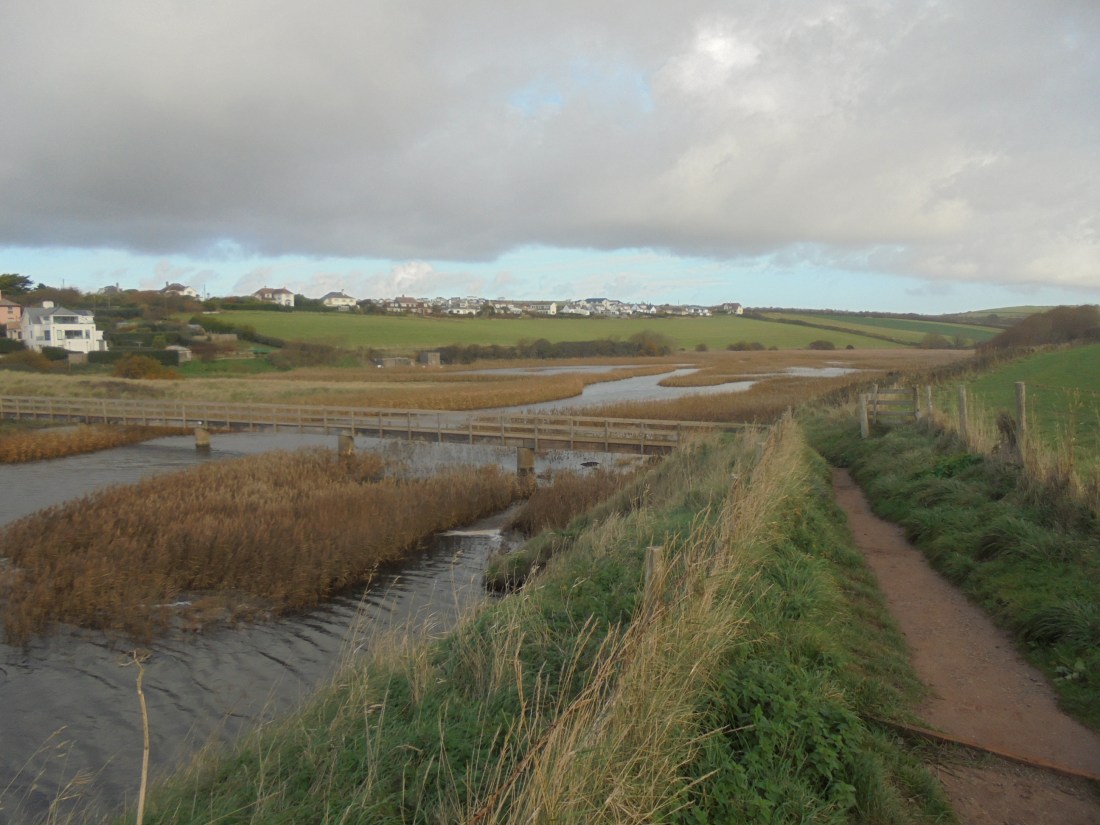
Walking beyond Thurlestone we were adjacent to a long golf course. The golfers were out in force in spite of the wind and they had to put a fair amount of offset into their shots to beat the drift. But when asked if this was challenging the nonchalant answer was “This is nothing”. With a heroic attitude like that how could Brexit fail? The local dogs were showing similar resilience and taking their owners for a good walk to keep them in shape. We were soon rounding the next headland and starting up the estuary of the River Avon.

The seasonal ferry had long since packed up for the winter and the guide stated IN CAPITAL LETTERS that on no account should a crossing be attempted. Martin pointed out that Bantham Ham is made up of sand dunes, the first we had seen on the coast since Studland. We then had a quick two car shuffle to get round the estuary and back to Bigbury-on-Sea on the other side, arriving there just after midday.
Heading West the path had more rises and falls than the gentle walk earlier, but we were soon leaving Burgh Island and Poirot behind.
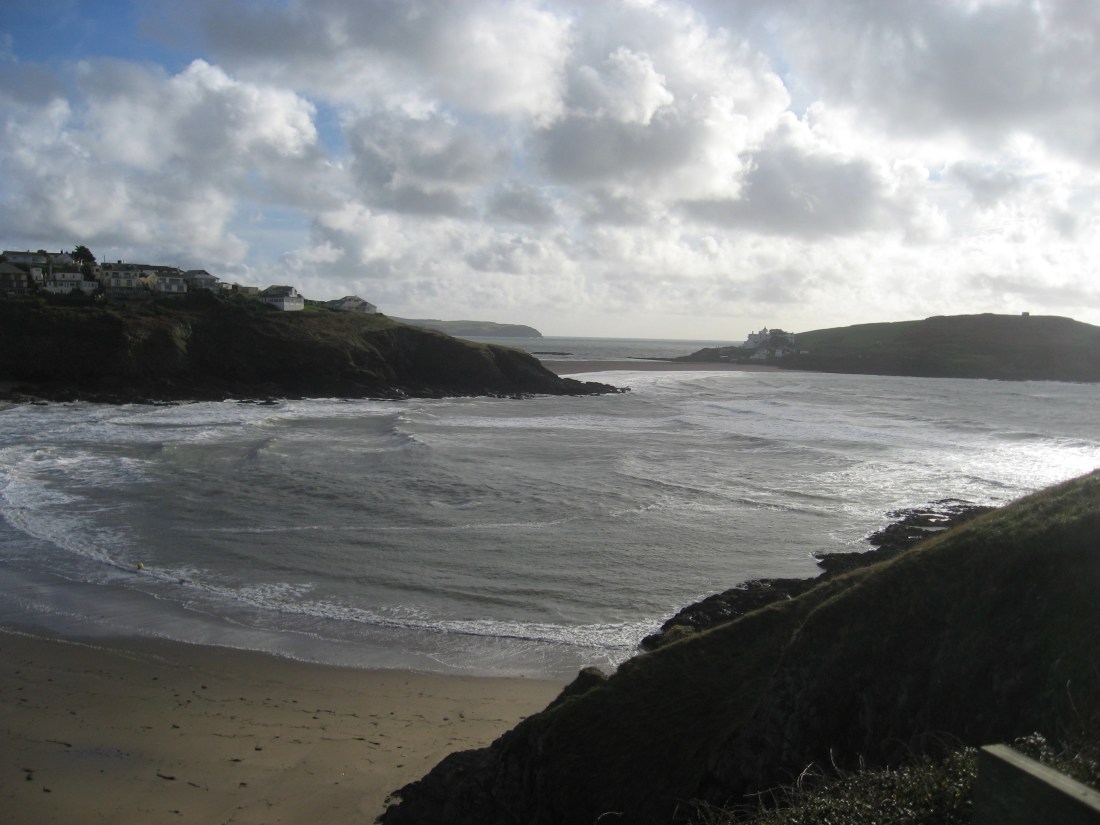
Further on the rock type changed to what we thought must be igneous formations. The hard faces of the rock reflected the light in an almost silver colour which was strikingly different from any earlier view.

In spite of the ups and downs the benign grassy nature of the path made this a pleasant walk.

The sun stayed out and the wind was brisk rather than violent. It made for a quick passage to the mouth of the River Erme.

By mid afternoon we were looking straight up the estuary at low water with the sun dropping fast. Before reaching the car we had to go and look at the recommended wading route to cross the river. It was easy to see how the crossing could be made. As we finished a group portrait a man called from the other side “You’ll be fine” – well yes, but also wet and cold if we did. It was too wet to wade – and so were we!
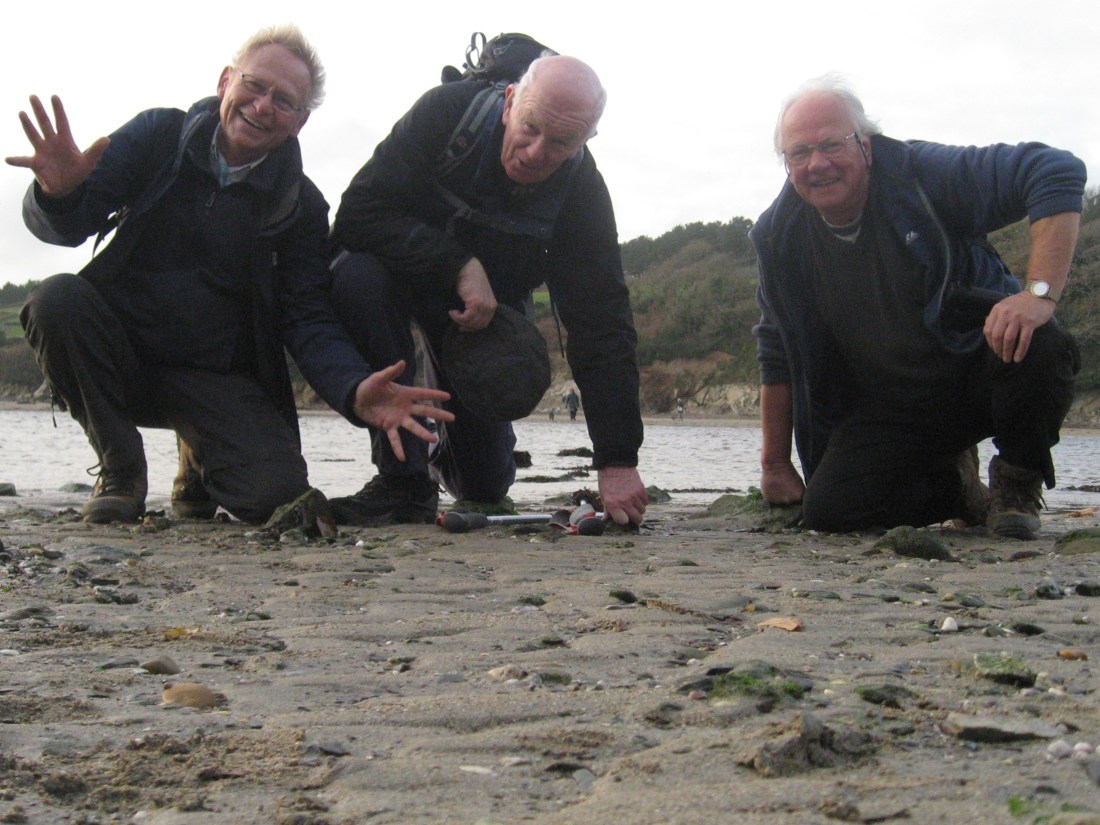
At the end of our November outing we were just 23 miles from Cornwall. Nevertheless we agreed that it was time to pack up for the year. But our wives are made of sterner stuff and made it clear they thought this was unacceptable defeatism. So it looks as though there will be another walk in December.
In the meantime Martin had a happy reunion with his crowd of cirl buntings the next day at East Prawle. They had obviously waited patiently for his return.


 Pensioners on The Path