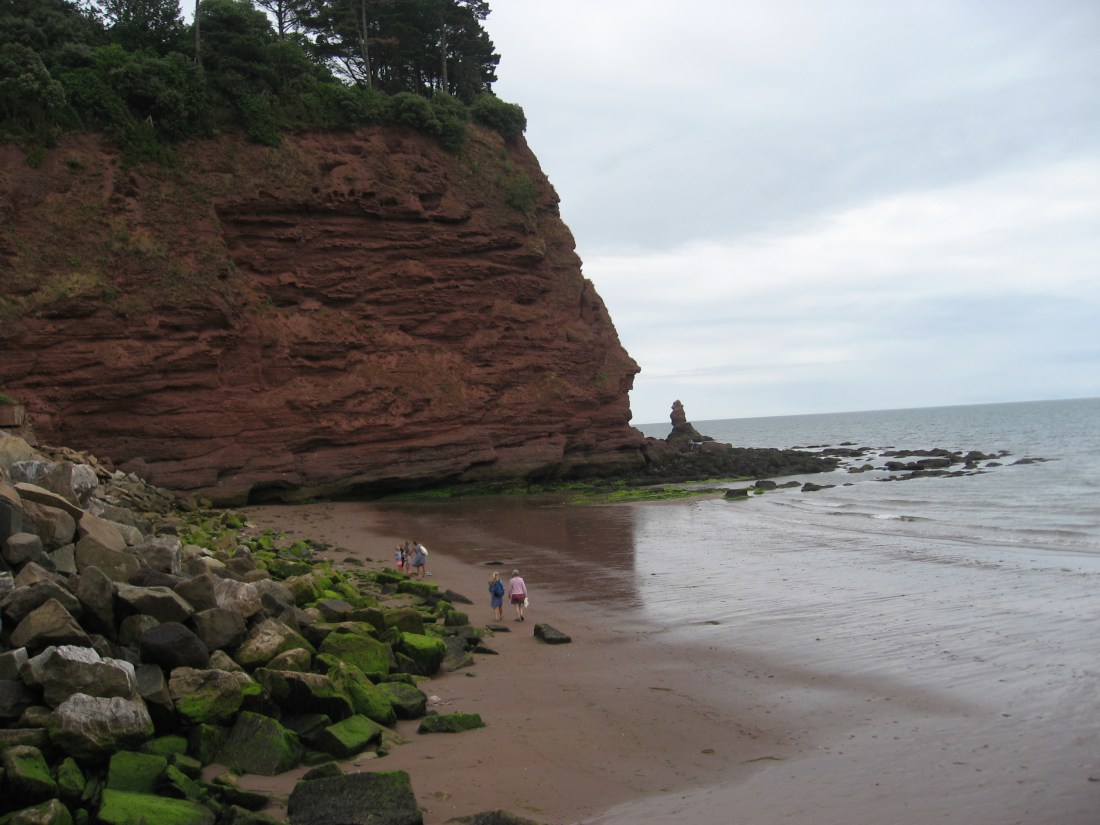
In our second weekend of walking in July the old engineering adage “In emergency read instructions” was apt. We did not do our due diligence very well. We were a threesome again with Martin rejoining. When we arrived at Starcross we made the startling discovery within a couple of minutes that Martin is a railway nut as well as a wildlife buff. He does not know nearly as much about railways as wildlife, but he gets very excited by them. Starcross was therefore a great walking place with GWR mainline and local trains passing (zooming being an overstatement for this creaking bit of infrastructure) every few minutes.

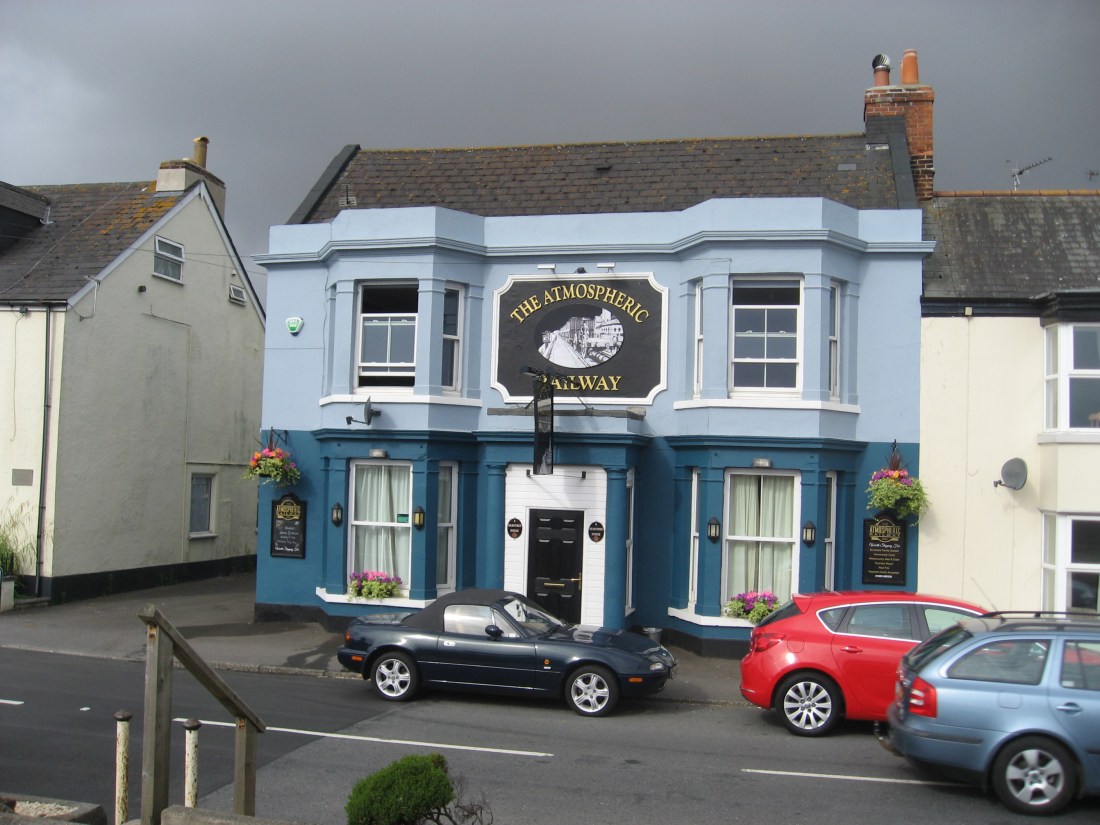
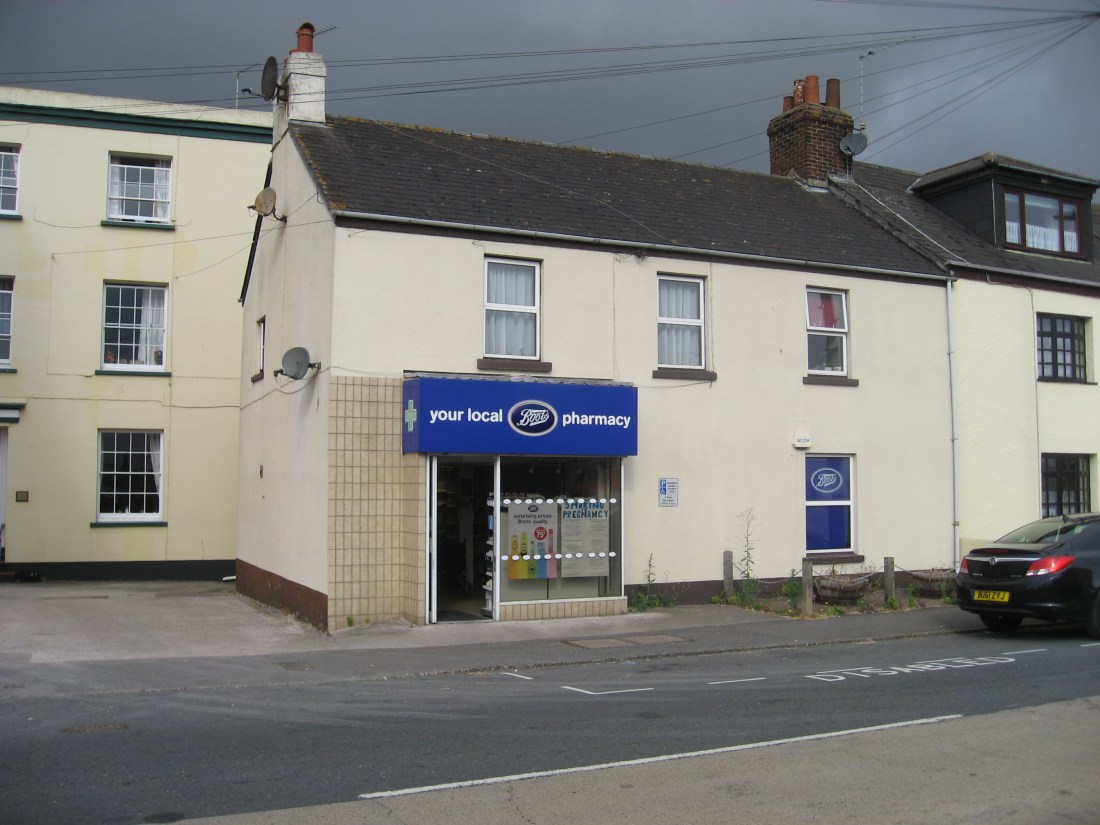
Timing was good because a low pressure system had pushed the extreme heat East and the temperature was much more bearable than the recent heatwave. We set off along Starcross high street and passed the Atmospheric Railway pub and a tiny branch of Boots described as “sweet” by Martin. Not really sure a branch of Boots can be sweet.
Then we were by the rather crumbling sandstone remains of one of Brunel’s atmospheric railway pumping houses. Brunel’s eccentric and expensive system of using a vacuum pipe to drag his trains along supported a service for about a year in 1848. It was rapidly abandoned and the blame was firmly attached to rats eating the oiled leather seal that was supposed to hold in the vacuum. But the rats may have been convenient scapegoats for a system that was never going to work – with apologies for the species mix.

Further on we were able to cross the line on a path and this was a must for Martin. We are leaving out the photo of him sitting on the track drinking from his trademark butterfly flask because it might upset Sally.

The road diverged from the track soon afterwards and we went round a very smelly inlet with decrepit boats, a contrast with the estuary which is full of smart boats on swinging moorings. Here Martin pointed out a group of mallard, male and female, with the males in non-breeding plumage.


Passing below Eastdon House we felt small drops that felt like rain – a new experience for the last few weeks. 15 minutes later we got the real thing with the very strong smell of dust dampened by the rain. The path then crossed the railway with a footbridge and we were alongside the line all the way to Dawlish.
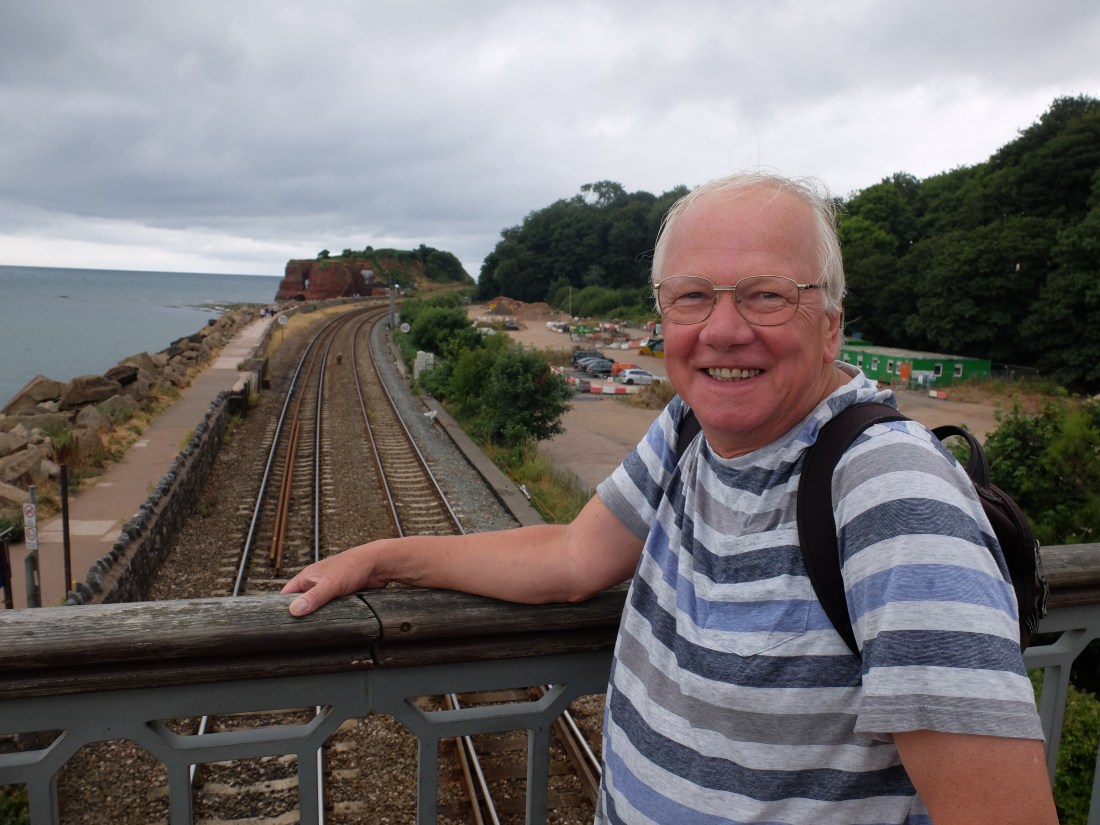
Behind Martin in the distance is the Elephant Rock. We talked about the GWR posters that advertised the attractions of Devon and Cornwall but could not find one that depicted the rock itself.
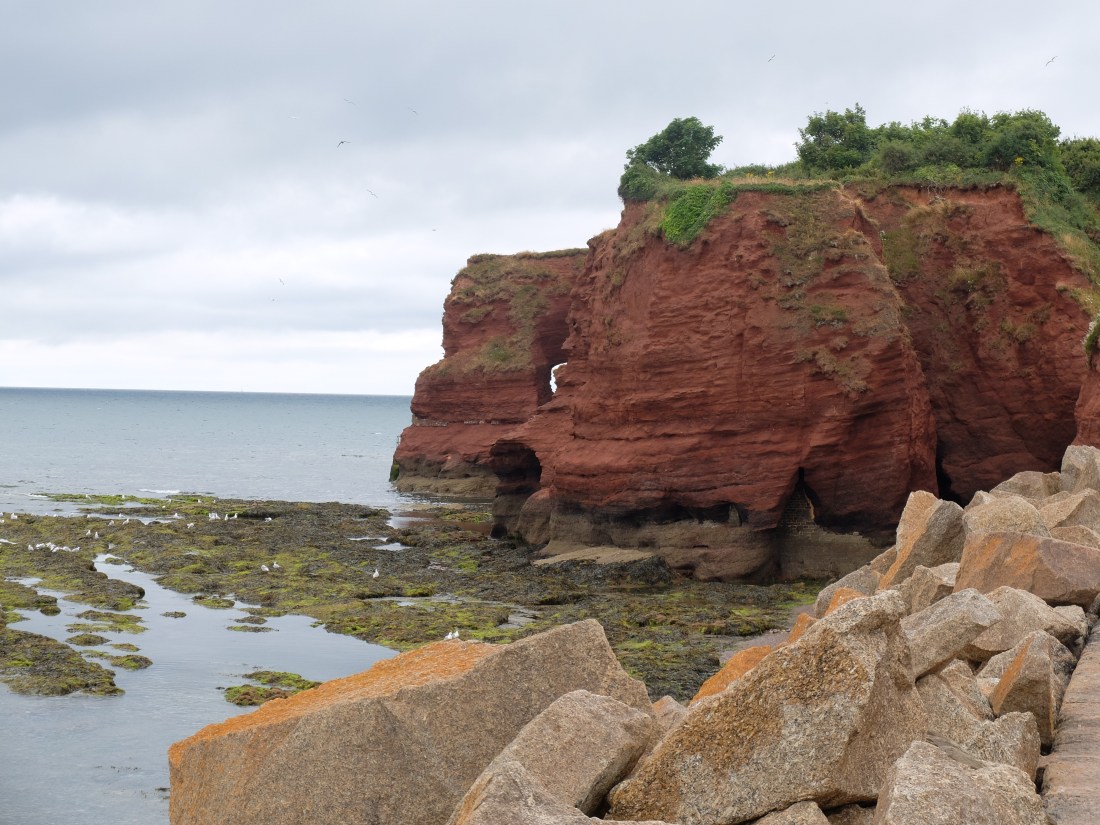
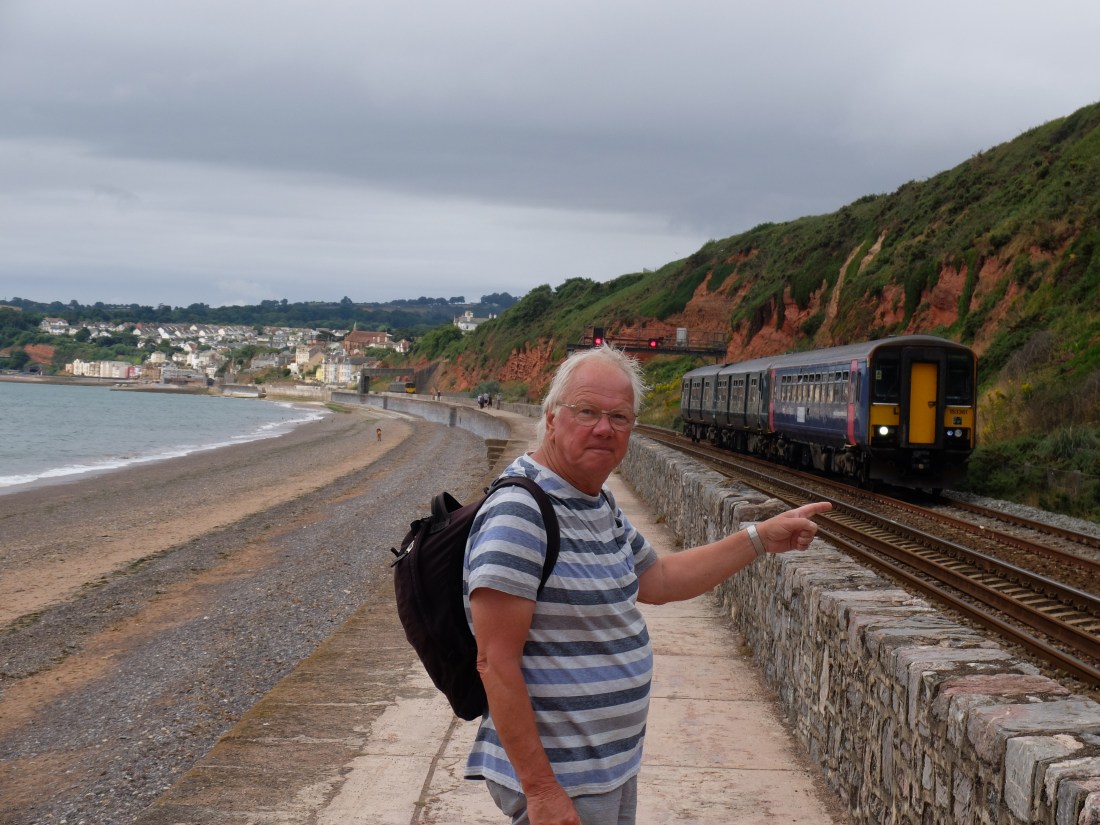
After Elephant Rock we were on the long sweep of the line through Dawlish. Trains passed to general admiration, but not the romance depicted in the GWR steam images.


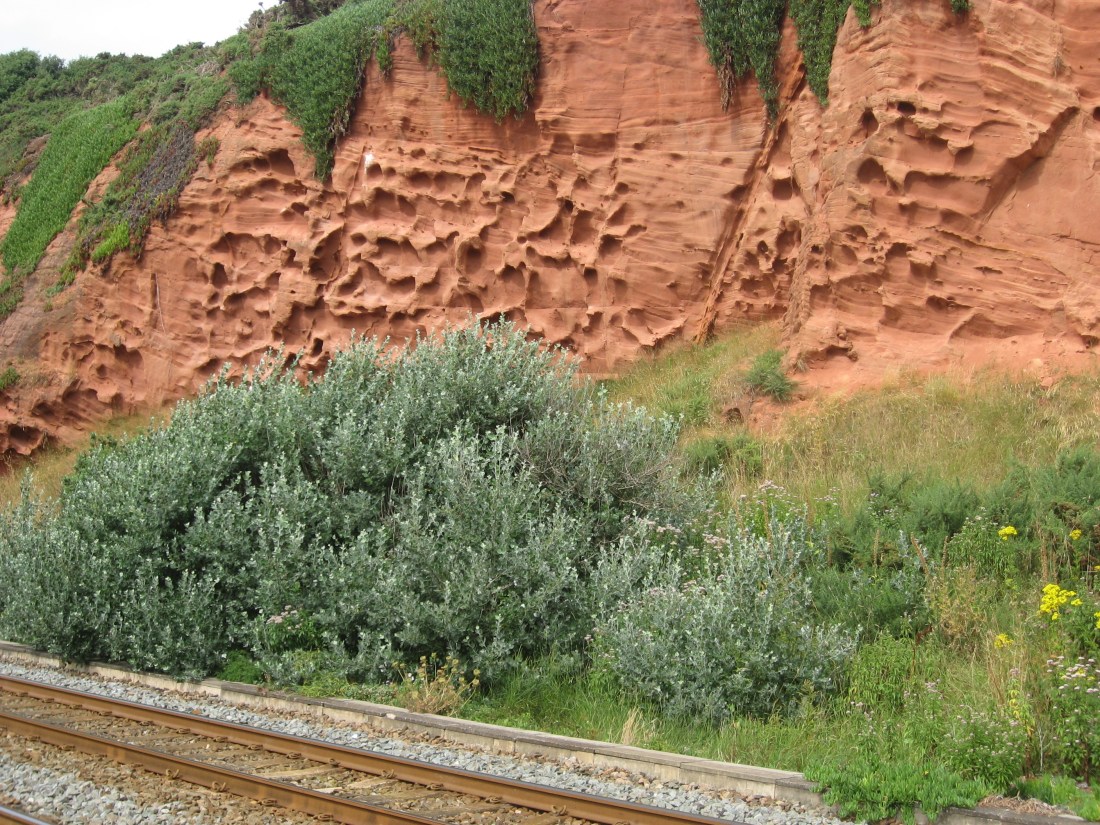
Behind the railway the red sandstone cliff is carved in interesting shapes by the wind, water and storms.

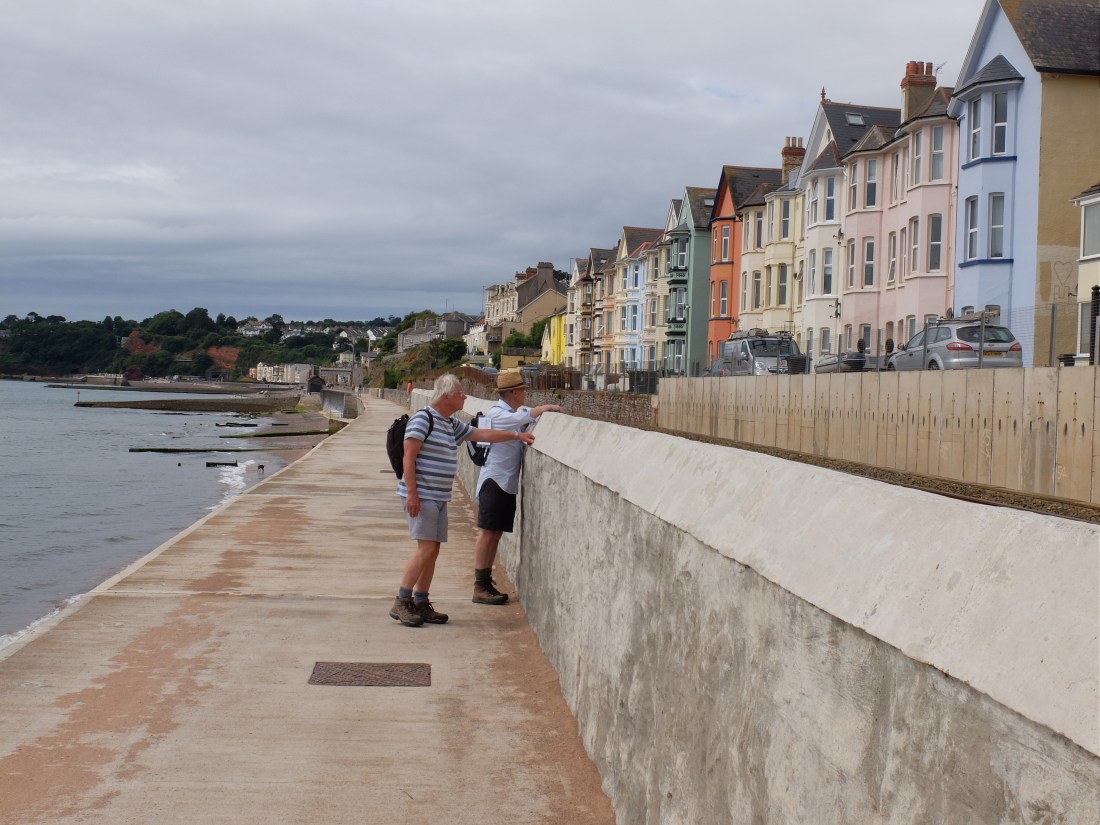
Getting towards Dawlish Station we passed the section of the line that was washed away in the storm in February 2014 and left the South West cut off for two months. The ends of this section are clear, but surprisingly there is nothing to record the event. It is a reminder of the enormous engineering task of building this line in the 1840s. Dawlish itself is a witness to the change produced by the railway with Victorian houses dominant in what was a very small village before.

Enthusiasm for the railway was temporarily put to one side in favour of a diversion to see the black swans of Dawlish. We saw just two adults and one young one.

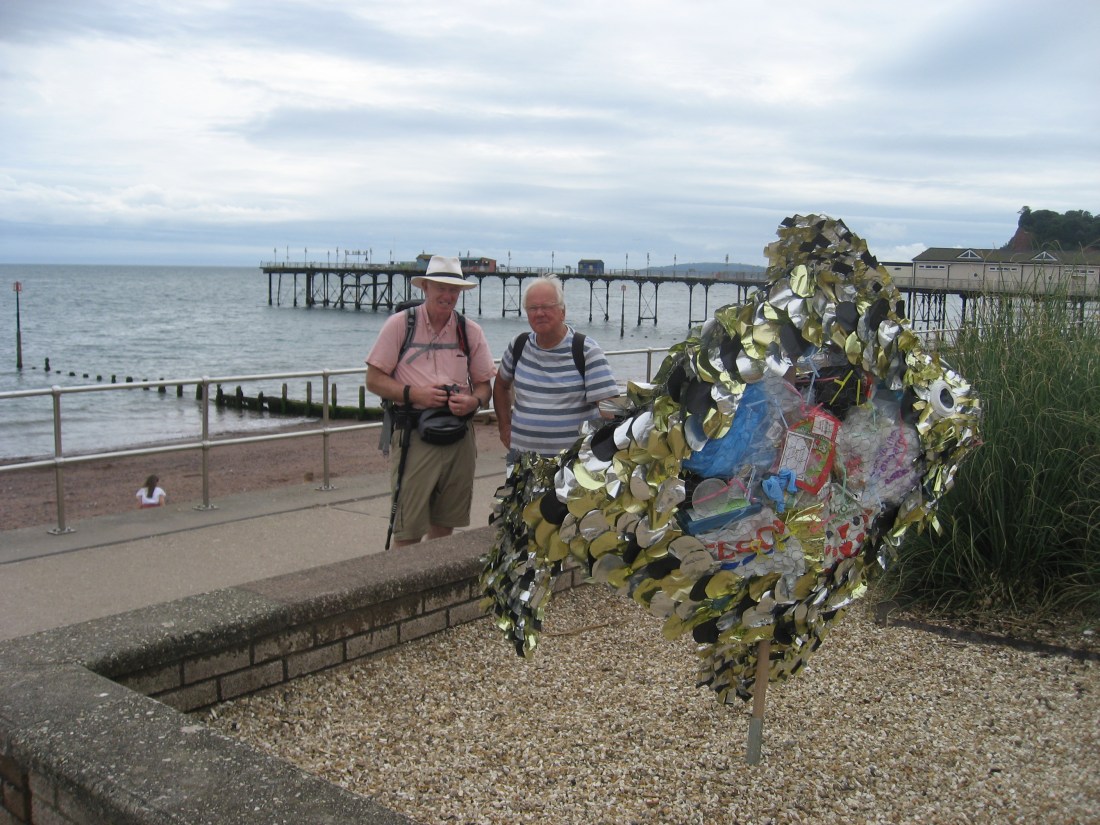
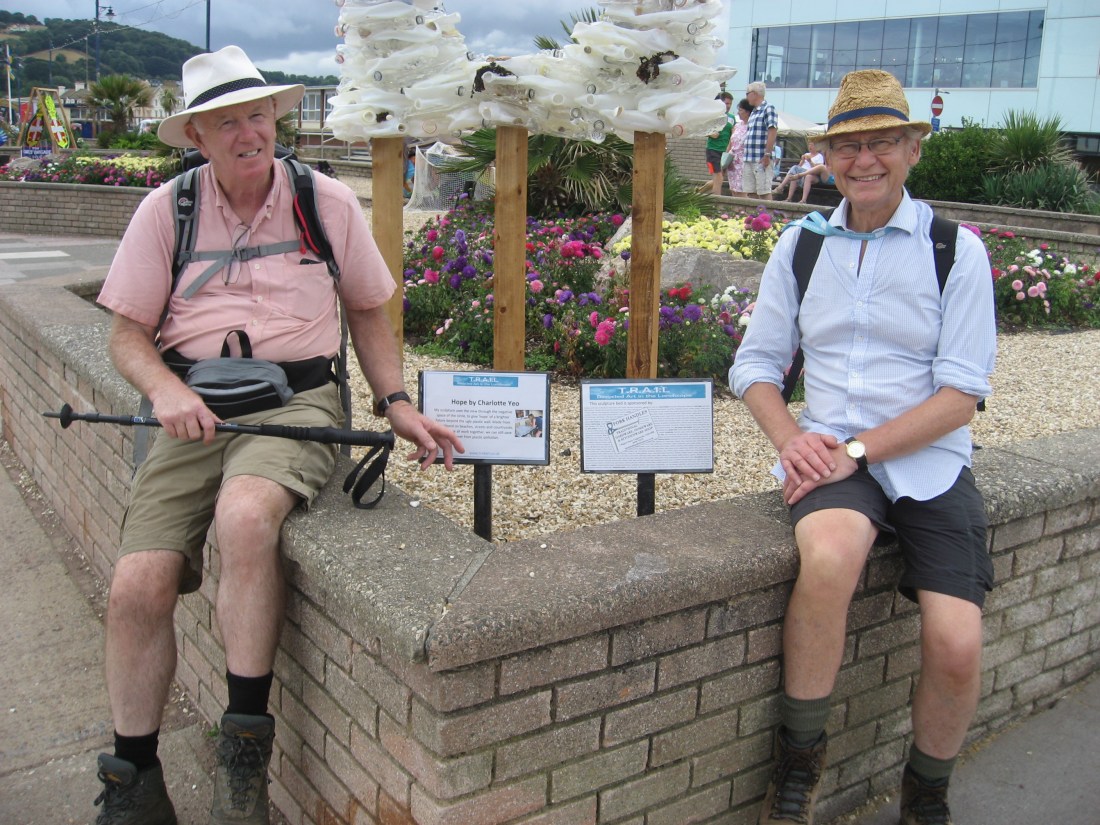
Back to the path and then goodbye to the railway up into open countryside. The unkempt overgrown pasture was the ideal habitat for Cirl Buntings according to Martin, but there were none to be seen. We remarked on the lack of butterflies so far, and almost immediately Martin was mobbed by a large number of them – the Pied Piper of butterflies. By lunchtime we were alongside the railway again briefly as we came into Teignmouth. The railway peeled off and we carried on along the front. The front was decked with plastic waste sculptures by organisations in the town emphasising the damage we are doing with plastic. Many of them were rather good – from the local primary school to the WI.

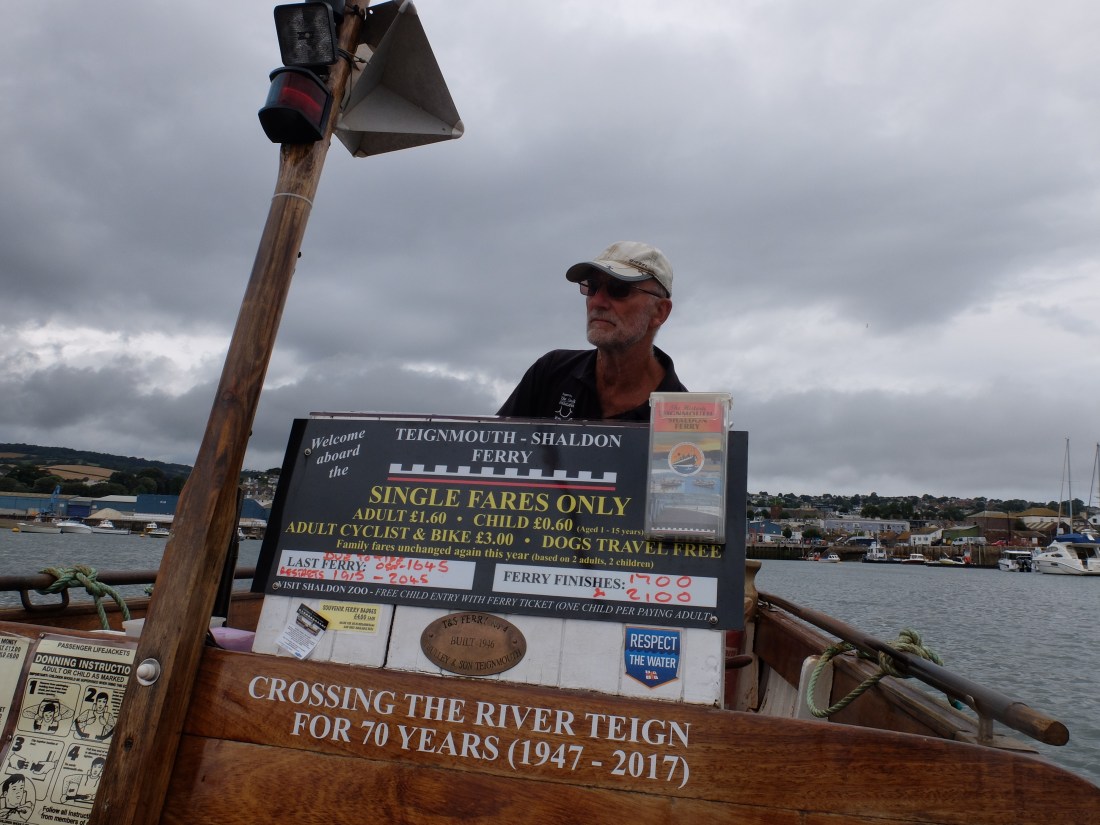
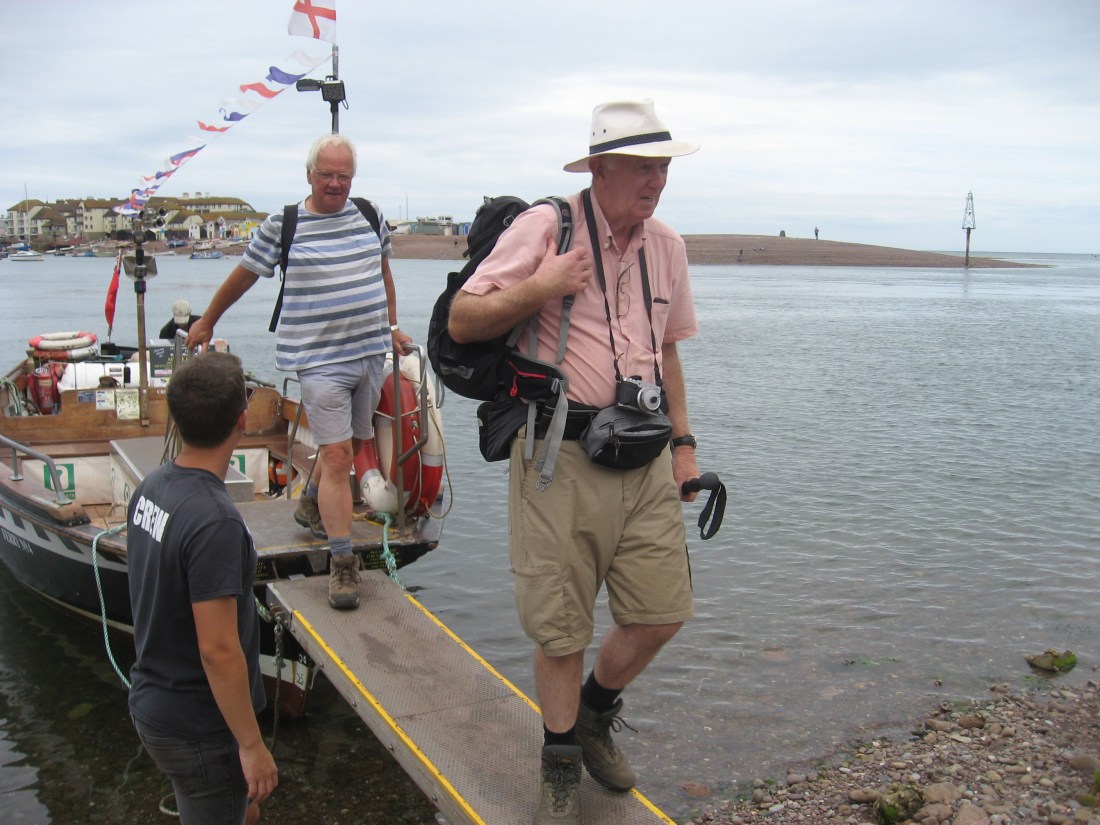
At the end of the front we eventually found the ferry crossing. The fish and chip man pointed out a large flag saying FERRY which was a bit of a clue. Very quickly the buccaneer decorated ferry turned up and dropped a boarding plank off its bow. We enjoyed the crossing with a skipper who looked as though he had been doing it since 1950. More prosaically he had been doing it one day a week for six years. But the boat was a real veteran having worked this crossing since 1947.

On the other side we had a pleasant lunch on a bench and congratulated ourselves on a successful morning. This is where we should have read the instructions: the morning had been successful and almost all flat. The guide says “There are some stiff gradients …. so be prepared for these.” We had not really taken this advice in and the next bit was gruelling.
After a steep climb out of the town we went through woodland dominated by holm oaks. It was now raining a bit more constantly. After this a couple of large switchbacks made us work for our distance after such an easy morning. Mid-afternoon we were on high ground and kept to it to avoid too many more switchbacks – ultimately self-defeating. We had to drop right down in order to climb again.
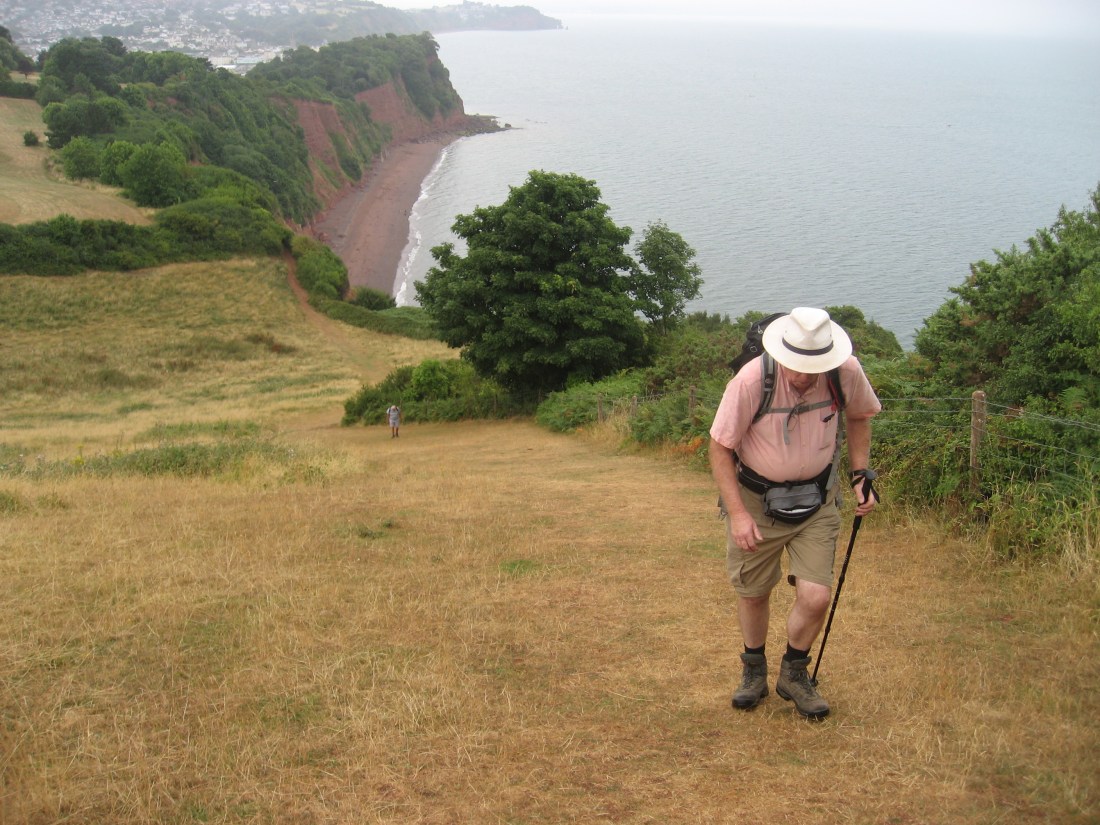
Martin’s bird sensors were still working though and in spite of the roller coaster path he heard a cirl bunting but could not see it. Later he heard buzzard chicks on the wing calling for food.
We arrived at Maidencombe to meet Wendy at about 4.30 and then had a very welcome drink at The Thatched Tavern. A local gave us good info about walking further and then walked out – this may have been the result of Dugald’s failure to provide a pint in exchange for info. But our friend was also very concerned about not going anywhere near Winfrith – although he was about 80 miles away. One result of this section of the walk is that Martin now has an irrational phobia of anywhere ending in “combe”.
Refreshed and ready for more stiff climbs we were back in the car park the next morning. It was sunny but quite cool – about 19 degrees – with a nice breeze. It was already a more propitious day for butterflies than the day before – with a Ringlet being an early sighting.

We had further stiff climbs with the path going up and down in very beautiful open woodland – sycamores and some beech.

There was also a change of tempo in the landscape – with lots of small inlets and coves all of them producing climbs to go round them. We were resting on a bench at the top of a climb when a small girl passing with her family remarked “That’s our bench”. Sorry!
On the top we were in more open ground approaching St Marychurch. At 11.00 we were suddenly in the town which is a suburb of Torquay. The wind freshened and was suddenly very strong. As quickly as we came in we were out of the town again in a steep and intimate valley with a Small Copper being our next sighting with a Comma shortly after. Thirty years ago this valley would have been closely grazed by beef cattle or sheep. Today its wild state has created a dense and interesting environment.
Dropping down we passed under the cliff railway installed by Otis in 1926, a bit of a change for a lift engineer.
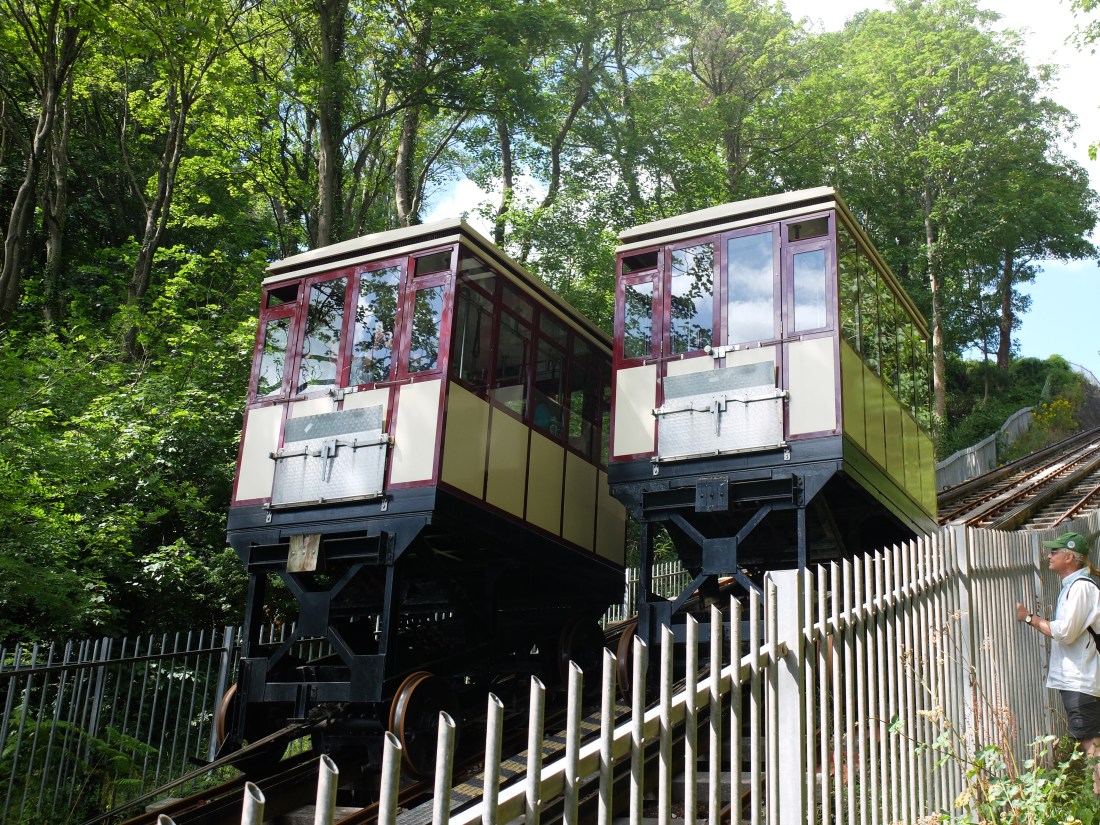
Below the railway we followed Babbacombe Beach.
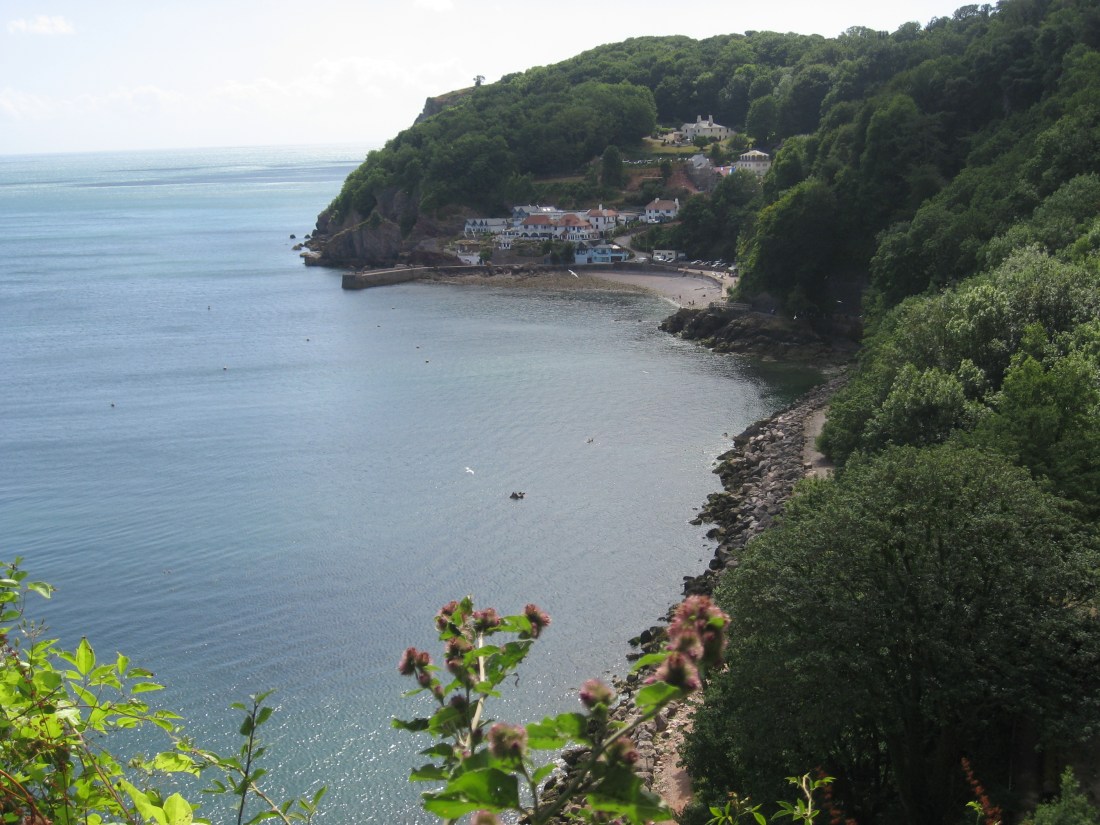
At the end of the beach another steep climb took us past the Cary Arms and out onto open ground on the cliff top heading for Hope’s Nose. There were more sightings – Grayling, Silver-washed Fritillary and a Peacock (butterfly – not bird) – as we passed Anstey Cove; and there were drops of rain. After lunch on a bench we went round the end of the headland and could immediately see the whole sweep of Torbay; and feel the impact of the strong SW wind – trying to blow away the heatwave.
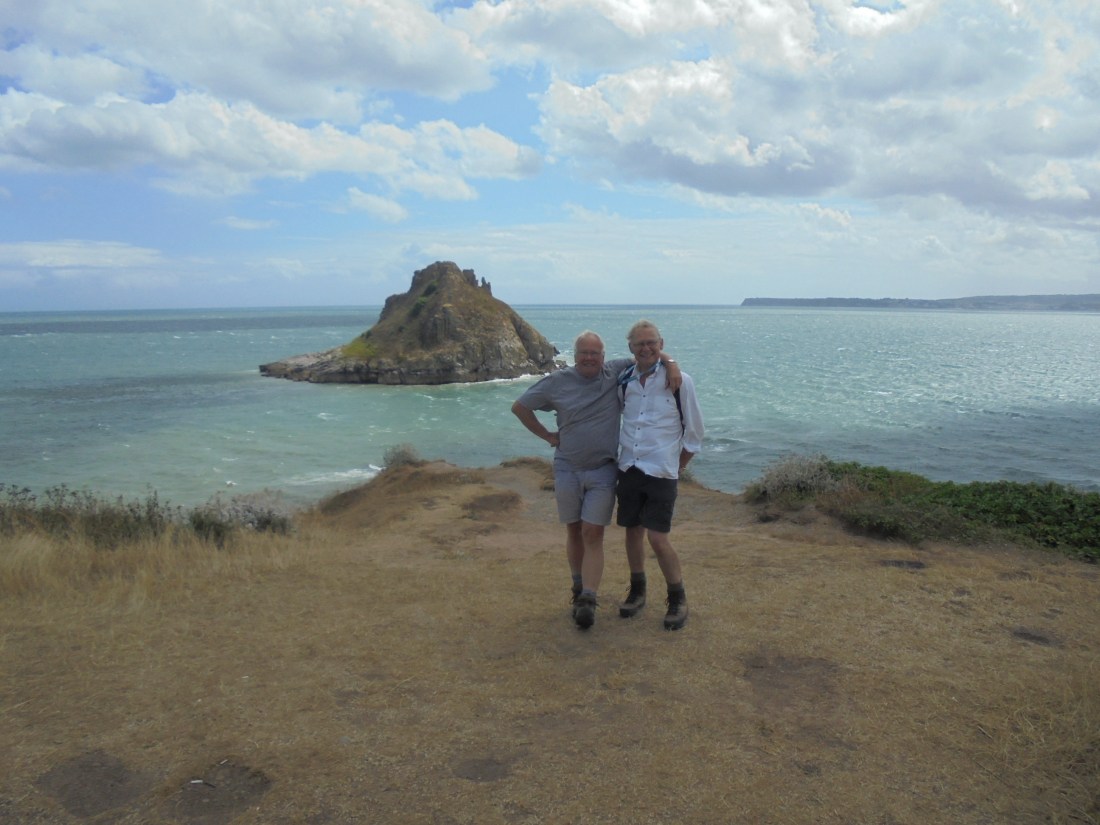
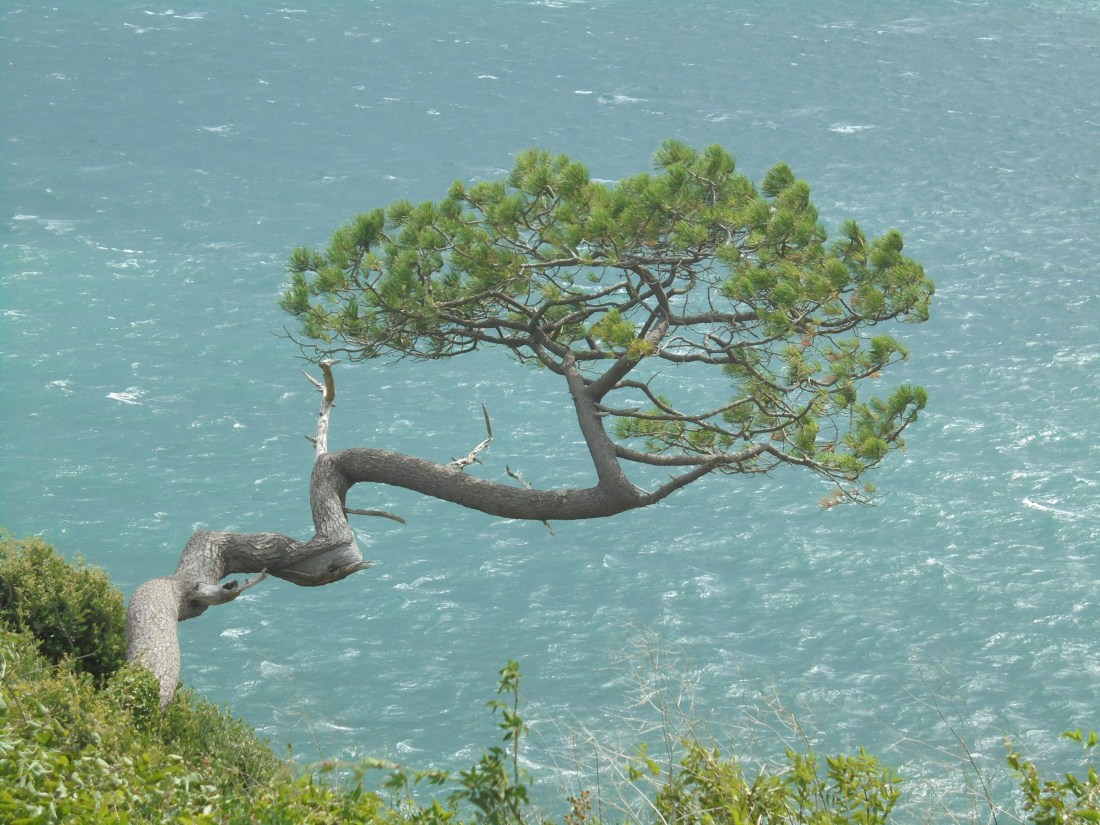
There are lots of Scots Pines as in Canford Cliffs and on the Isle of Wight. Walking along the fairly craggy path we looked out on Thatcher’s Rock, the source of inspiration for many Tory conference speakers looking for something to say. The image of Richard and Martin in front of the rock is memorable but doesn’t seem to have any political implications.
Getting towards our meeting place near the marina a picture of Martin in front of Living Coasts, a marine extension of Paignton Zoo, was a must for his scrapbook.

At 3.30 we arrived relieved at Torquay Marina car park. This was the end of our walk and we adjourned for a non-alcoholic drink. We met up with Wendy and Anne who had been eating crab sandwiches round the corner. Cue heavy rain – and the proposition that the team will have to go by train next time!
We had two enjoyable days, but the climbs made us check the next bit more carefully. The section from Brixham to Dartmouth is deemed strenuous and the contours on the map certainly suggest it is. The good news is that we now have less than 500 miles to go!

 Pensioners on The Path