
We did no walking in June, so were doubly keen to get going again in July. But by the middle of the month the hot spell had started. So the plan was modified to two short walks. Anne and Richard had celebrated their 40th anniversary the previous weekend and Anne said she wanted to celebrate the 41st, so being sensible was in order. To put our hot weather walking in context, the day before Anderson and Isner had battled for six and a half hours in their semi-final; and on the day of our walk Djokovic and Nadal were keeping very even scores in their delayed semi-final. It was also the Trump weekend although he avoided the SW Coast Path.
Wendy delivered us to Sidmouth and we set off with her and Bertie along the sunny Sidmouth seafront.
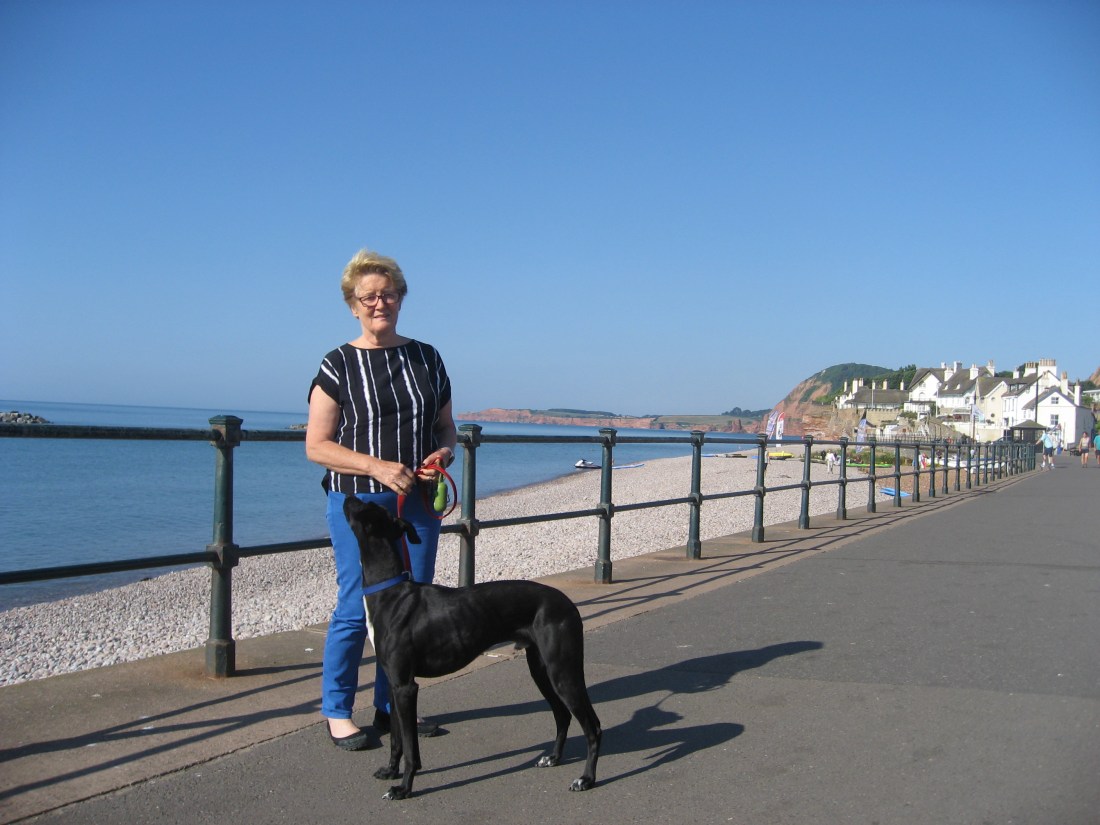
The boardwalk follows the bottom of the low cliffs of red sandstone along to Jacob’s Ladder. There Wendy turned round to take Bertie back home. He was very unimpressed by this change and kept on looking over his shoulder as we went on. Richard’s first Red Admiral greeted him as we climbed out of the town. First on road and then through shaded woodland with steps we got to Peak Hill.
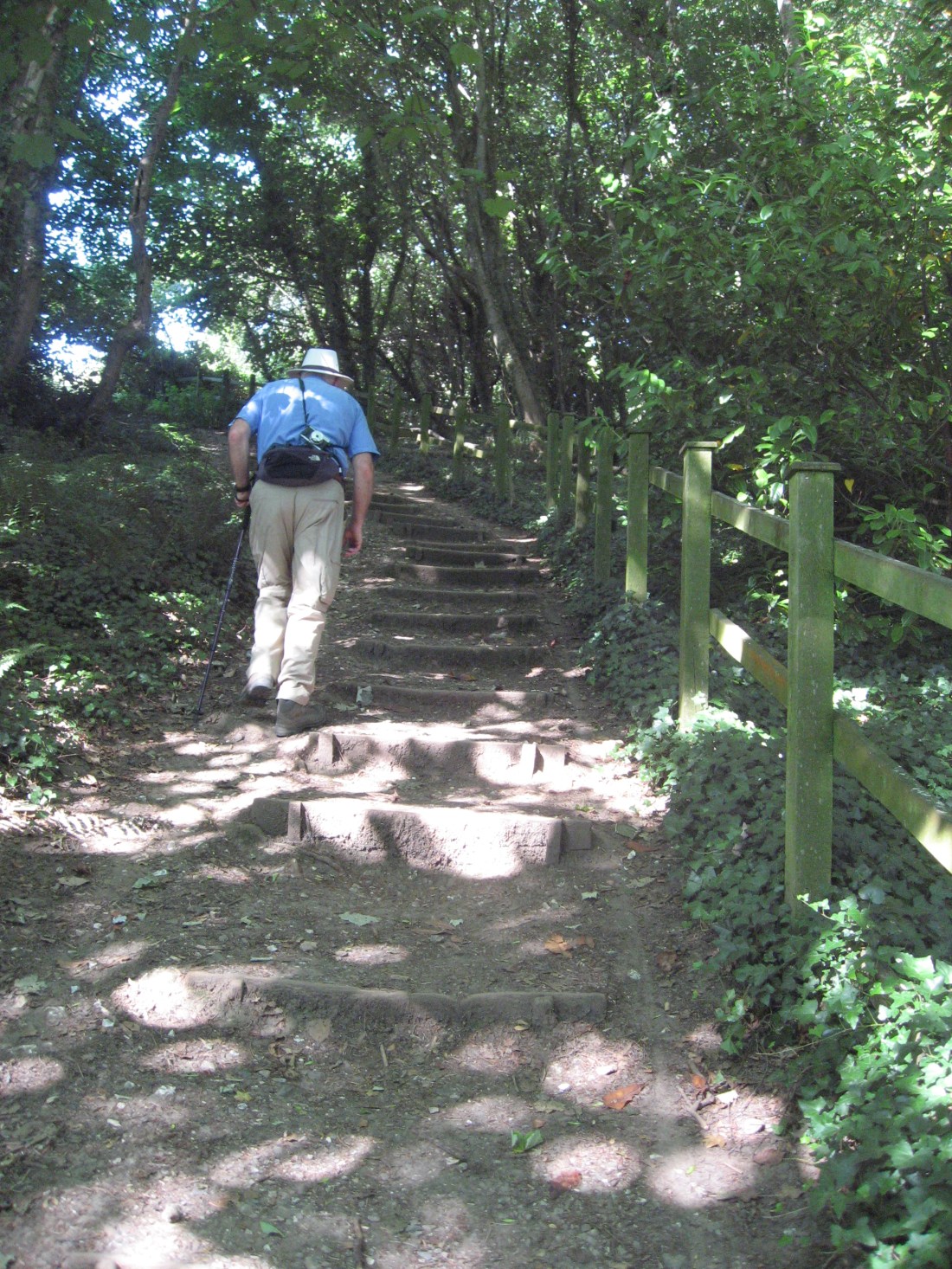
As we walked along the top the scorched brown grass was a new and alien feature of the path, which normally seems to suffer from an excess of moisture. We left the main path to climb up to High Peak, flushing out a buzzard no more than 10 metres away. It was the site of earthworks from before and after the Roman occupation. This feels more explicable if one remembers that a lot the cliff has fallen into the sea since then.

On High Peak there were swarms of butterflies enhancing the view. Indeed it was a very busy butterfly weekend and Richard spotted ten species – small, large, green-veined Whites, Gatekeeper, Meadow Brown, Ringlet, Red Admiral, Peacock and Silver Washed Fritillary.
By 1030 we were walking through Ladram Park towards the bay and its striking red stacks.
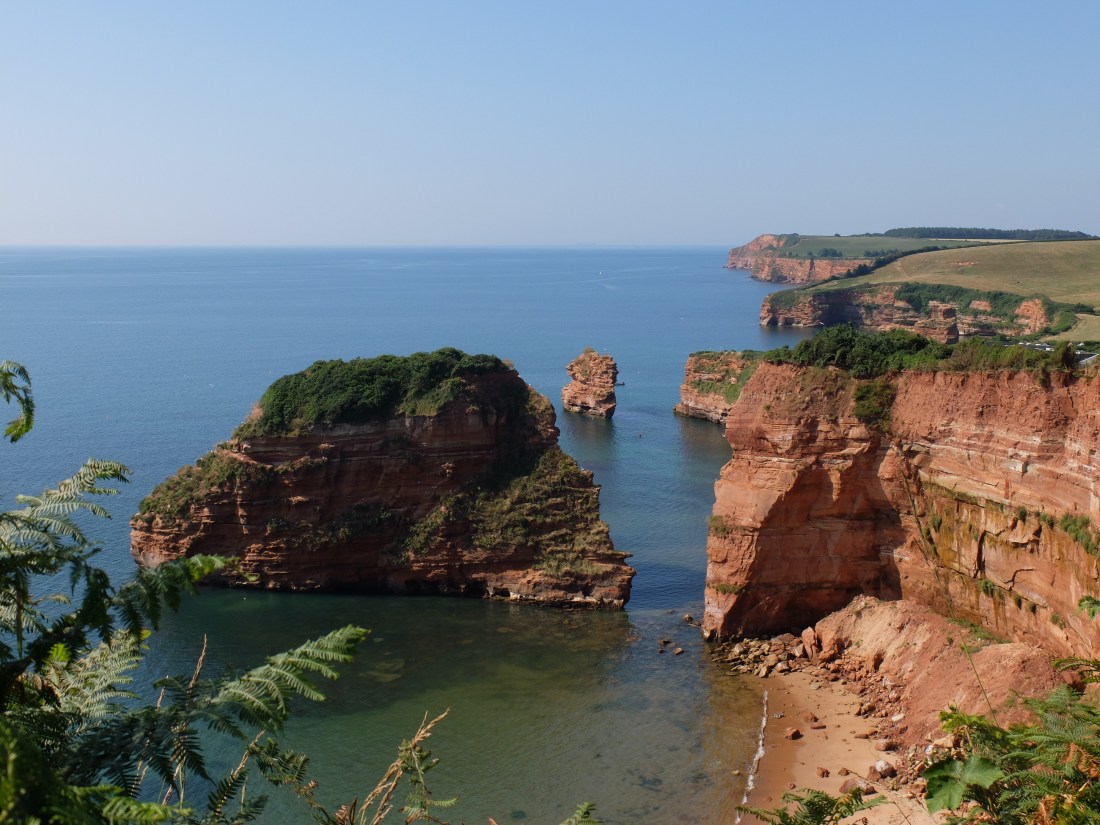
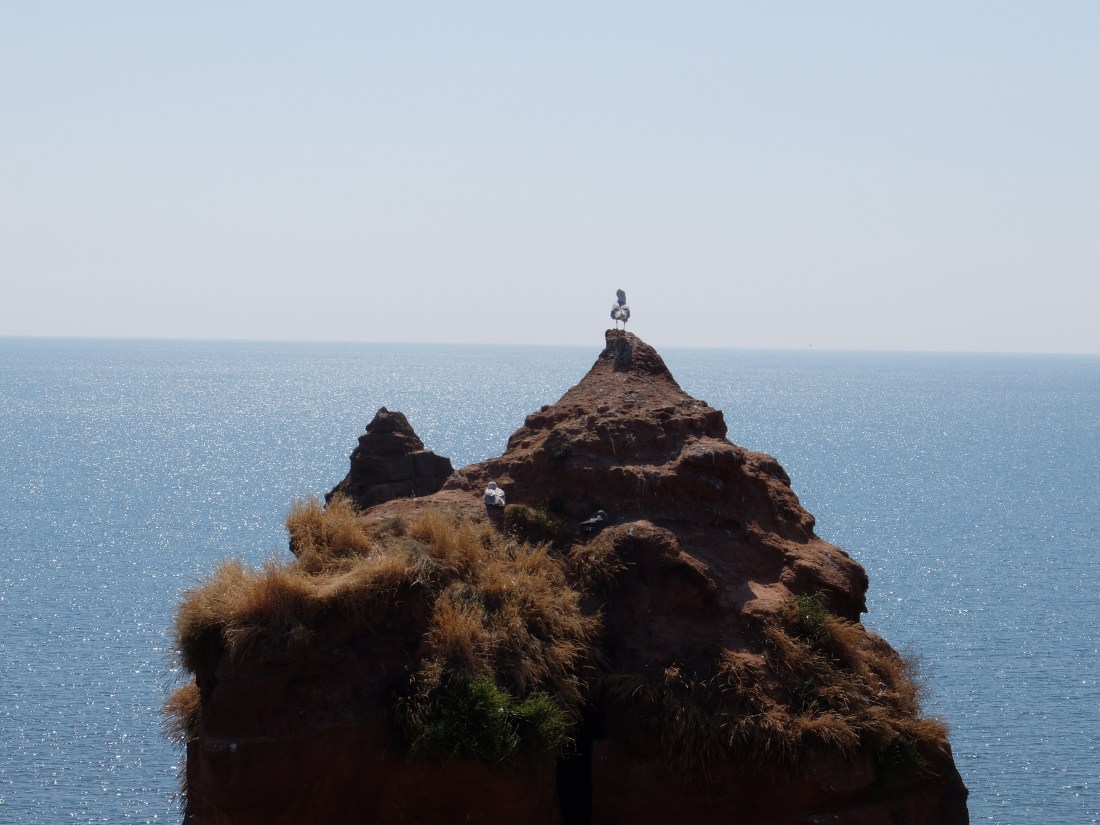
Huge numbers of caravans are adjacent to the bay.
A fraught mother entertaining a hyper-active toddler suggested we could change places, but we were too savvy to fall for her kind offer. We’ve been there before!
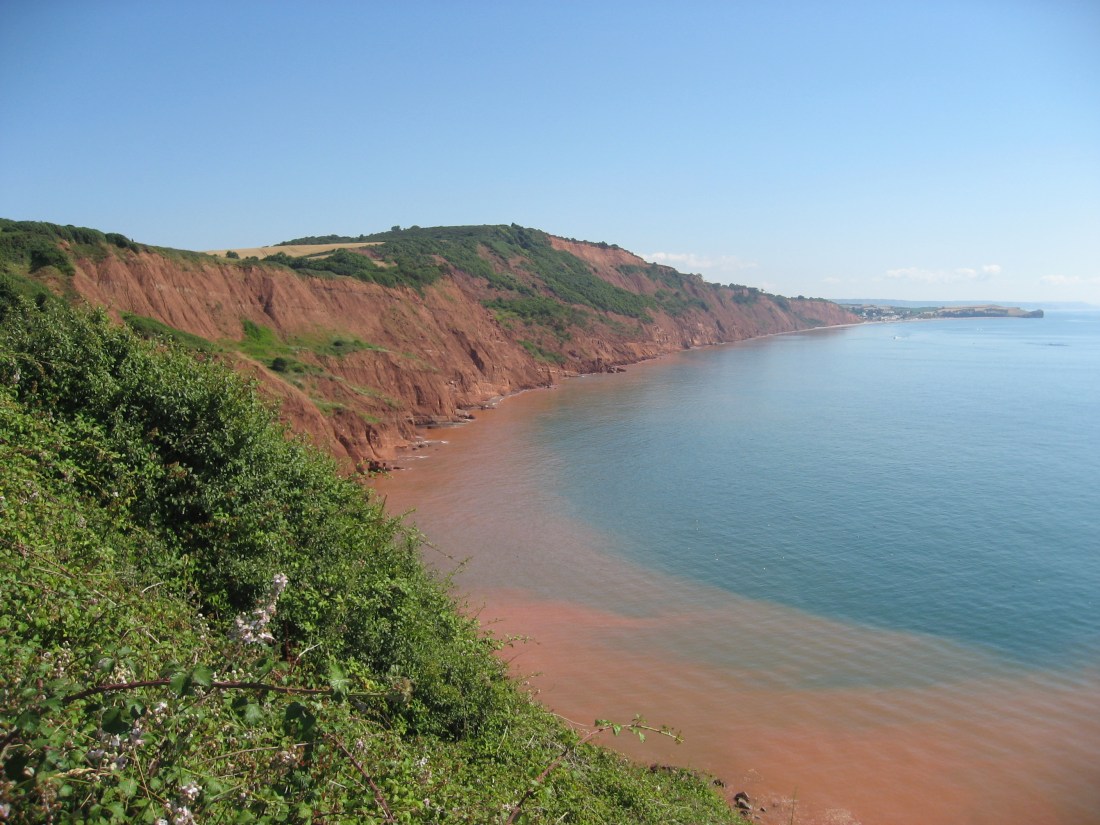
Walking along the cliff top the scene is quite different from our earlier walks: the fall of the cliffs is gentle at the top and completely green with bracken. The season of course makes a difference but the feeling is nevertheless less rugged here.
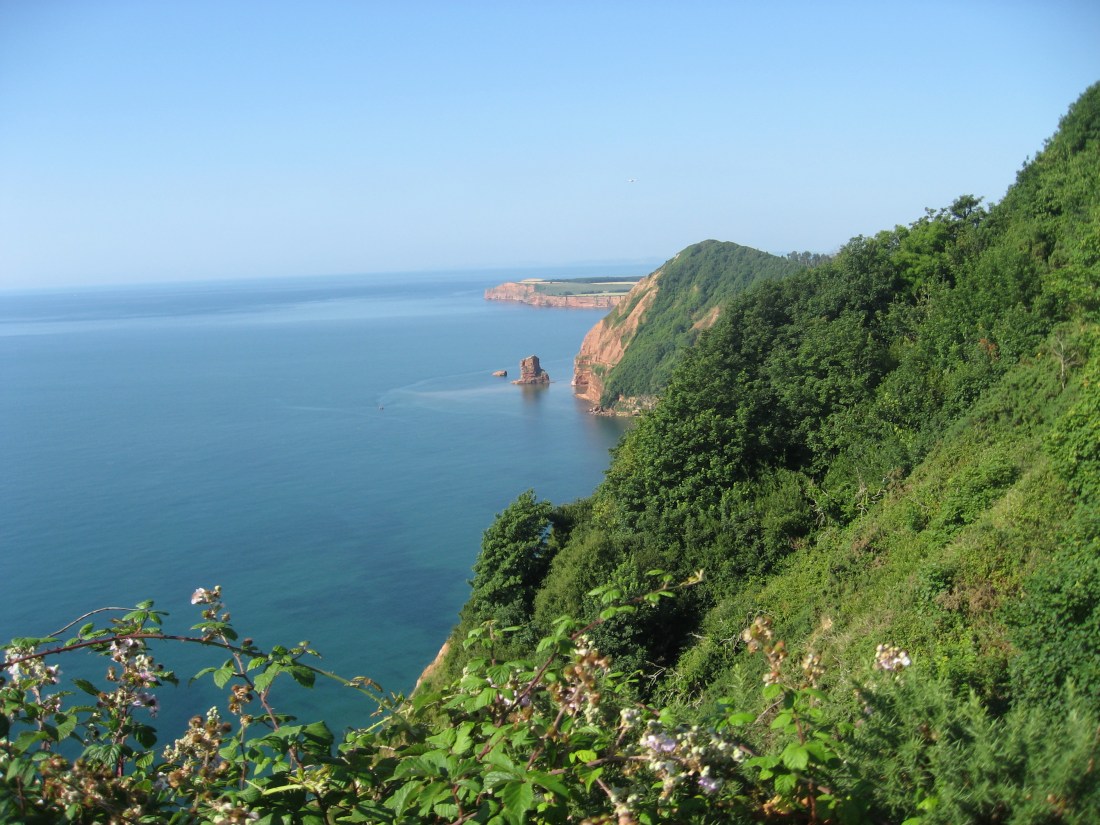
Brandy Head speaks for itself as a favourite spot for smugglers, but it was also a site for supervising aircraft target practice in the bay in WW2.
We were soon coming down the hill towards Budleigh Salterton with a view of yet more striking red cliffs in the distance.

Going inland along the Otter we crossed it just after midday. By 1230 we were in the Lime Kiln car park, waiting for Wendy who had had an argument with her Google Maps.
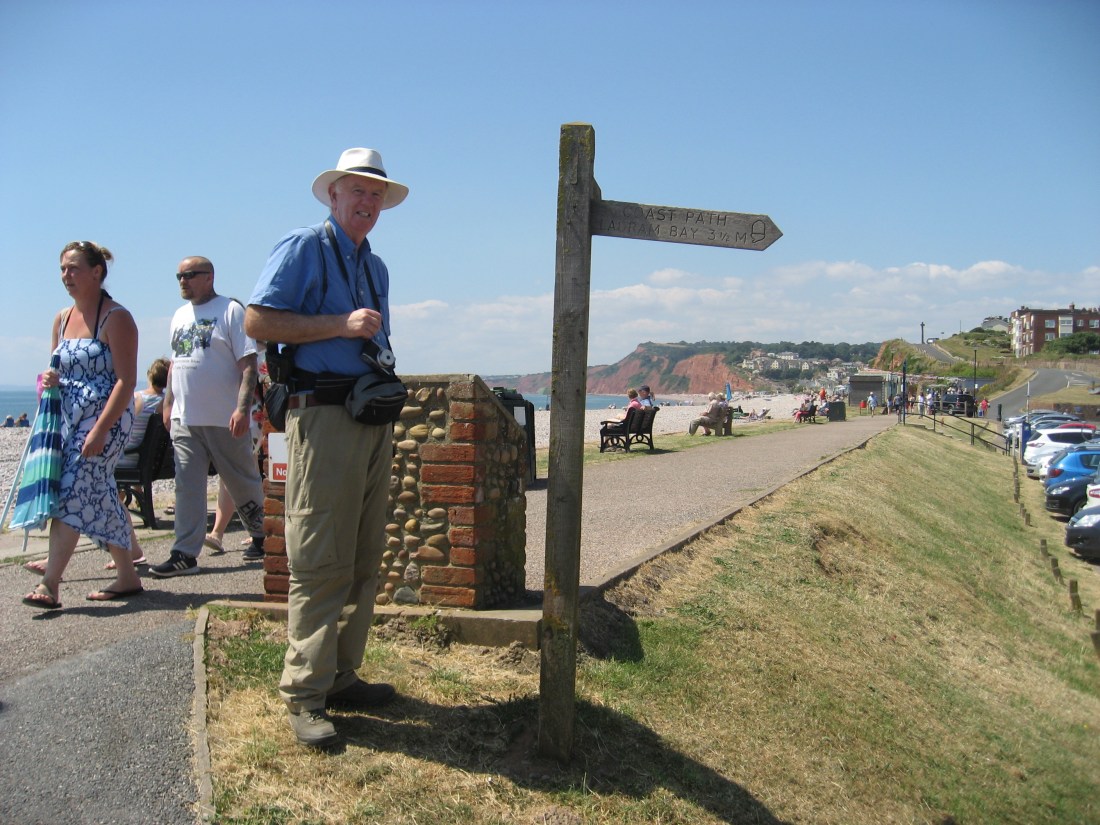
It had been a moderate walk of 7 miles and only modest climbs, but we still felt the heat.
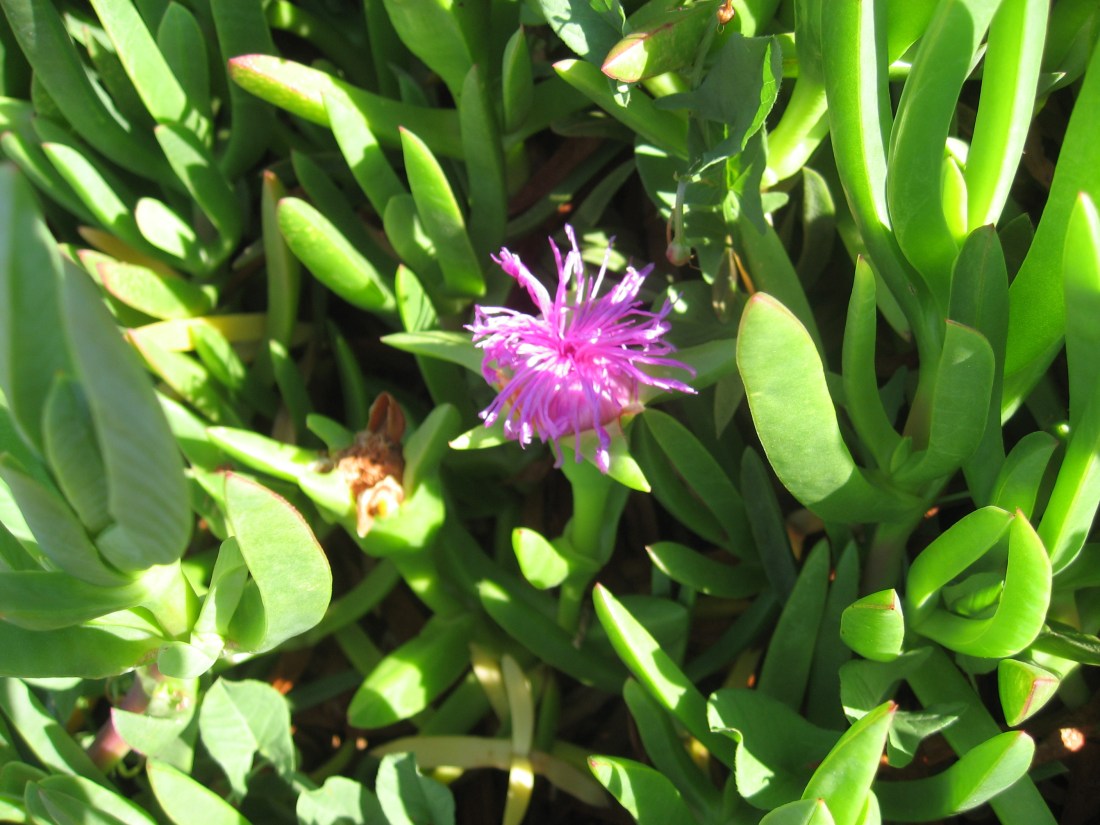
We were back in the same spot on Sunday 15th. Walking along the seafront the cliff was covered in succulents with purple flowers, showing no concern about the temperature or the lack of rain – Carpobrotus edulis (?) – demonstrating how well adapted it is to Summer 2018.
Budleigh Salterton was very quiet and did not seem rocked by Donald Trump’s visit. A flower boat commemorated all sorts of events.


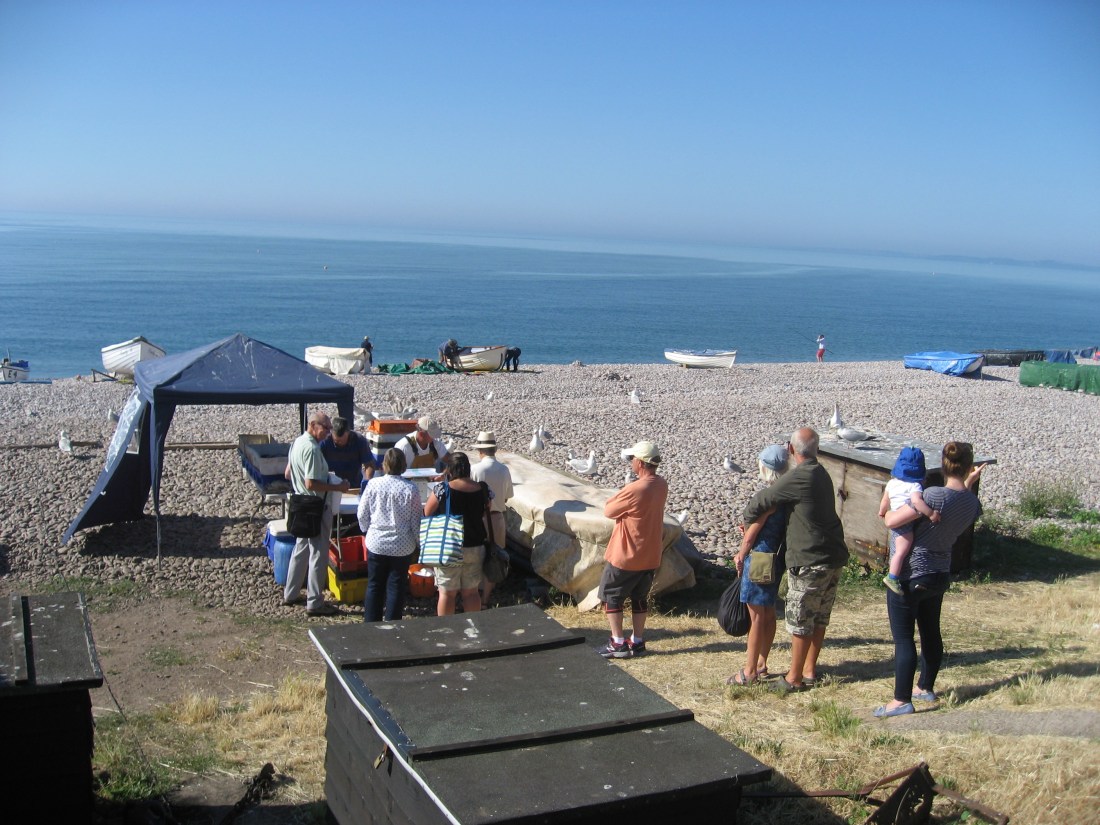
At the end of the beach we came across an informal fish market being run from a boat. It must have been the morning’s catch and a regular event because the locals were in an orderly queue for their Sunday fish.
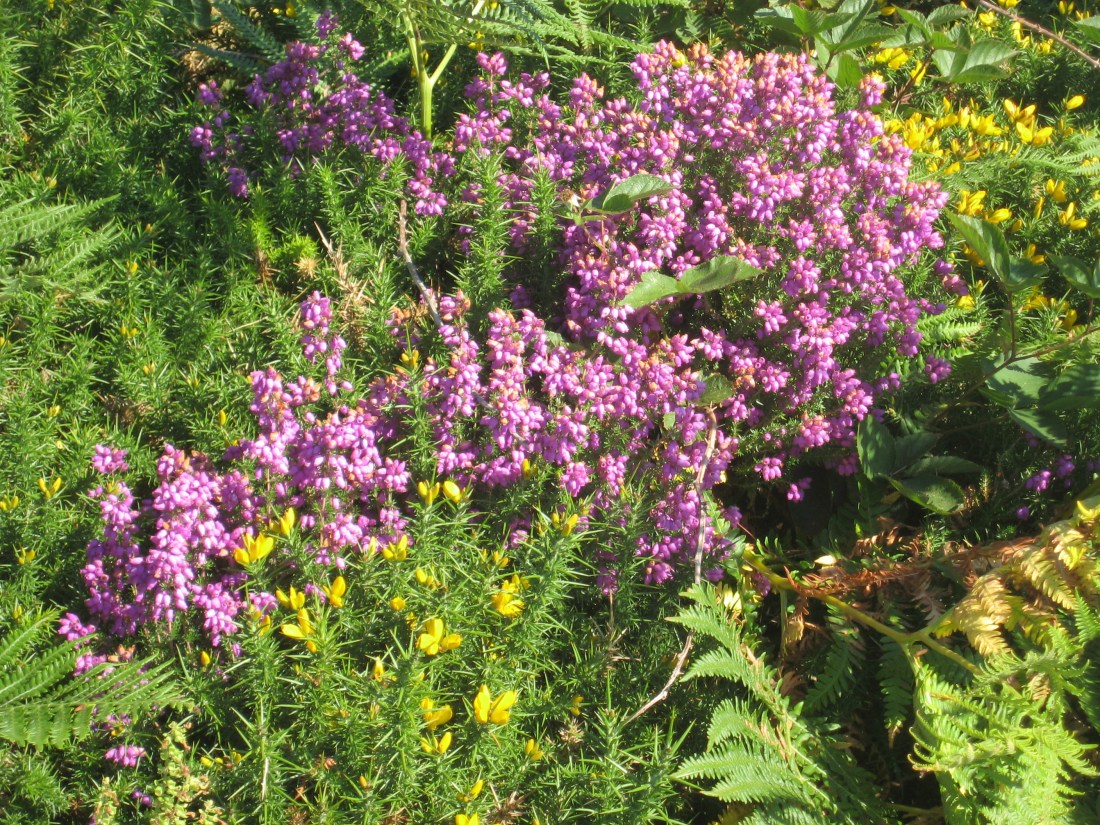
Along the top of the cliff we were walking on a well-kept path in dense woodland with pine and holm oaks – cool. Coming out of the woodland we saw heather in flower for the first time.
The path was covered in smooth oblong pebbles – part of stratum of the red rock. Our walking rate was slowed by the very large number of butterflies, each one requiring an inspection and appreciation by Richard,
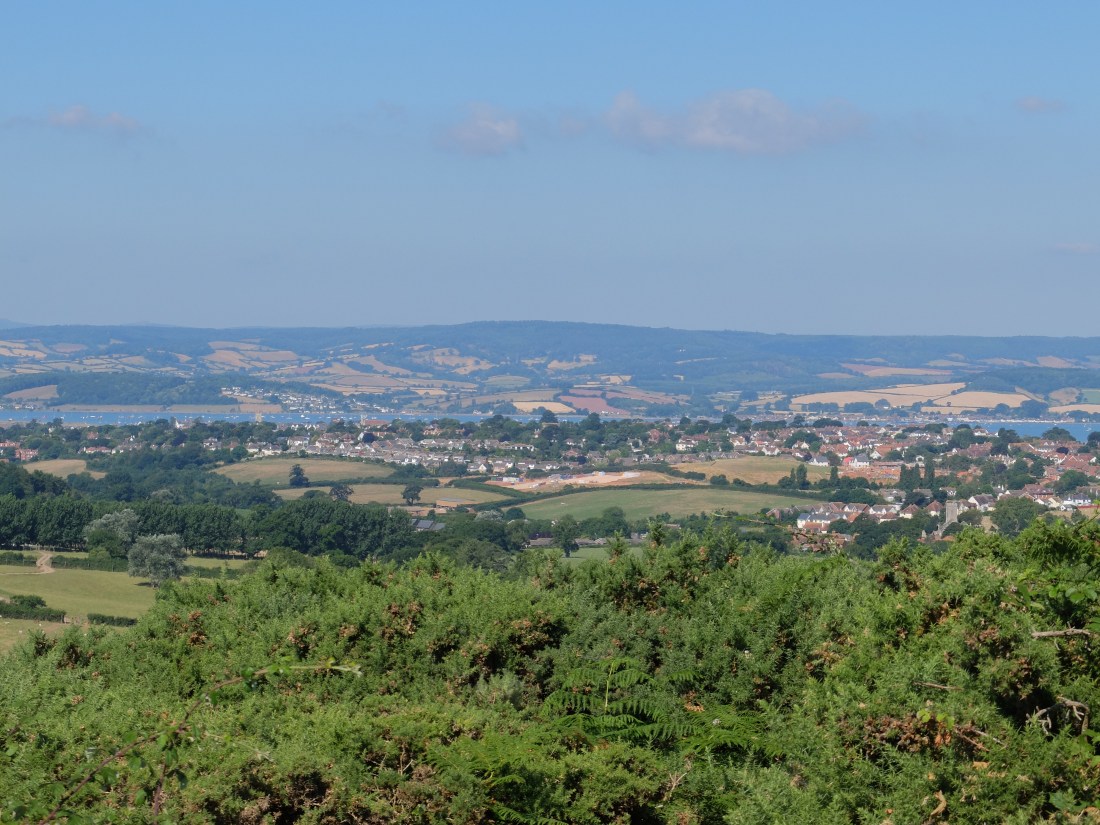
Just before Littleham Cove we had a view of Exmouth and then of another huge camp of caravans.
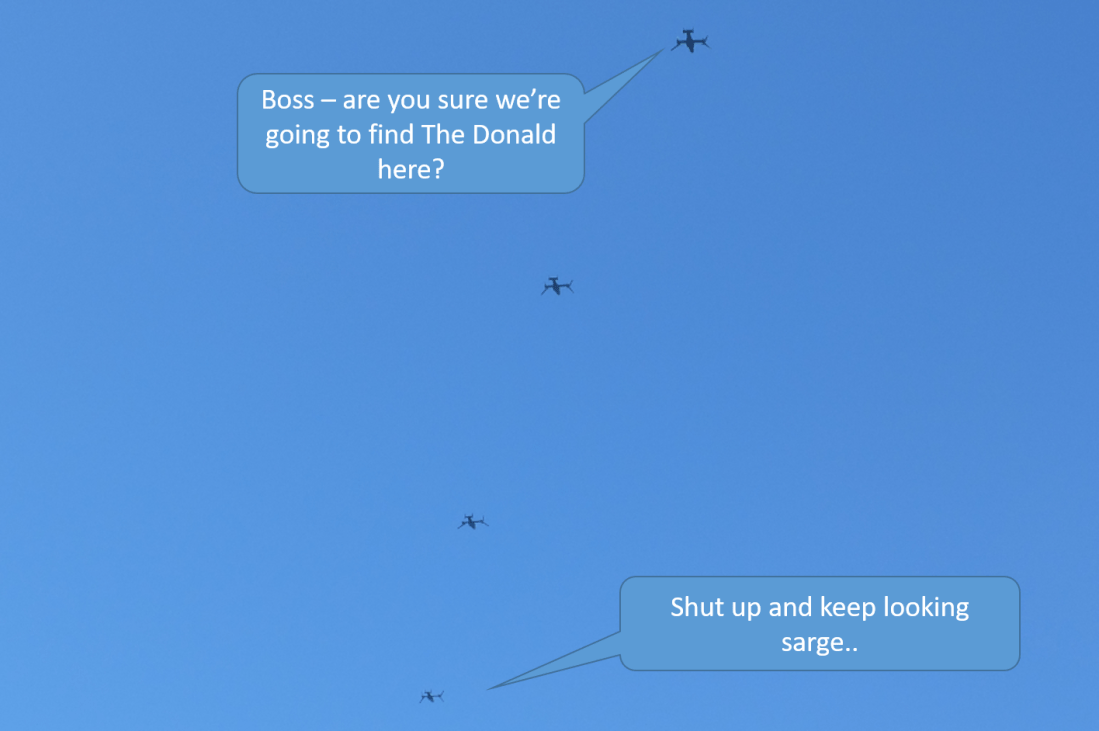
As we left Richard was enthusing about the imaginative use of plastic. But this was overtaken by the sight of four Osprey helicopters flying over in line. They looked as though they were in the wrong place, but we were lucky to overhear a short part of their R/T conversation.
As we trudged steadily towards Exmouth we mused about the way in which the footpath signs show a rather random assessment of the distance travelled and to travel. It’s possible to go backwards between signs in spite of following the direction of the sign. We wonder if there’s a bored National Trust apprentice who randomises the distances or draws them out of a hat. Either way do not trust the distances shown for fear of disappointment.
We looked at crops maturing early. This wheat seemed near to ready at least two weeks earlier than usual.

The path was getting noticeably busier as we got towards the Geo Needle. Richard described it as being like a suburban high street. The Needle is said to mark the Western end of the Jurassic coast. It comprises a mix of local stones, including Ham stone. As past and present residents of the Ham Hill area we did not think this attribution worked.
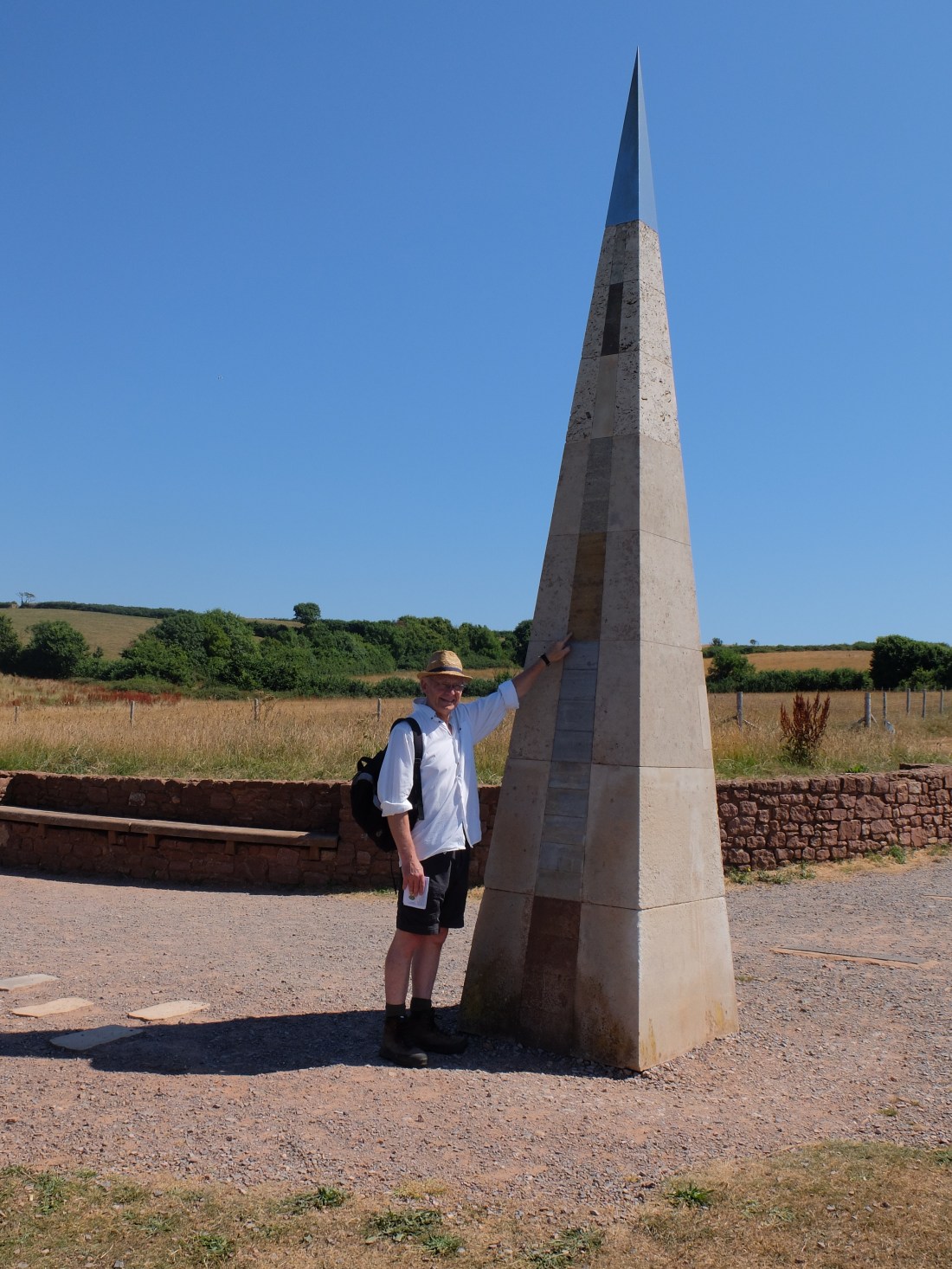
From there it was fifteen minutes to the beach. It was crowded but we guessed the numbers would double the following weekend as the school holidays started. It was a long but pleasant walk along the beach with all manner of beach behaviour on display.

Coming up to the river mouth the ebb tide was ripping along the edge of the beach. Jetskis dashed around in a dangerous melee among boats bucking the tide. The hirers sat on the beach uninterested in the potential accidents being created by their customers. Fortunately none happened.
At last we got to the point at which the ferry crosses to Starcross.
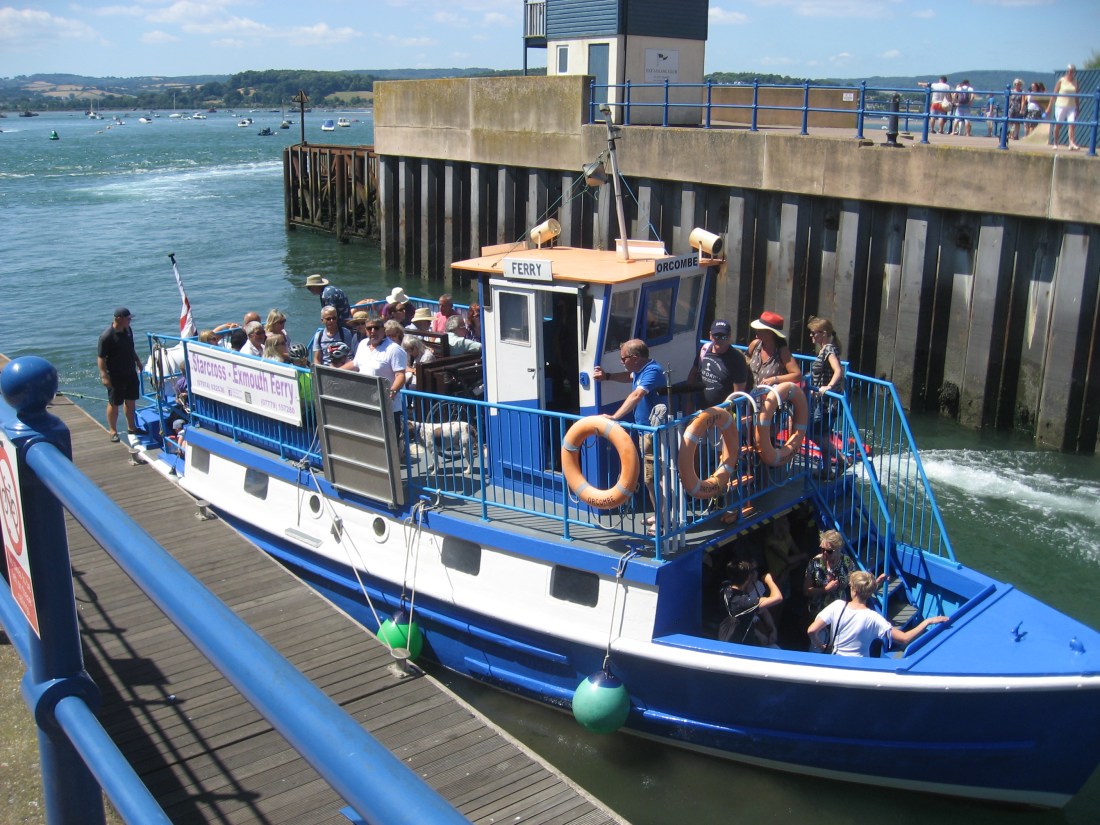
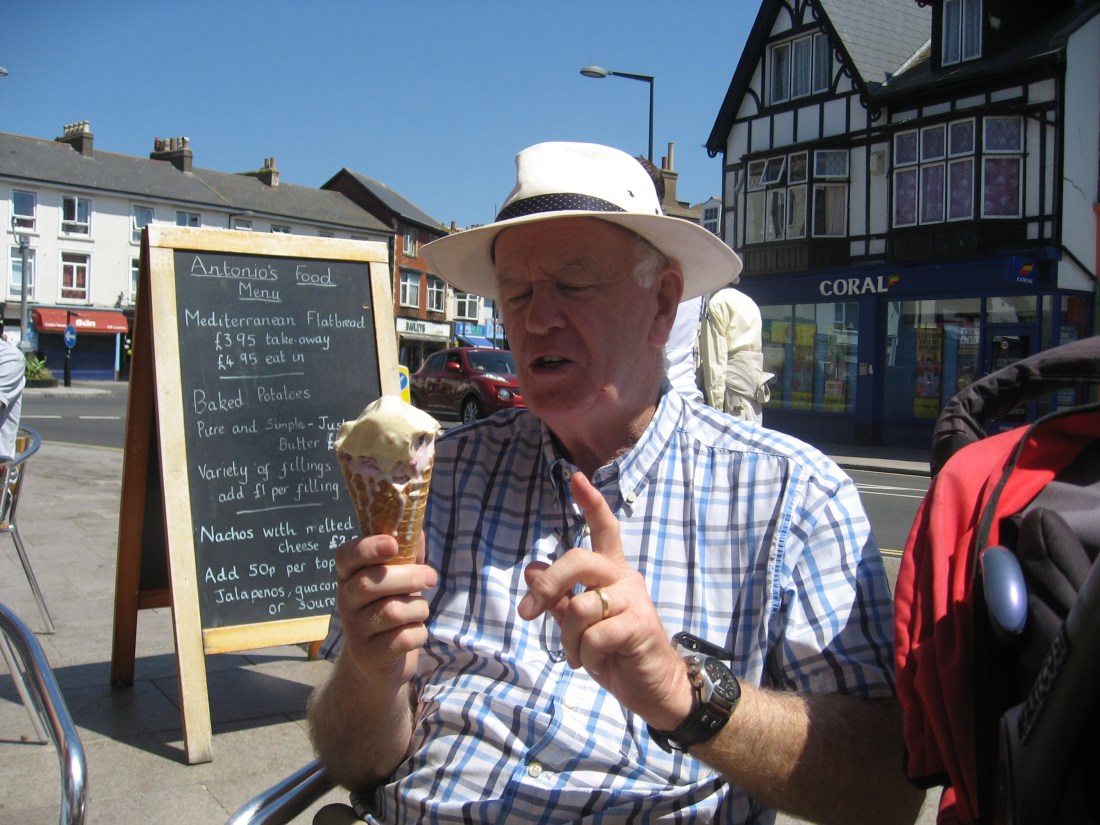
This was the end of the walk. Next time we will start from the other end of the ferry’s transit. Walk finished we went on to the Strand in Exmouth a pleasant open space. There we met Anne and Richard’s friend Victoria with her children Sophia and Alexander. We got a table outside Antonio’s for very good ice creams. The children wisely had – or were given – tubs but we settled for large cones. Given the weather this was a mistake and Alexander (5) watched with amazement as Dugald’s battle with a double cone got messier and messier.
Another short and hot walk – this one just over 6 miles. Net progress for the weekend therefore not great. As a result of the hot weather Richard has adopted a more military approach to planning and instructions about the route and length of the walks are now rapped out on What’s App. This all seems a bit arbitrary so in another part of the organisation work is going on to develop a formula to determine the length of the walk for different temperatures. The draft formula (only to be applied when the temperature exceeds 22 degrees) is:
W = 12 – ((T-22) * 0.763)
Where W = walk in miles and T = temperature
This means that if the temperature exceeds 37 degrees the Walk distance is nil and one can sit in a chair with one hand supporting the head, the other holding a very long gin, while you mutter “I’m still sure it was hotter in ‘76”.

 Pensioners on The Path