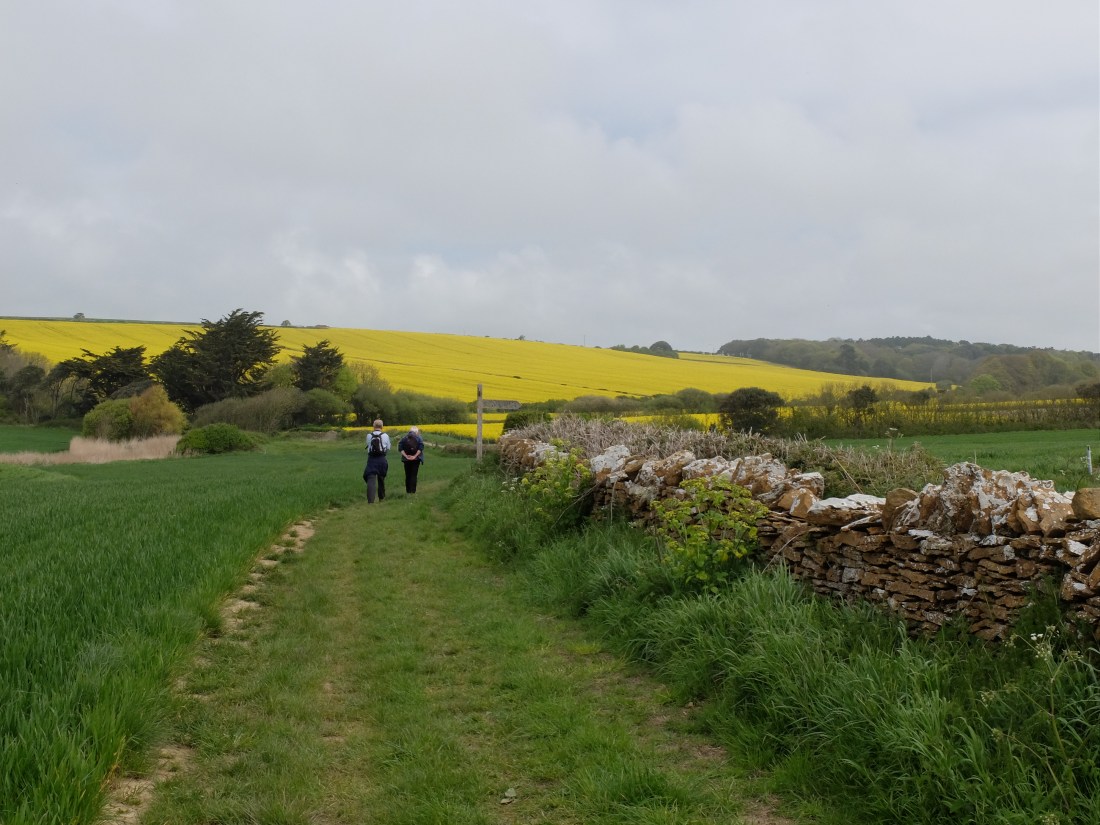
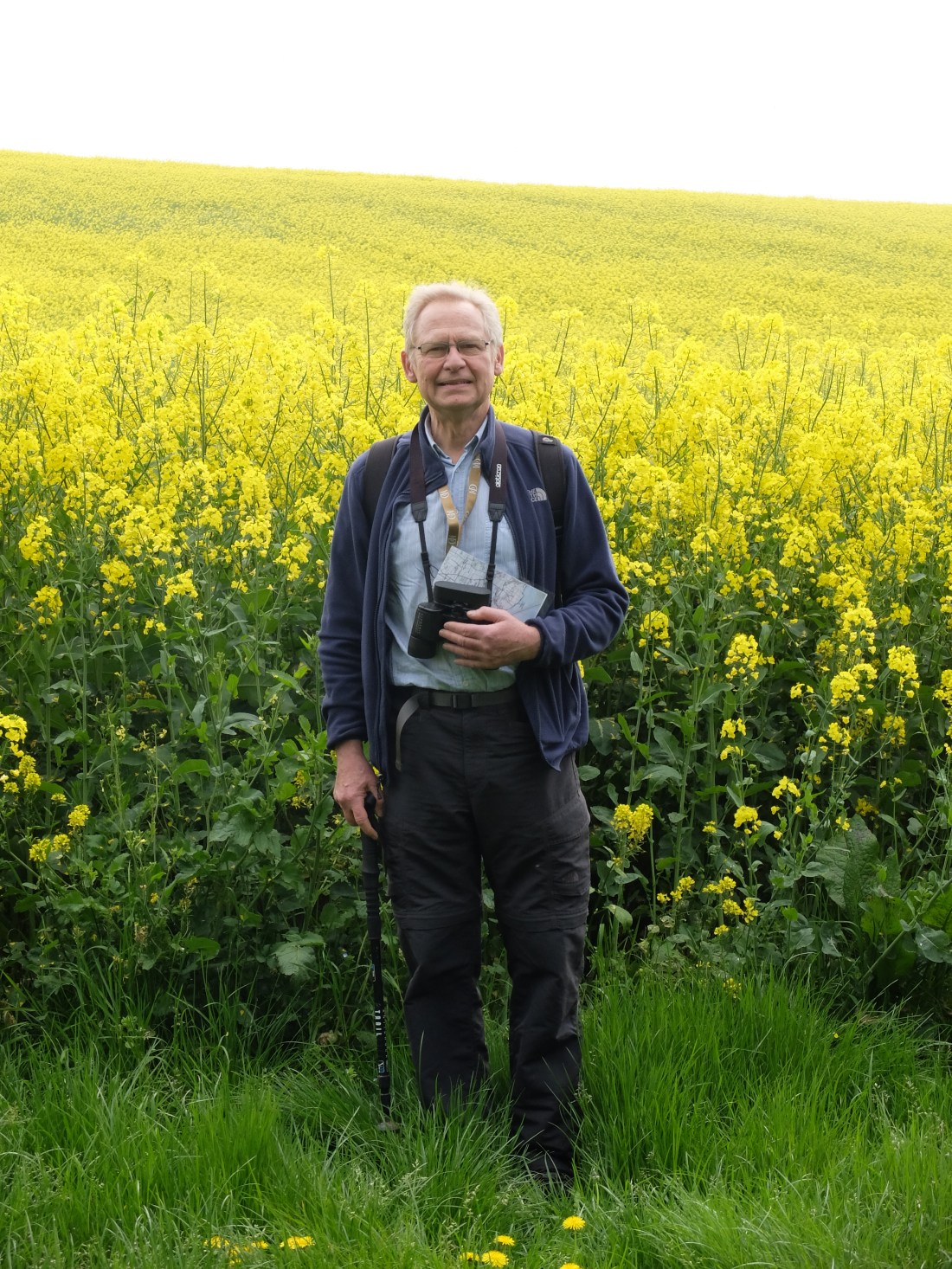
May 4 was the day after the local elections. Time to turn away from Plymouth, Barnet, Dudley, Westminster and from Jeremy Corbyn, Theresa May and all the other participants in the squabbling stasis that is today’s politics in Britain. It is like a large elephant stuck in deep mud thrashing around and trumpeting but making no progress. The South West Coast path is all the more attractive. And after so many faltering starts spring really seems to have arrived. We started at Moonfleet dressed for the first time for warm weather. A sign of the spring is seeing oilseed rape in full flower with the country cloaked in its bright and cheerful yellow. Purists tut-tut about the unnatural colour but one of the real pleasures of growing rape was the brief blanket of yellow.
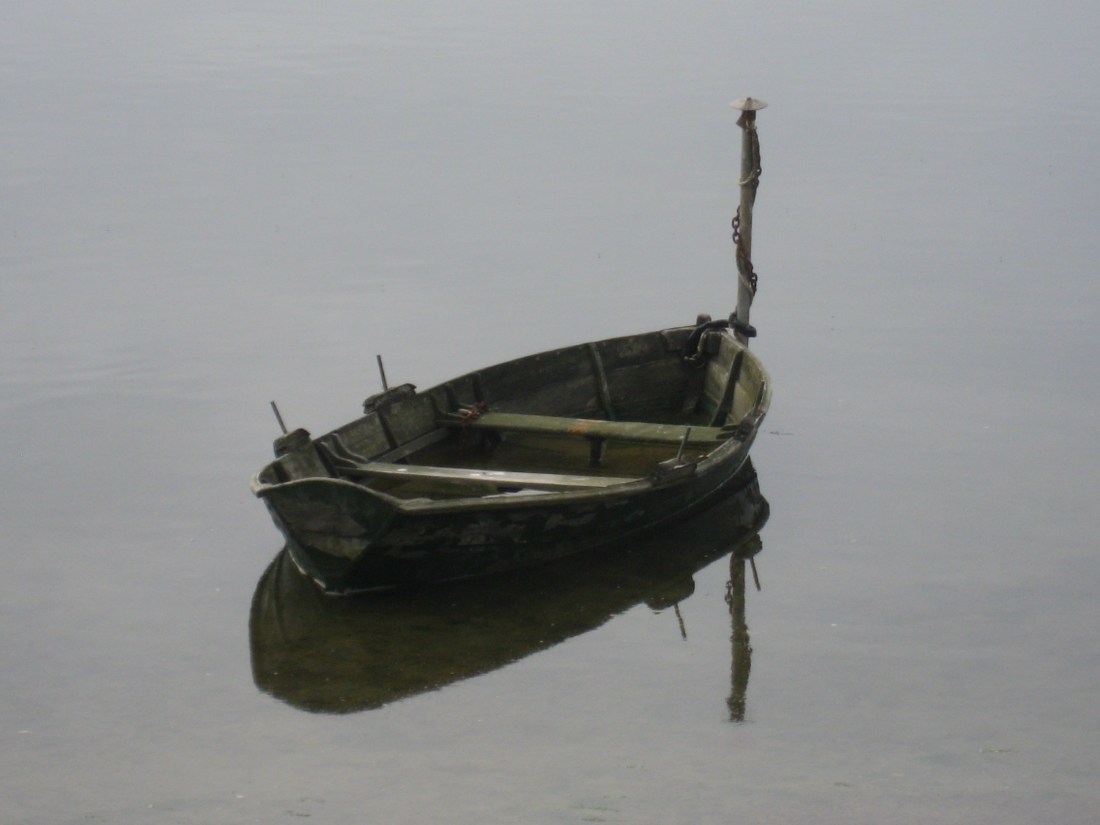
The water on the Fleet was smooth and calm and the wooden fishing boats lay at ease on it.

As we set off along the edge of the Fleet there were few people but many birds. Within minutes Martin had counted the calls of a chaffinch, wren, blackbird and blackcap; a bit later a white throat and a wheatear which is an African migrant that returns in the spring. Martin and Richard were spotting butterflies too – a holly blue and several orange tips. As we passed the oilseed rape a buzzard was being mobbed by a crow and we heard a corn bunting. Swallows were everywhere sweeping after insects; but then disappeared when large swarms of black flies appeared and needed eating. In a nearby wheat field a tall hare ambled along.
Just before midday we had to turn inland at Rodden Hive and leave the Fleet. Martin attributed this diversion to the Ilchester Estate’s dislike of people tramping their shoreline; he even thought this might have been at the behest of Charlotte Townsend herself. But there was no evidence for either allegation and we had to trudge inland anyway. It was striking how quickly the landscape changed from the harsh windswept atmosphere of the coast to lush Dorset grass and crops. The pasture was full of cowslips which thirty years ago could barely be seen, and the deep dark green of grass and wheat showed up May as the month when farms look their best. Strong stands of ryegrass shone in the sun soon to be cut for silage, and in places this had already started.


Soon we came over a rise and could see Abbotsbury and the striking St Catherine’s Chapel on the hill above it. Abbotsbury is a magic place but a trap for walkers trying to make progress so we skirted round it.
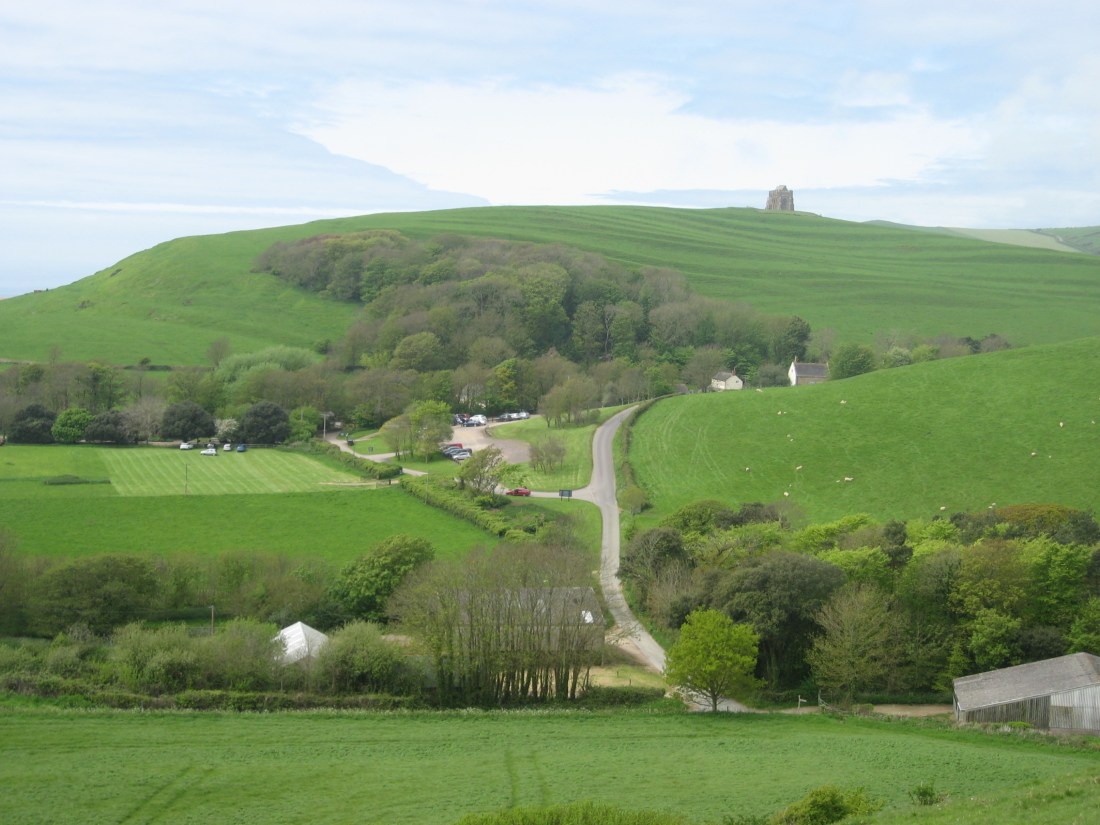
By one o’clock we were looking down on the Swannery and could see the swans in the distance. Nowhere else do 600 plus swans live in such close proximity to each other. As territorial birds they normally carve out large and defined areas, but here a thousand years or so of conditioning have changed their habits.

Passing between the Abbey and the chapel we moved back towards the Fleet.
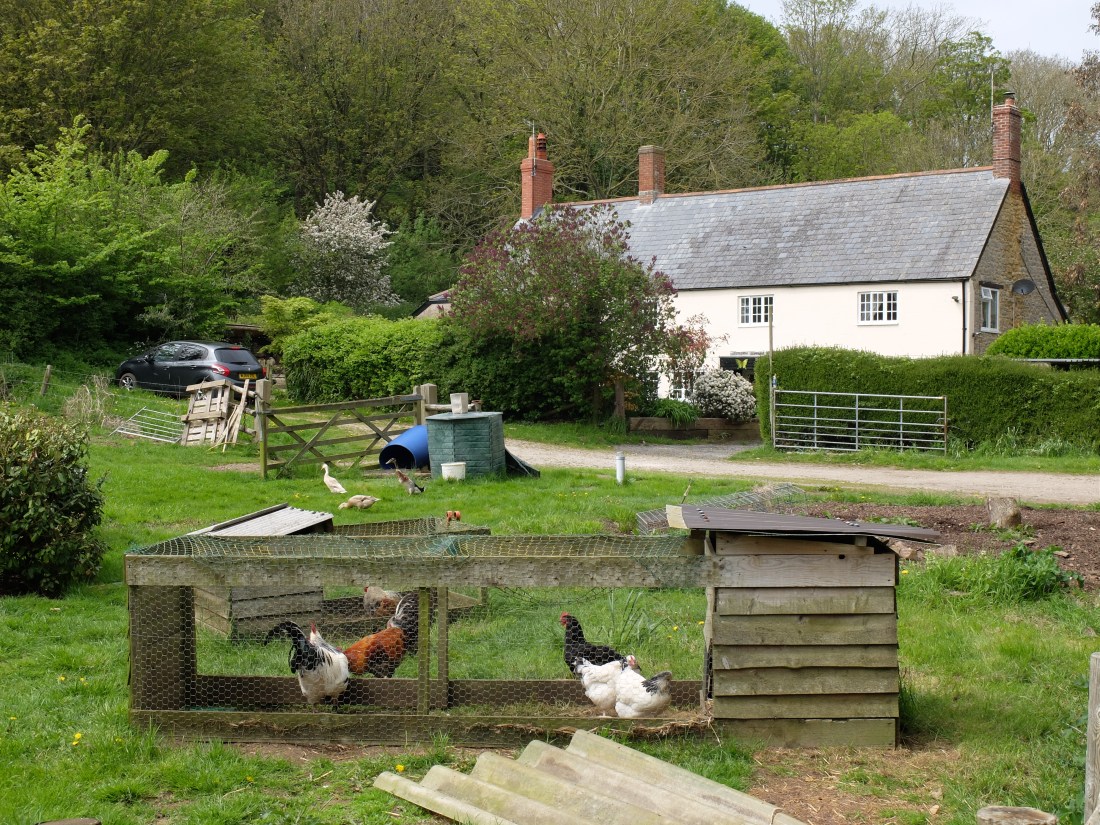
On the way we met a hardy couple who were getting towards the end of their coast path walk. They had started in 2000 so we felt moderately encouraged about our progress; looked at another way we can’t afford that amount of time as we would all be nudging ninety by then and wouldn’t have much time for further walks. We passed the end of the Fleet before we got back to Chesil Beach.
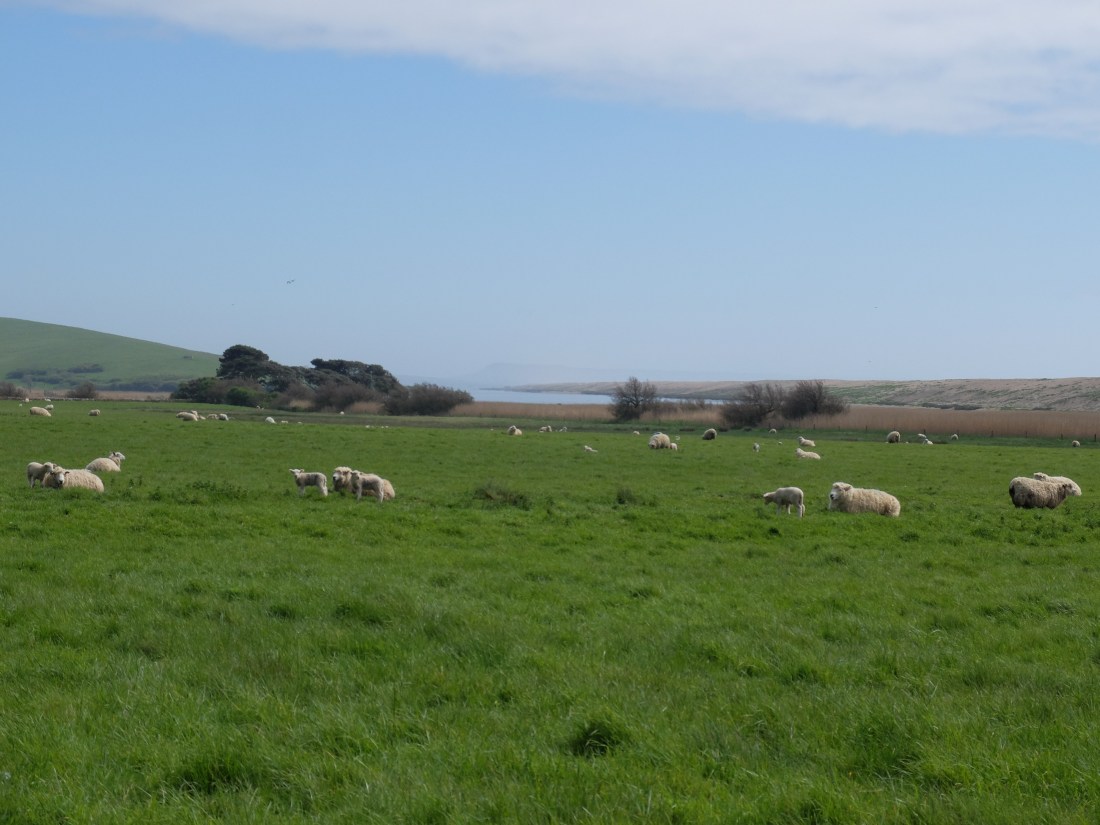
At the western end of the Fleet a line of tank barriers supplemented the pill boxes that litter this part of the country. The flat terrain was obviously thought to be a potential invasion spot. How the tanks would have coped with the shingle is fortunately just a matter of speculation. Back behind Chesil Beach we walked up the boardwalk and had lunch perched on the beach.

A young couple with very light summer clothing walked past and settled down with just their heads visible. A small pile of clothing developed by them. Modesty forbids any conclusion.
Before setting off again we studied the information board. Chesil Beach is 29km long and is about 15m high, made up of 100 million tons of pebbles. Apparently the whole beach is moving East at about 5 metres per century. Martin began to worry about the impact on Weymouth property prices towards the end of this millennium.
We now had a long flat walk to the end of the day at Burton Bradstock. In the distance we could see Golden Cap with its own shroud of cloud. In many places the shingle has covered the hard path so it is hard walking. At three we passed Labour in Vain Farm: farming is tough but must be tougher still if you are lumbered with a name like this.
Soon after Dugald added a bit of drama by tripping on a very small stone and hitting the ground with a heavy thud. Much groaning and complaining, but the treatment of one Werthers Original worked well. On we went beset by shingle until we got to West Bexington where the shingle gave way to grass.
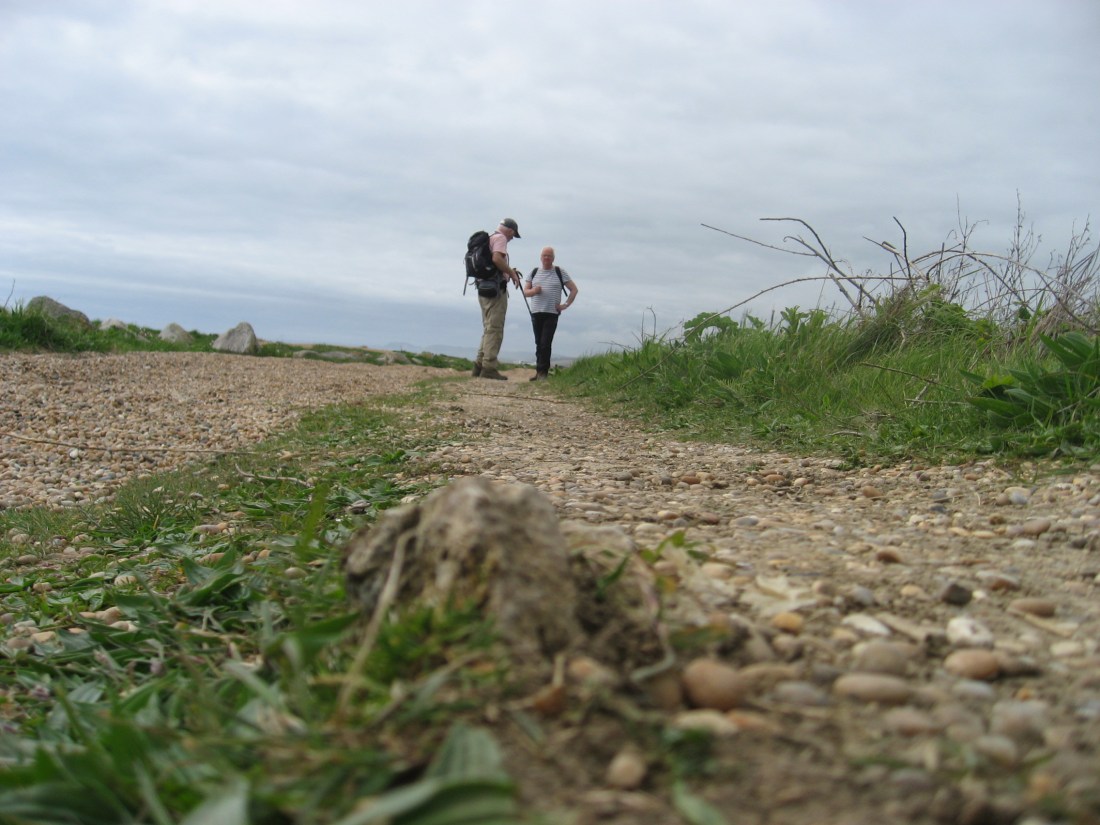
Coming into the village we passed two couples in serious discussion. They did not seem to be having a holiday chat, but were perhaps dealing with a family crisis out of the hearing of anyone else. It was noticeable how their body language picked them out as not enjoying a pleasant afternoon.
An hour later we got to the car park at the Hive, Burton Bradstock. There Sally was waiting, this time with some suitable Jurassic beer which was much appreciated. The car park was very busy, a contrast to the very few people we had seen on our walk. We had made just under 11 miles, and felt tired even though there had not been much climbing – a bad omen for the next day when there would be plenty.

The Saturday morning was warm and bright and the Hive car park was buzzing early in the day. Bank holiday fever was in full swing. We were going to be joined by Claudia, Dugald’s daughter for the first part of the walk. We were booted and spurred when she arrived with Eliza (5) and Bertie their young and elegant black lurcher.
After a false start on the wrong path we were off on the right track, three old ones and three young ones. In the fields at the start of the path Bertie was released and set off to play at staggering speed. When he returned he ran at us at the same speed. He somehow sped between us without hitting anyone – just as well because the speed of impact would have been very bruising if not worse. Once on the cliff path he was on a lead and more subdued. Eliza trotted along cheerful and chattering.

When we got to the end of Burton Cliff Claudia, Eliza and Bertie turned back for home. Skirting round the River Bride there were dozens of young children swimming and playing in the river, while more sedentary and older adults sat cooking in the sun. Many of them already looked redder than was sensible. Once across the Bride the collective decision was to take the cliff route to West Bay rather than the beach. Up the cliff for the first climb of the day followed by a switchback and then along by the golf club towards West Bay. The recent falls in the East Cliff have driven the path inland and taken some nibbles out of the golf course. Just looking at the strata of the cliff told us why it crumbles away so easily, a process accelerated by the nesting birds digging holes in it.
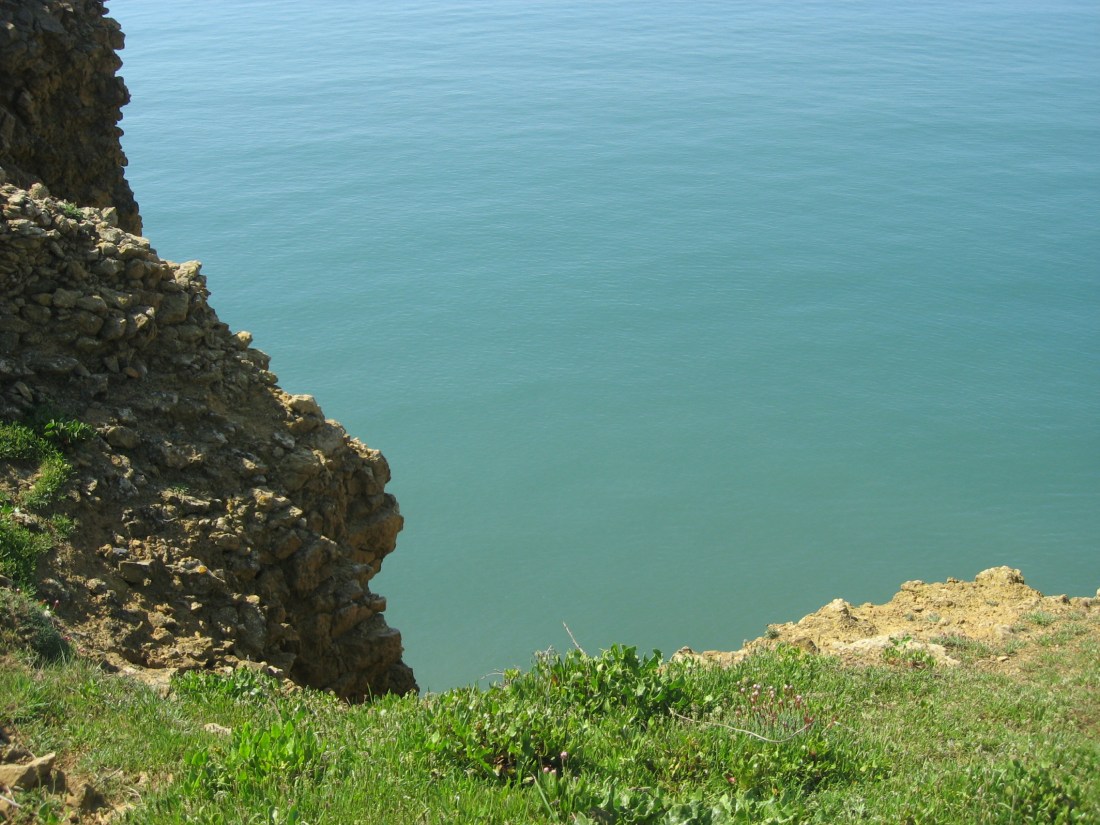
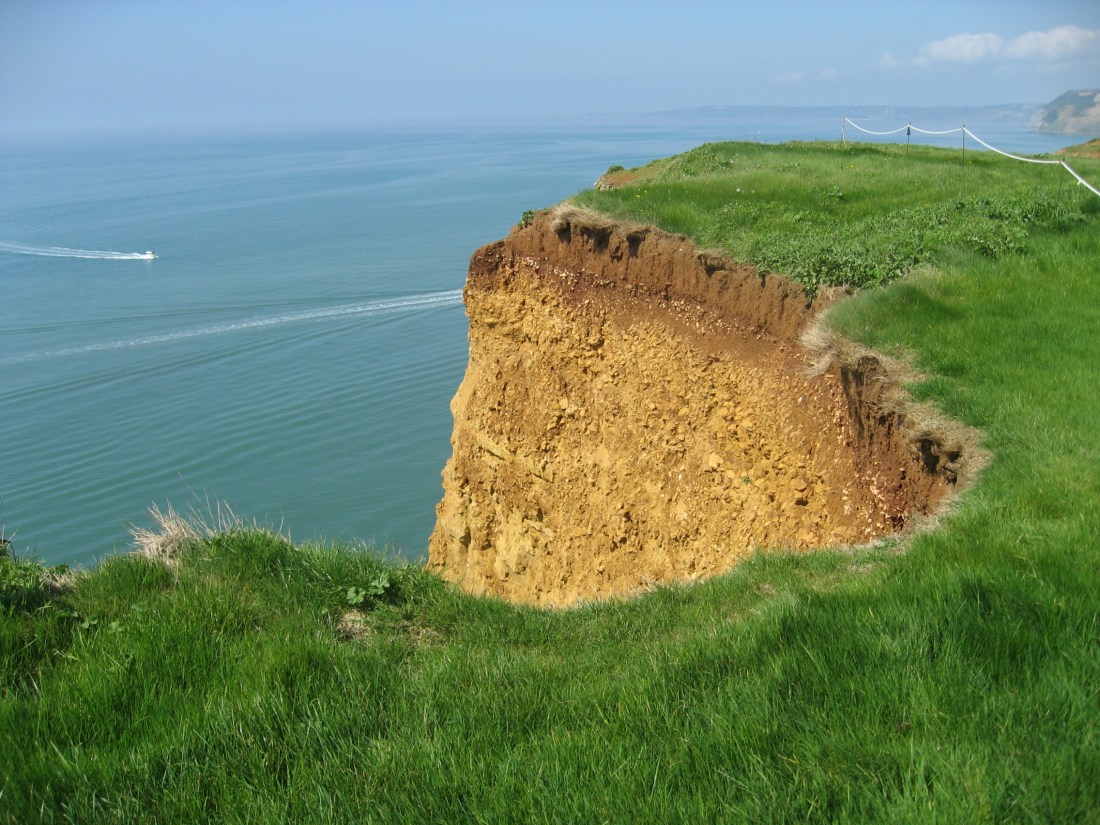
We came down the steep descent of the East Cliff onto the beach. The profile of the East Cliff has changed dramatically in a short time – even since Wendy and Dugald lived here just over five years ago.

We walked round the harbour which was busy with holiday makers. Dugald looked nostalgically at the Ellipse flat where Wendy and he had lived.
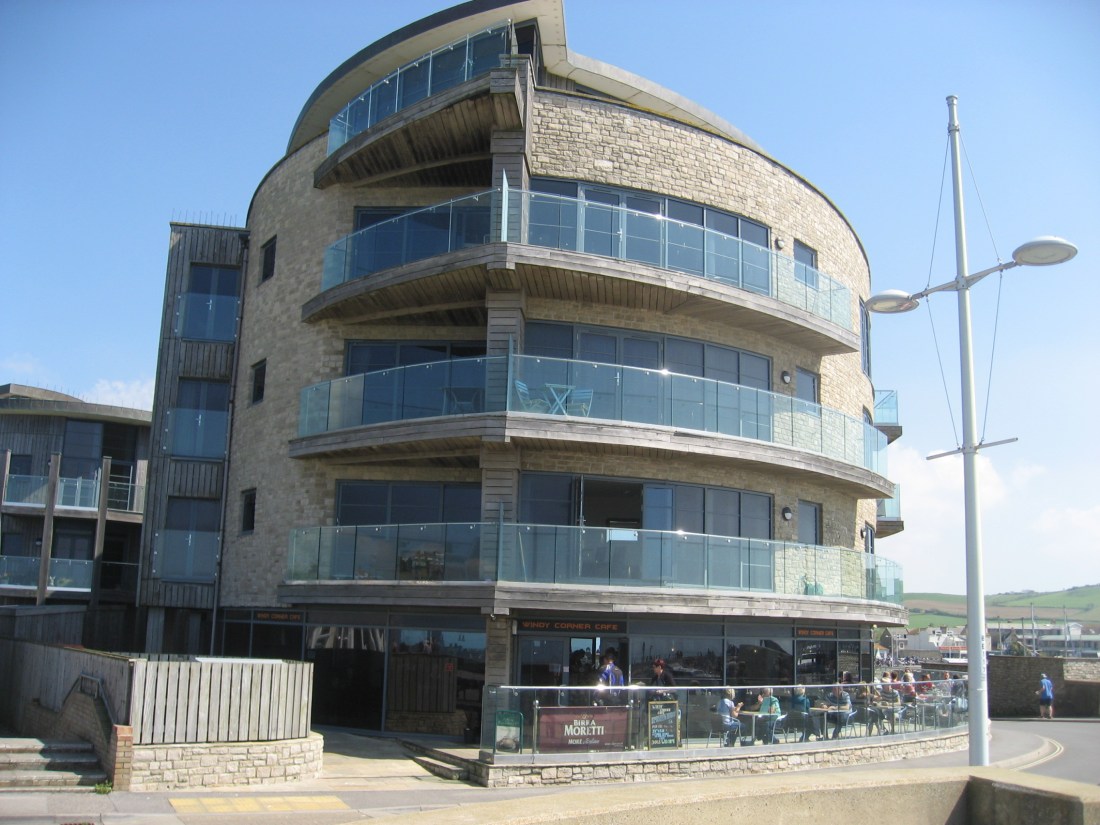
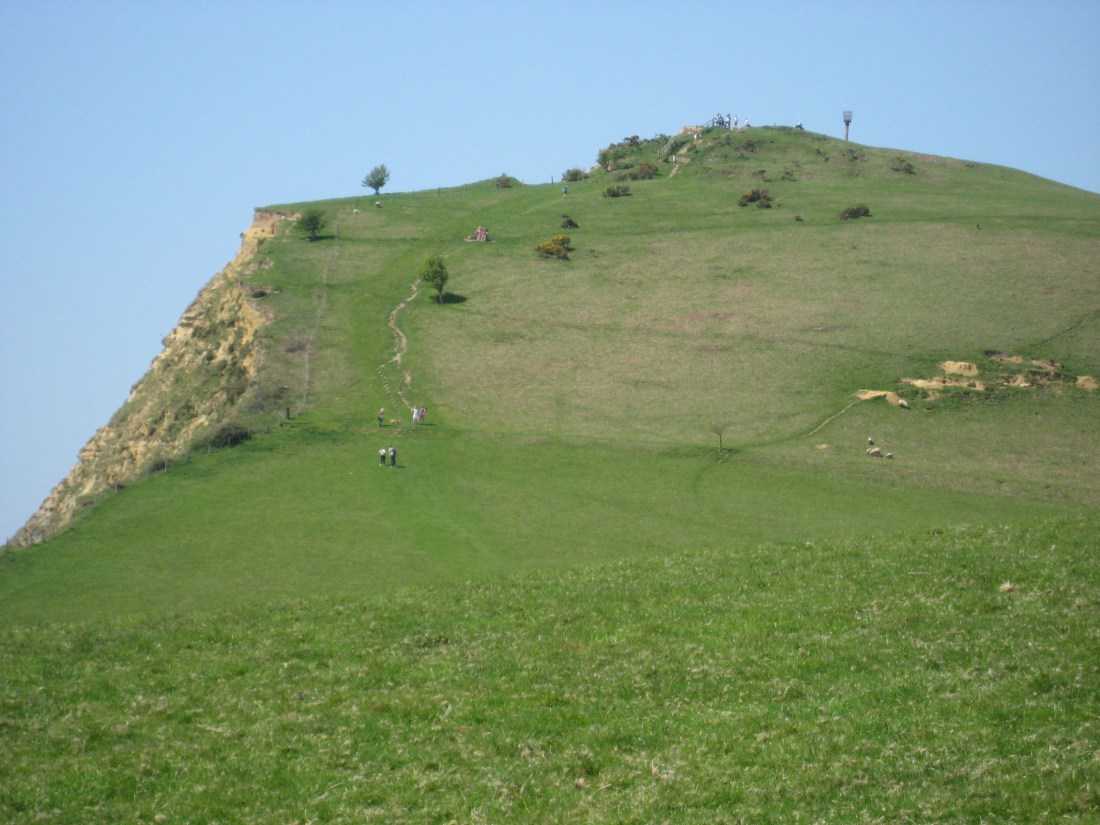
No time for sentiment, there were hills to be climbed. We passed Eype, where Wendy used to take a walk after work and where Martin and Sally spent a week prospecting for the right place to live in the South West. Then we were heading for Thorncombe beacon. Ahead of us a teenage girl with long blonde hair was running up the hill. Her father remarked that “we could all do that at one time”. We supposed so. Richard, on the basis of no evidence, decided she was a hockey player. The young family took the direct roller coaster path to the beacon, while we skirted round the collar to the right of the beacon.
Looking down from the cliff there was a sailing cruiser anchored off with the whole coast to itself. It looked an idyllic lunch spot but she was gently rolling so some of the crew may have felt a bit queasy.

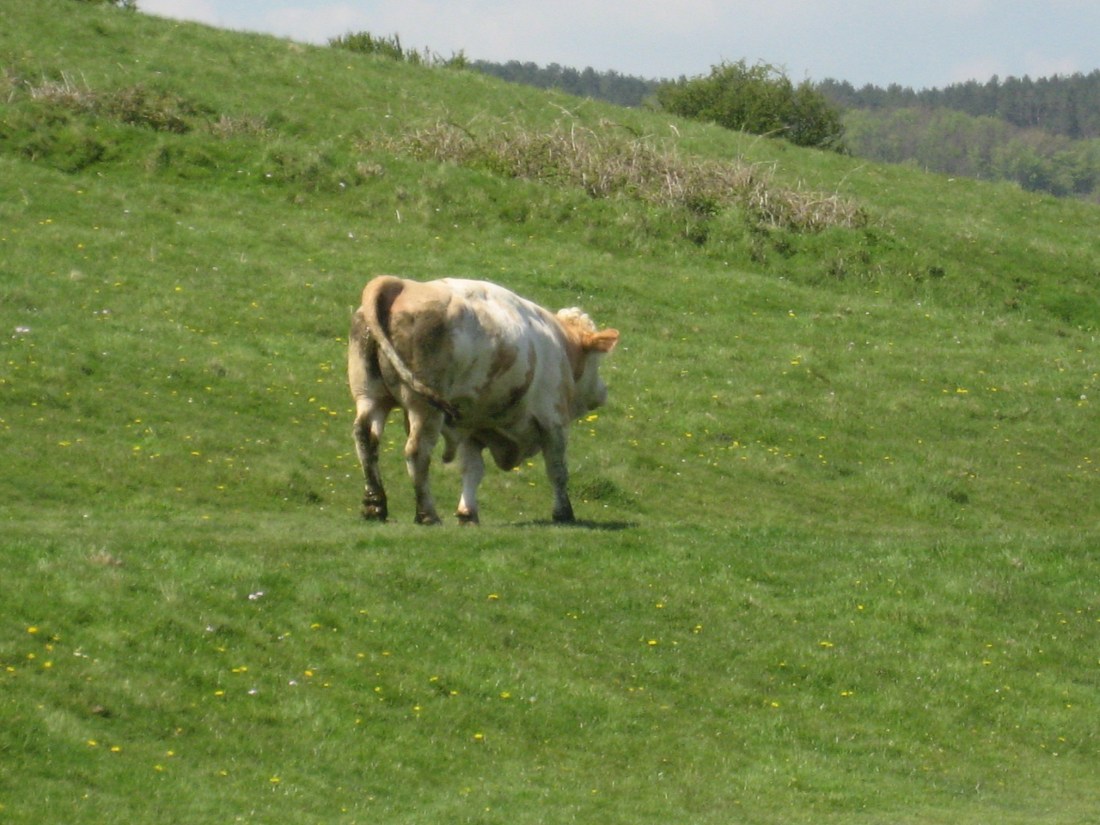
Shortly after one o’clock we were on the track down to Seatown following a large beef bull walking down with his cows, and keeping a respectful distance from him.
Golden Cap was ahead for our next climb.
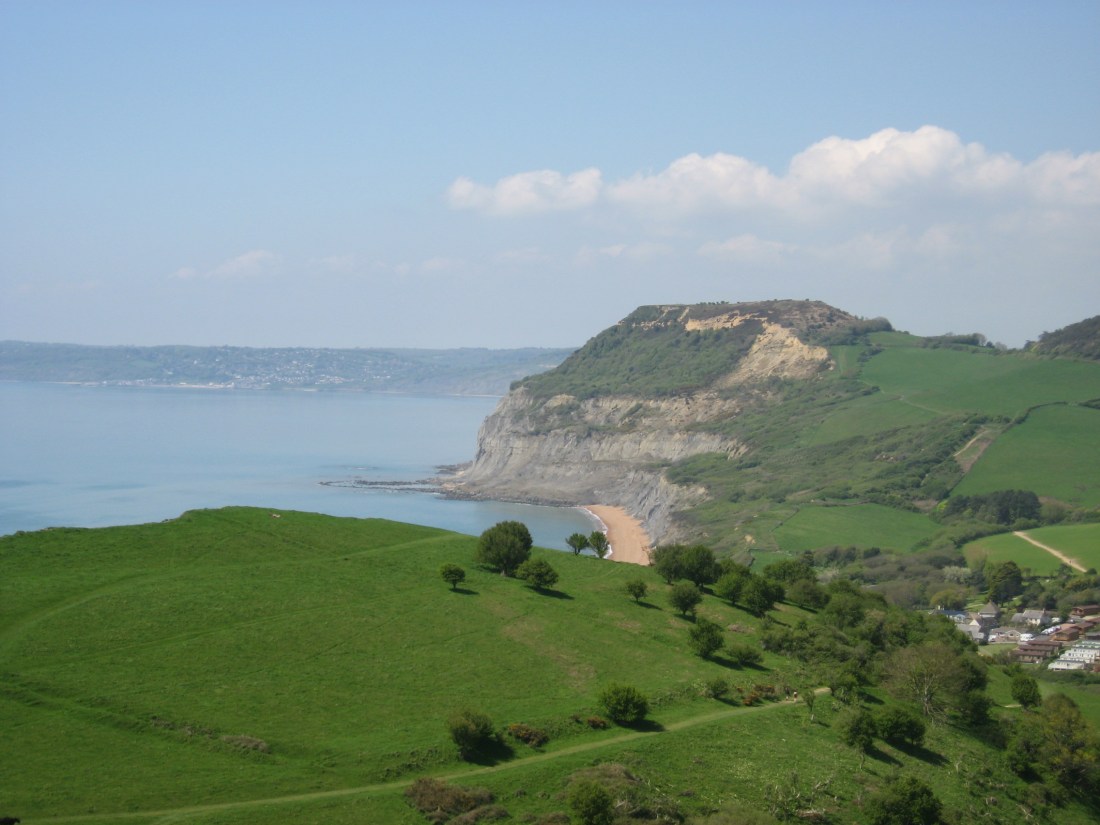
The Seatown car park was packed and the terraces of the Anchor were crowded. The Anchor is a pleasant pub and the thought of a pint there was tempting, but it would have been fatal to the day’s effort, so we turned away from it.

By two we were resting on the bench just below the final climb to Golden Cap. Martin was making some comparisons with Everest: we could see what he meant but it seemed a bit overblown nevertheless.
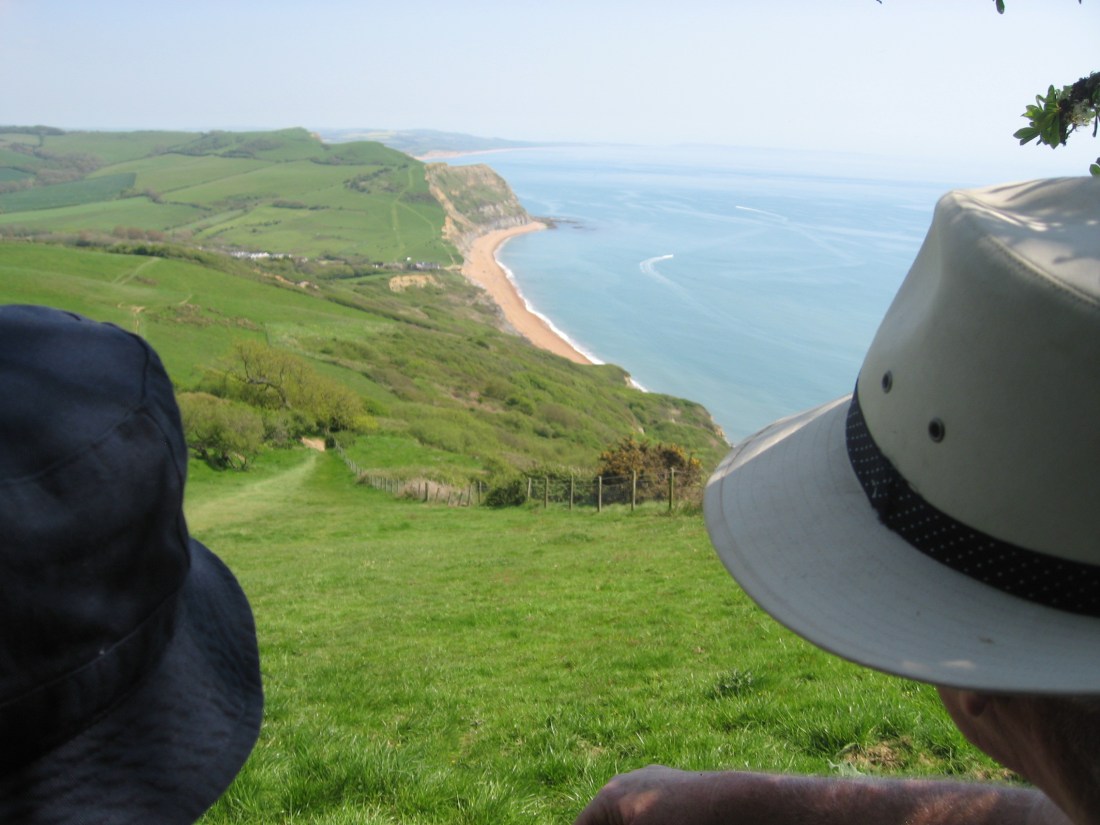
Twenty minutes later we were on Golden Cap having a luxurious lunch on the highest point of the English South coast.

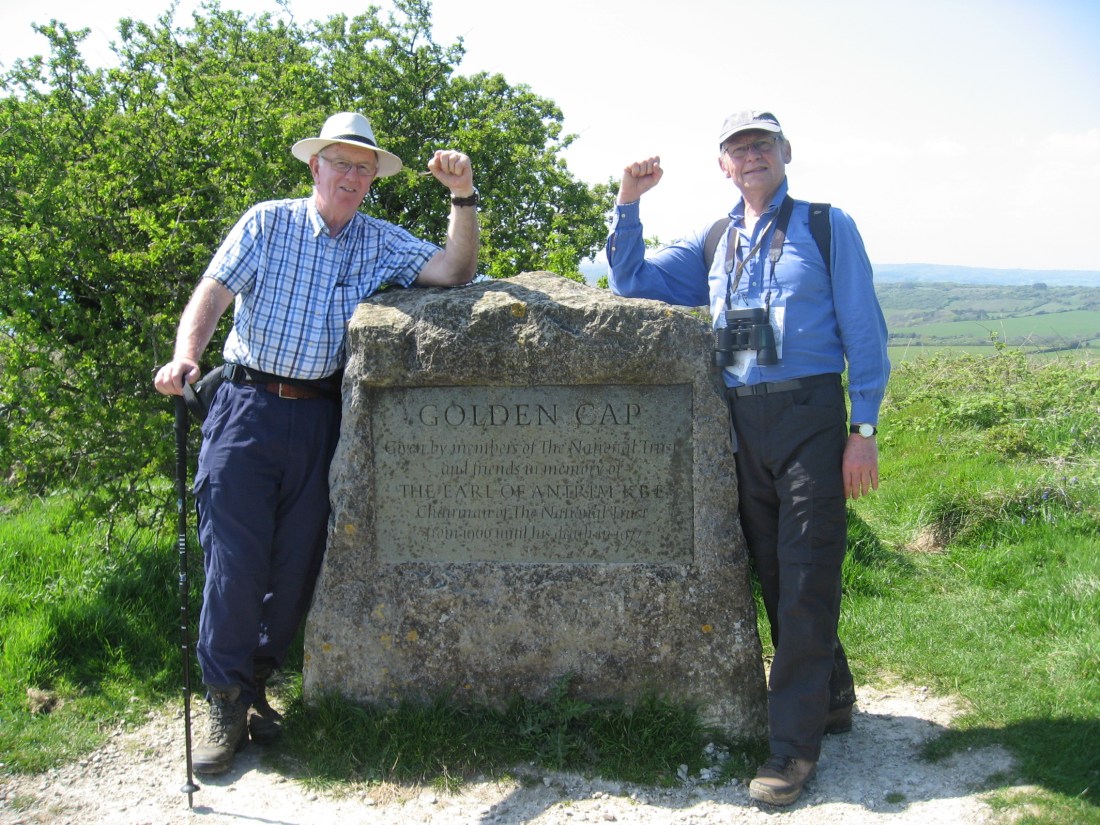
Between Golden Cap and Charmouth the path is deceptive and full of surprising drops, rises and gullies. Tired limbs found it hard going. Between the cliff and the sea is the chaotic and verdant undercliff which looks like a different land. This section ends in steep steps up to Stonebarrow Hill, part of a diversion as a result of the cliff collapsing. Coming at the end of the day they feel taxing but Richard pointed out there were only eighty-two of them. We need to get used to steps as there are over 1,000 between Seaton and Sidmouth.
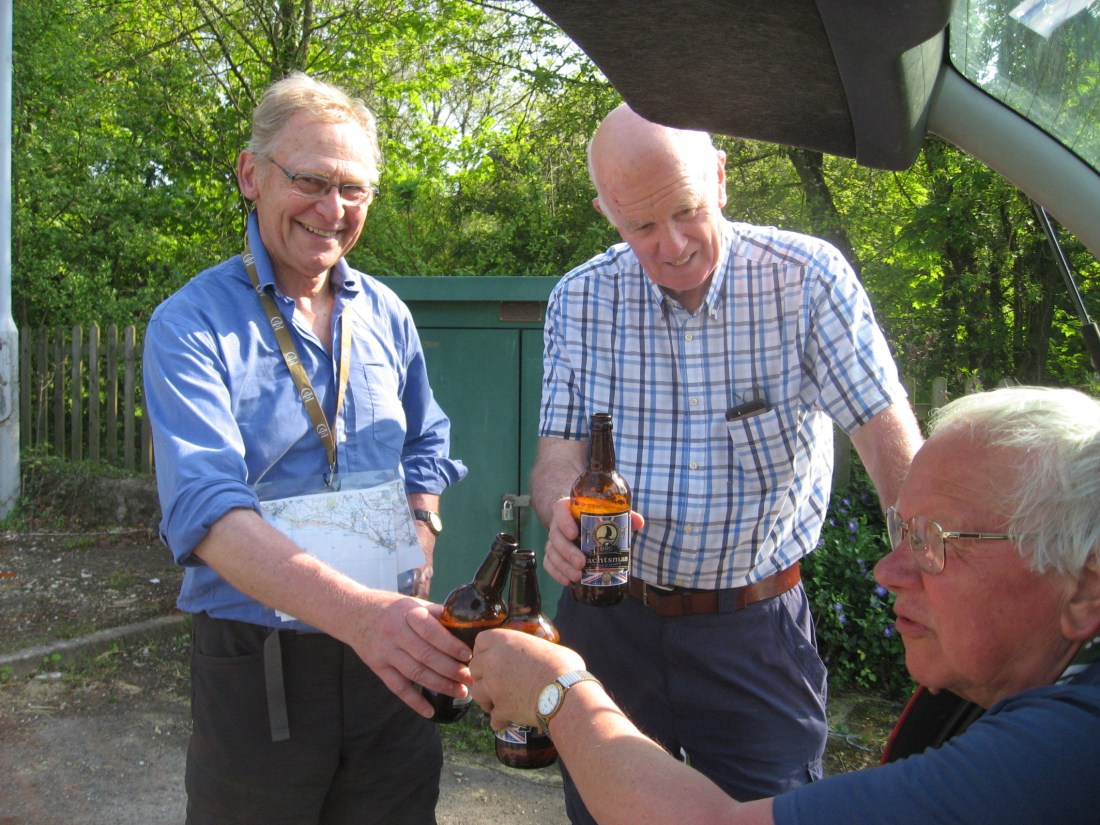
At half past four we were coming down the last section of the tarmac road from the hill and into the edge of Charmouth. Plans to walk to the beach were abandoned in favour of ringing Sally who arrived soon after. Once again her imaginative supply of beer was just what three very tired walkers needed. This was Yachtsman beer from the Dorset Brewing Company of the Jurassic Brewhouse, Dorchester – very good indeed.
We had only covered just over nine miles, but all felt spent. It was a lesson that walking on a hot day needs a different approach – and more water. There was also a clear contrast between our two days: the first saw very few people and large numbers of birds; the second lots of people through the day and far fewer birds.


 Pensioners on The Path