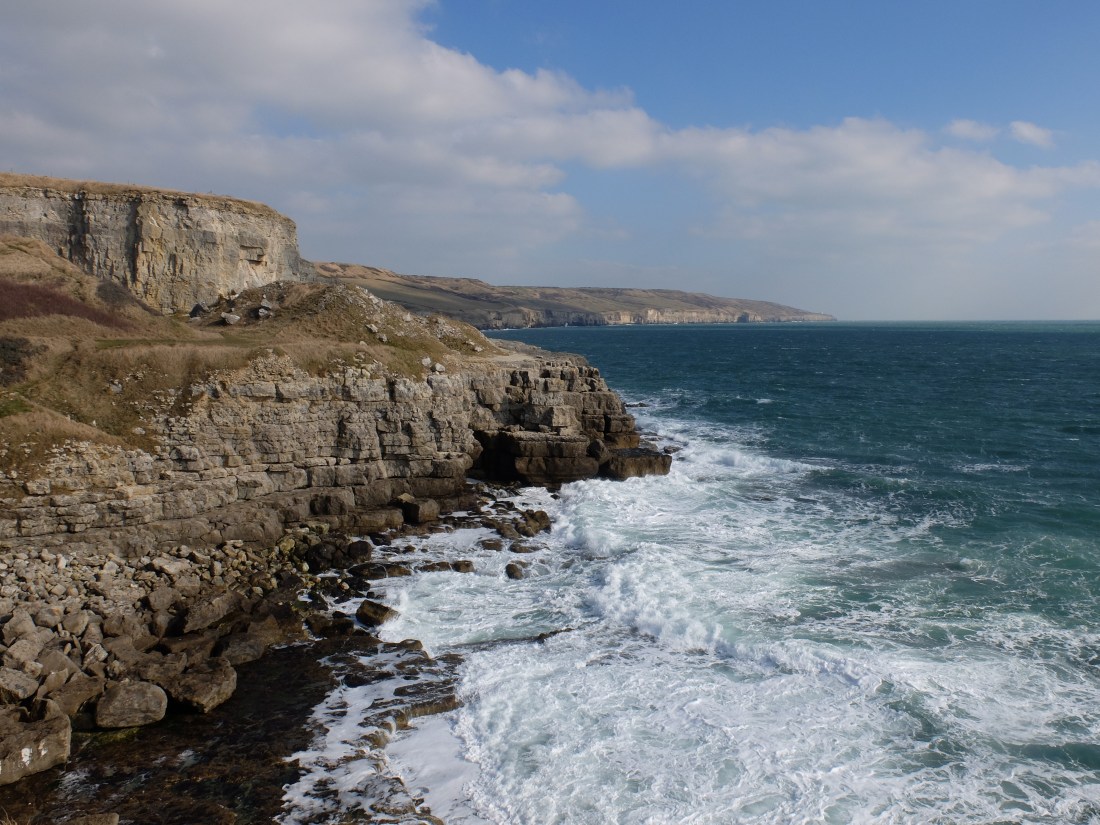
On 23 February the “Beast of the East” had been named and was beginning to work up enthusiasm for cooling the UK. But in its advance we had two wonderful walking days. Ambition was limited in part because of our competence and in part because significant Westward progress was blocked by the Lulworth ranges being closed on our weekend. Dugald was pretty confident that, with the end of the financial year approaching, a shortage of ammunition would result in the cancellation of any practice. But, whatever the state of the ammunition stocks, the range did indeed remain closed. The fact we heard no noise at all could lead us to all sorts of conspiracy theories – but to no avail.
The first day was a short circuit from Worth Matravers to Winspit Quarry, then to St Albans Head and back to the pub in the village after passing Chapman’s Pool. We had about half a mile walking into the growing “Beast” and that was quite enough – very cold and biting wind. At the first dairy farm gateway Dugald took a route that rapidly swallowed his boots, which were fortunately retrieved still attached to his feet. It was clear that his experience as a dairy farmer had been lost – or perhaps never learnt. Richard, equipped with only running trainers, found a more successful route round the edge.
After this faltering start we turned down the track to Winspit, downhill and more protected from the wind. We had a look around the remains of Windspit Quarry. Here the seams that were quarried undermine the rest of the cliff. The roof is held up by pillars of rock left in place. How the quarry workers calculated what had to be left to keep the mine safe is not clear – but they got it right.
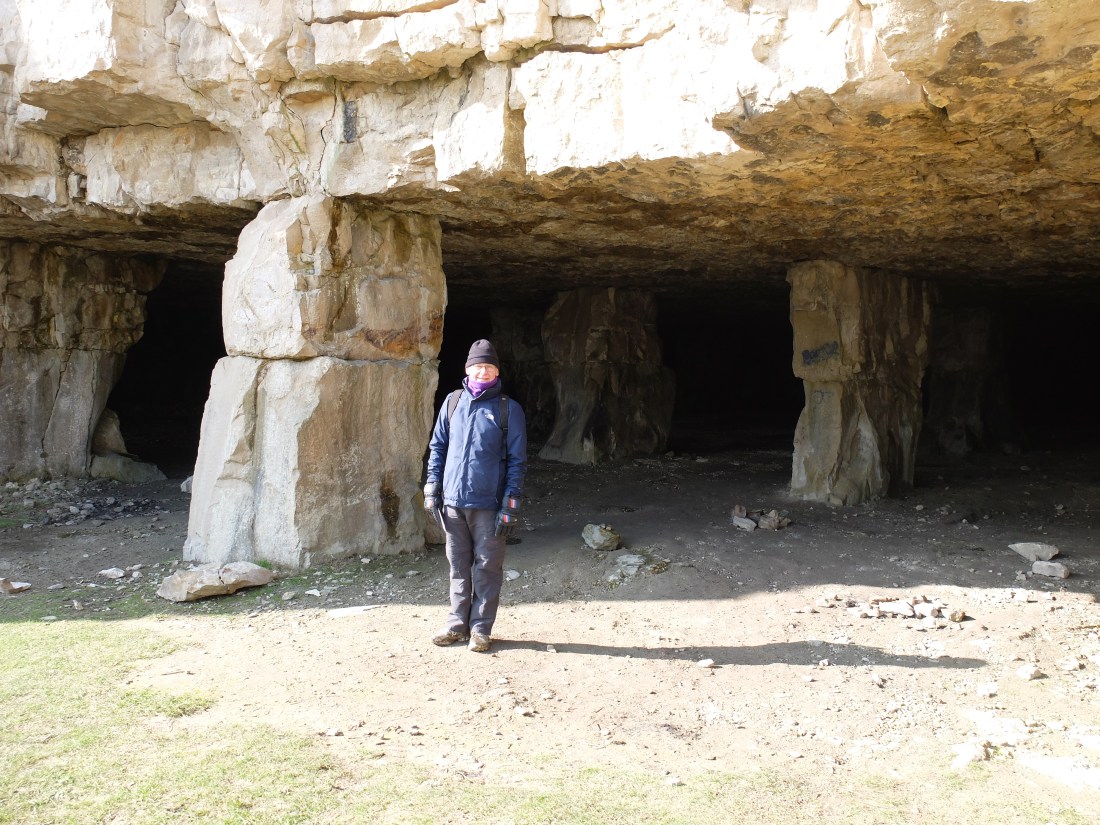
It has not been worked for 70 years, but has been a film location for a number of Dr Who episodes, and is a home to many bats. Richard was not posing as the good Doctor when he stood in front of the quarry.
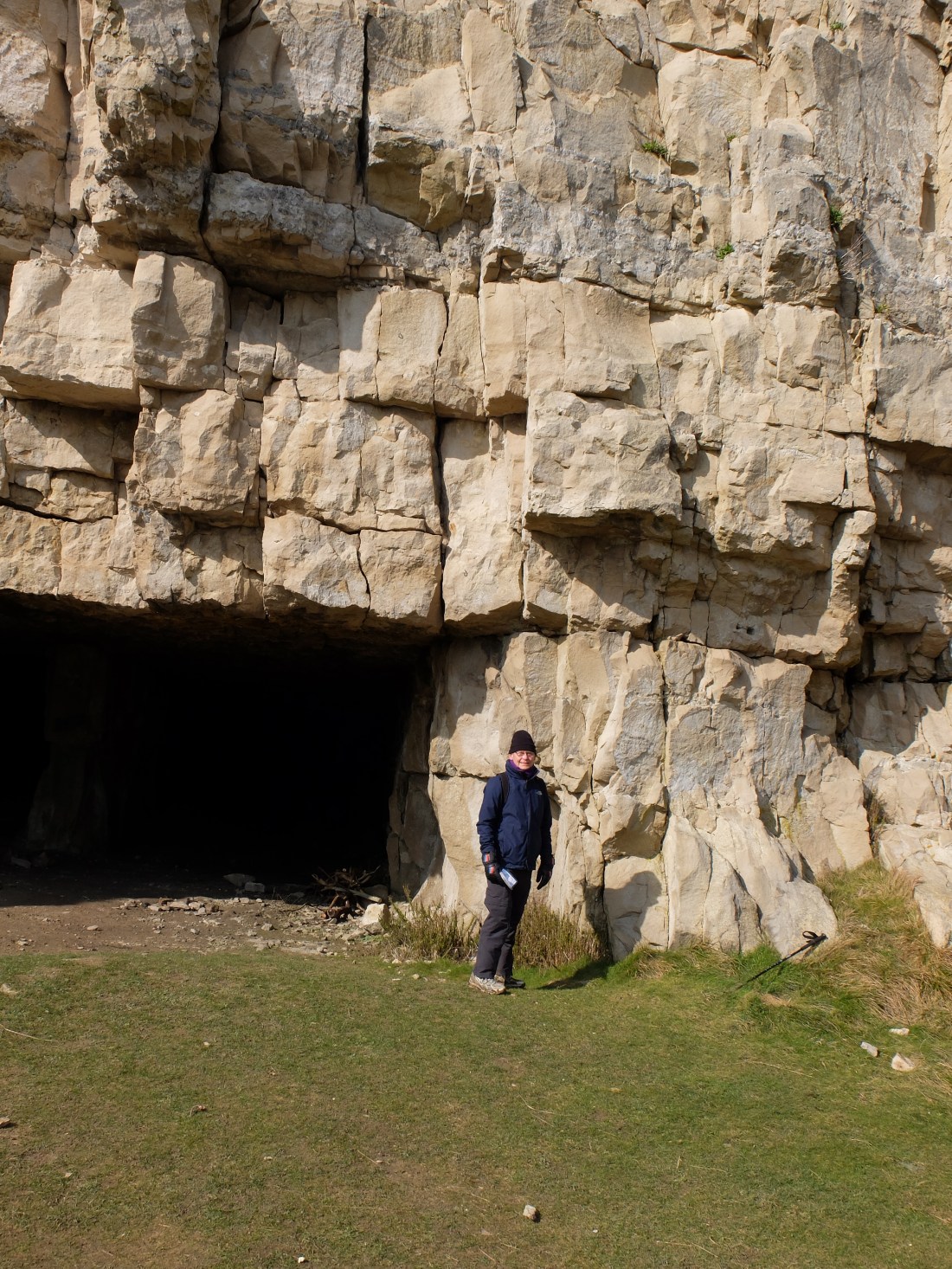
From here we set off to the West and downwind. Without Martin to help us we saw fewer birds and identified a smaller proportion of those we saw. But the views were magnificent and the walking dry and firm. At St Albans Head we saw volunteers working in the former coastguard building – run without any public funding.
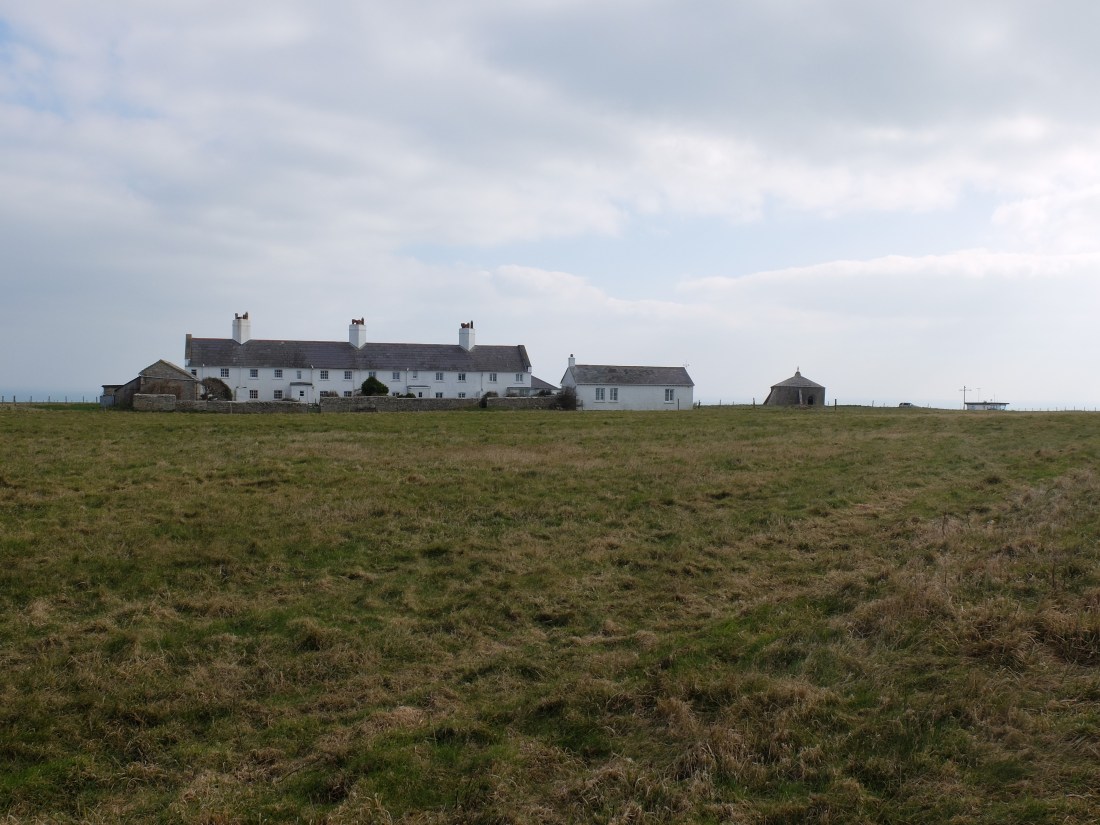
The modest buildings do not give any indication of the wartime radar establishment that was here, both as an operational station and a research centre: a plaque is there as a reminder. The tiny square Norman chapel dedicated to St Aldhelm sits on the top of the cliff with very small windows looking out to sea. It’s hard to see who would have patronised it. Perhaps St Aldhelm who was Bishop of Sherborne in the seventh century came and rested here when the burghers of the town were being particularly irritating. With a couple of curled postcards in Dugald’s pack for the grandchildren we moved on
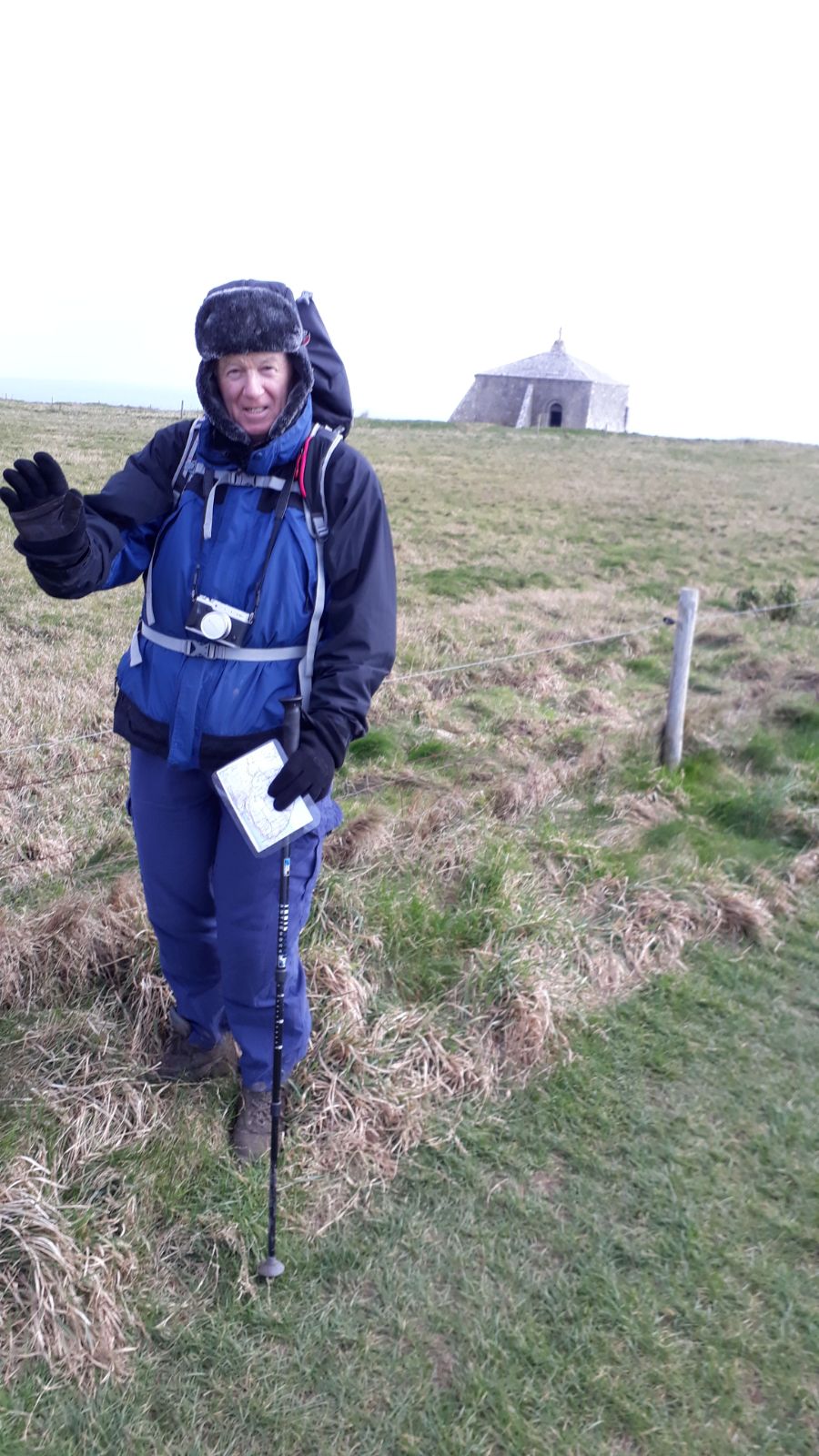 .
.
Turning North towards Chapman’s Pool soon gets you to a sharp 218 step descent, followed immediately by a 185 step climb.
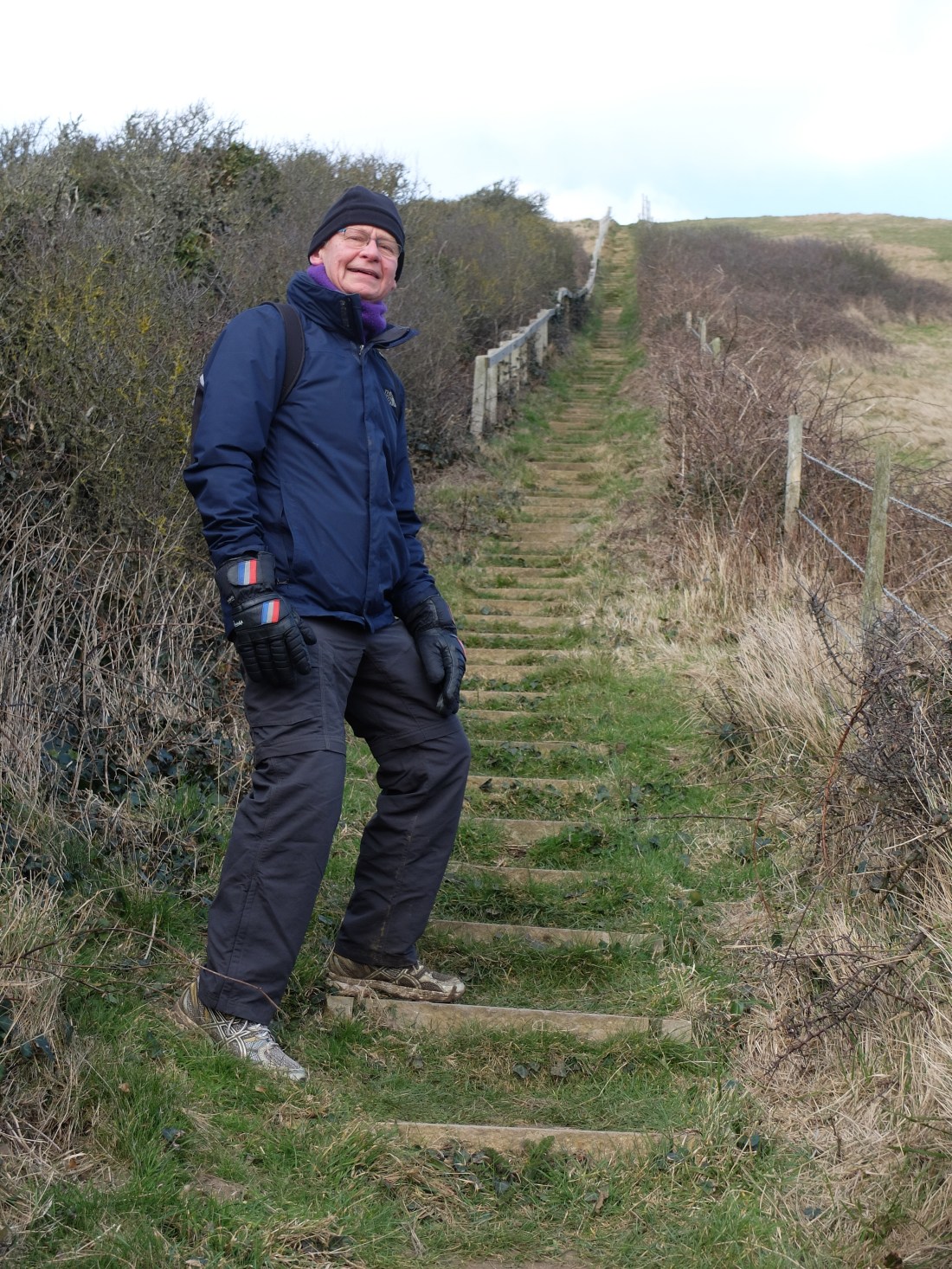
At the top of the climb we both agreed it was better than our expectation.
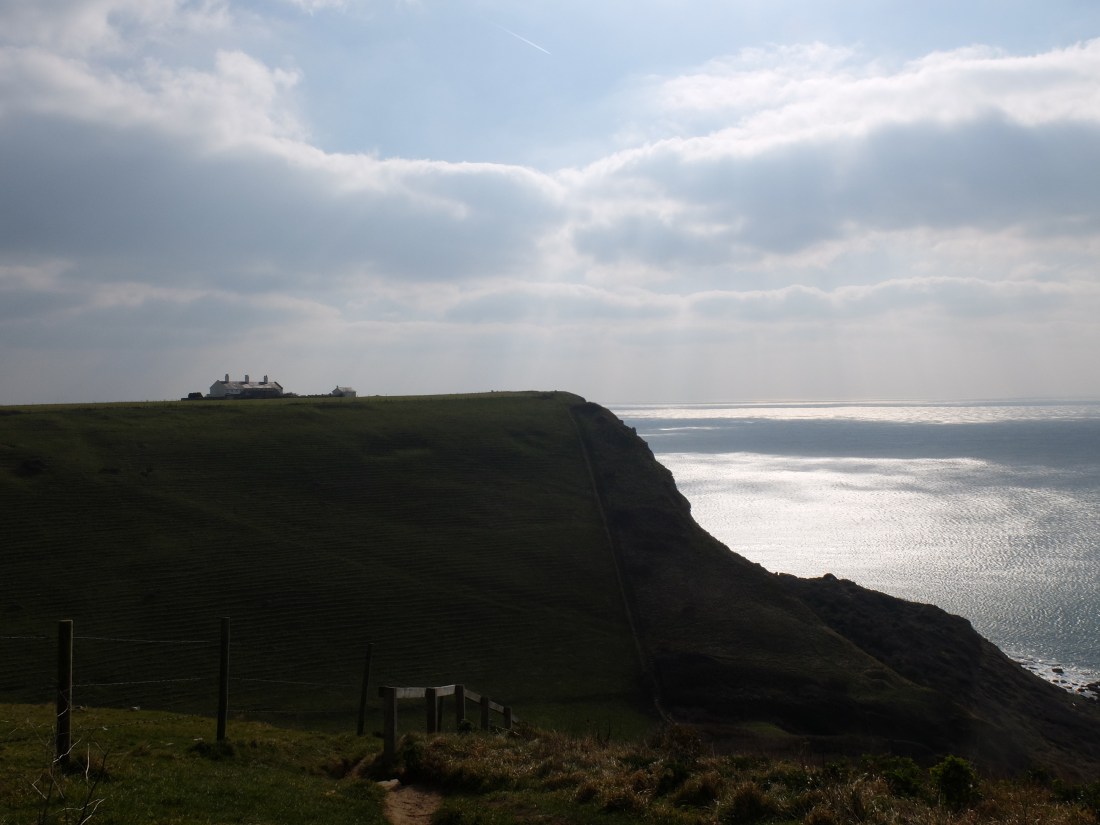
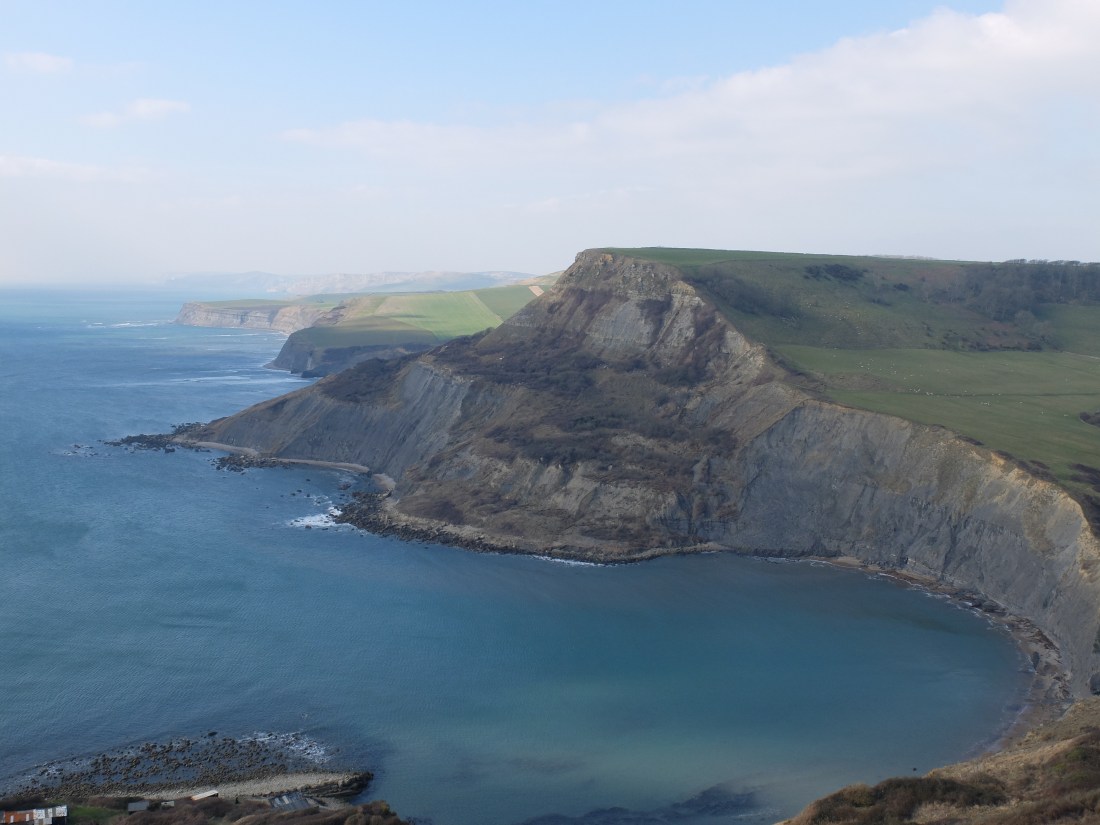
Chapman’s Pool is a delightful sheltered cove which is a beautiful spot to anchor in a Northerly or an Easterly, so would have been brilliant shelter from the Beast.
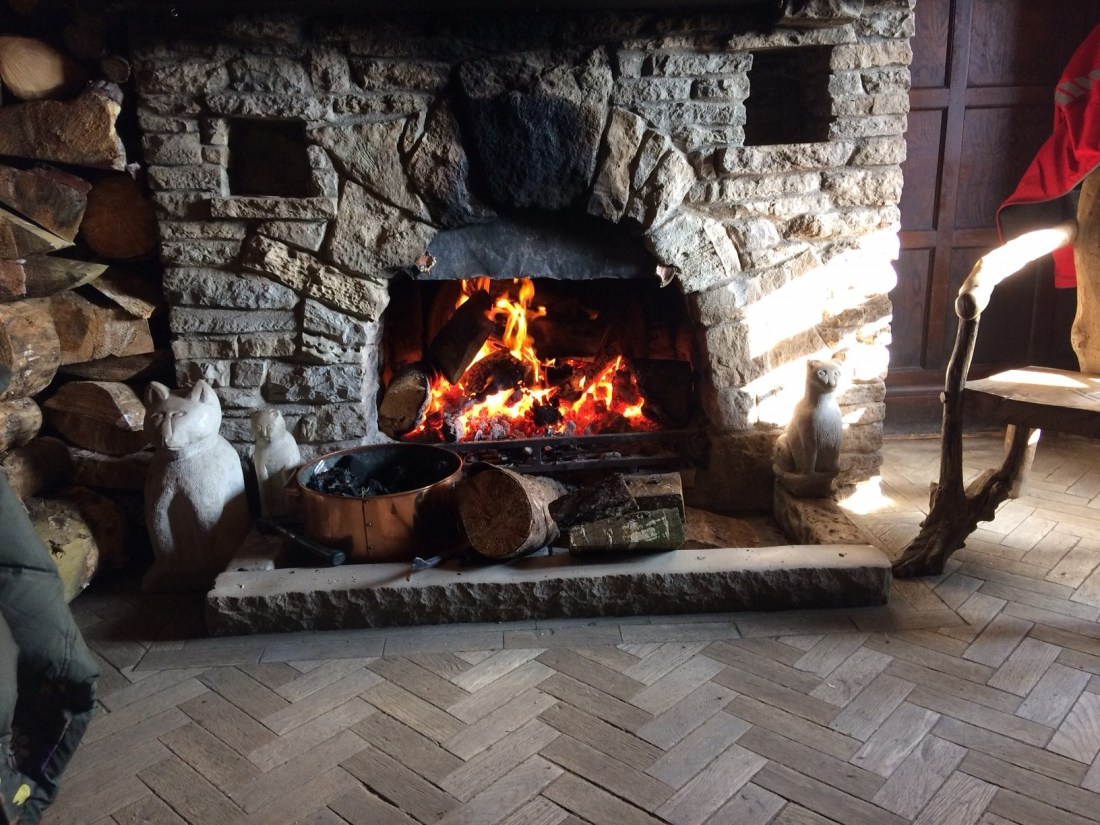
We were soon back at the car and then in the Square and Compass for a very welcome pie and beer in front of a roaring fire, which was frequently fed with large logs by the punters closest to it. This was not a fire for decoration but for blazing heat.
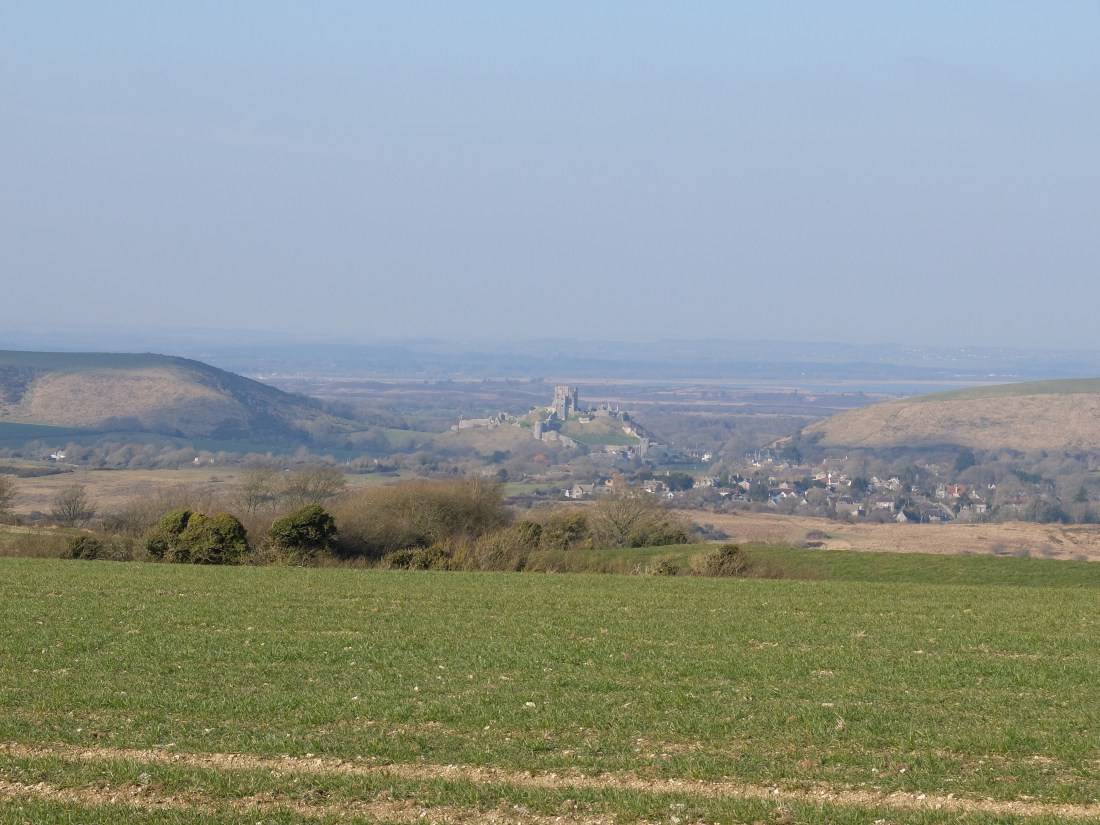
On the way back we stopped at a layby from which we could see Corfe Castle blocking the gap in the hills to the North of the Isle of Purbeck. It is a magnificent ruin and must have been awe inspiring when it was built in the eleventh and twelfth centuries. During the Civil War it was defended against the Parliamentarians by the redoubtable Lady Bankes in two sieges, but was eventually overwhelmed and then destroyed. The Bankes family moved to a more comfortable berth in Kingston Lacy.
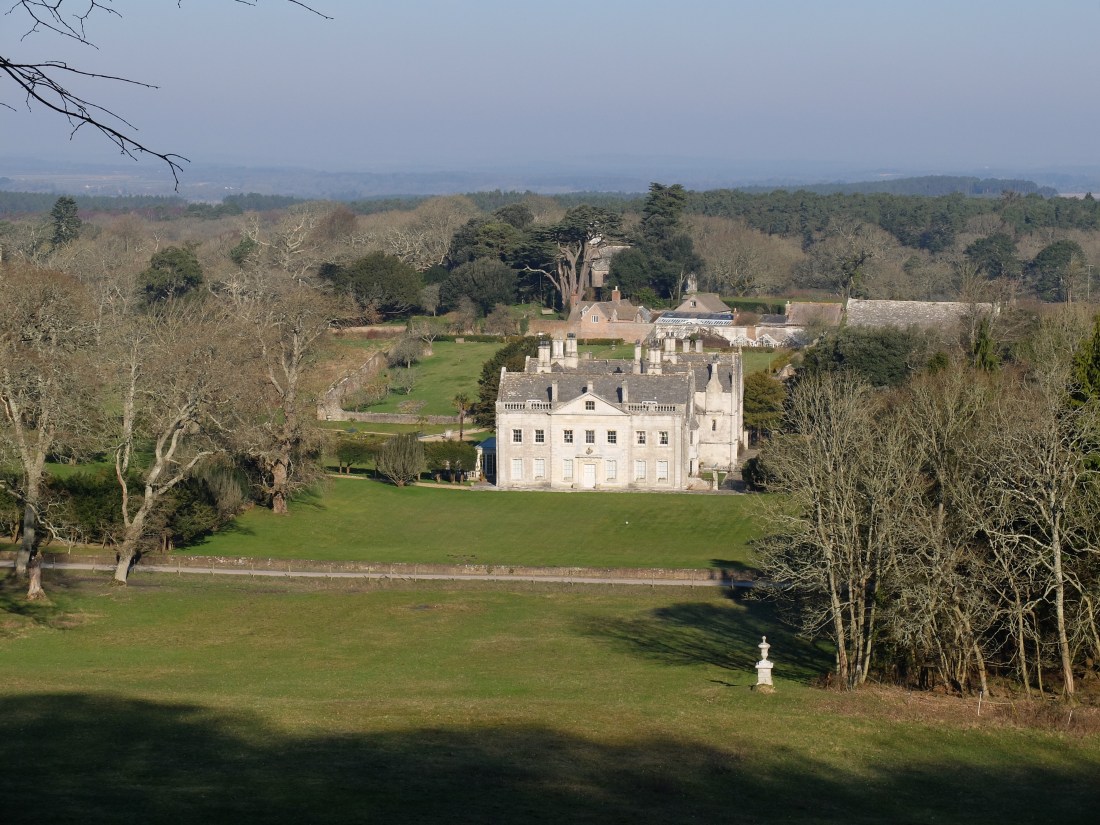
The next day was as good a February day as you could ask for – cold but sunny all day. On the outward car journey we passed Creech Grange, a striking country house.
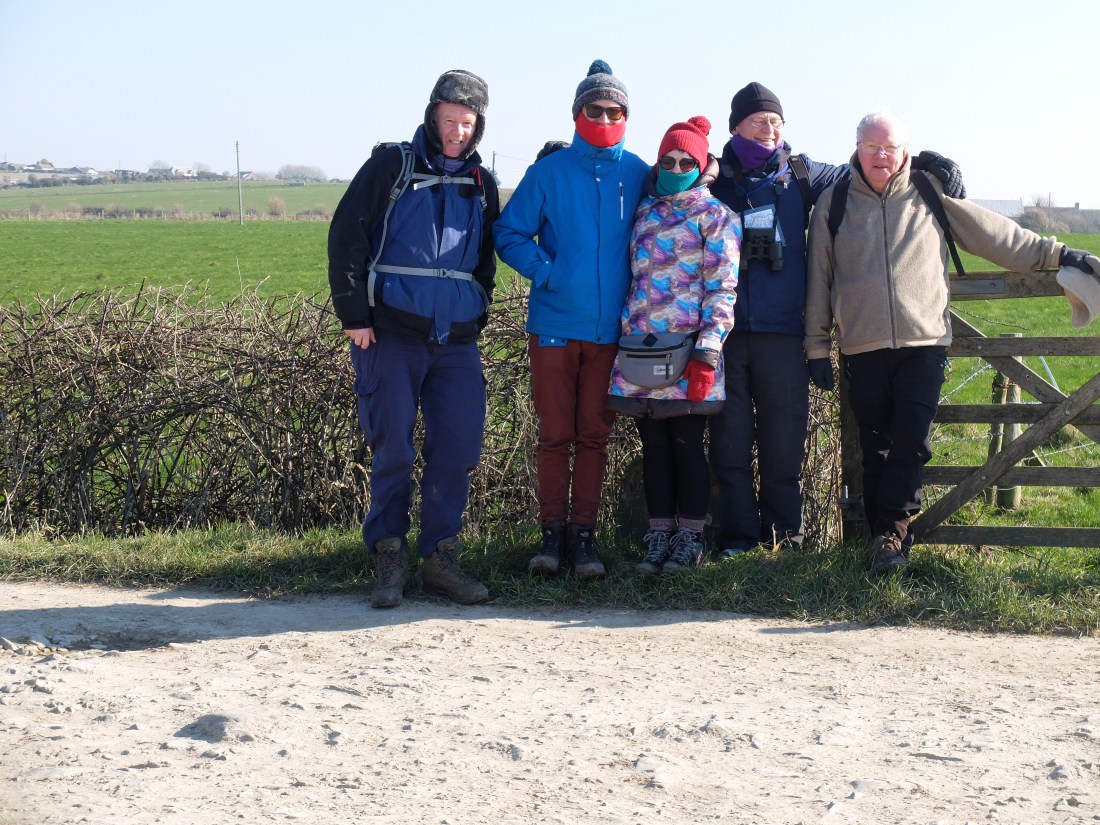
We were now five with Matthew and Emily joining in as well as Martin. This dropped the average age by about 15 years, but did not increase the average speed at all.
The rendezvous of two cars at Kimmeridge involved paying the toll of £5 twice – bad planning. Then off to Worth Matravers for the walk. The first section skirted Chapman’s Pool and took us to the steep slope to Houns-tout Cliff. One of the benefits of going slowly is that there is plenty of time to stop and stare.
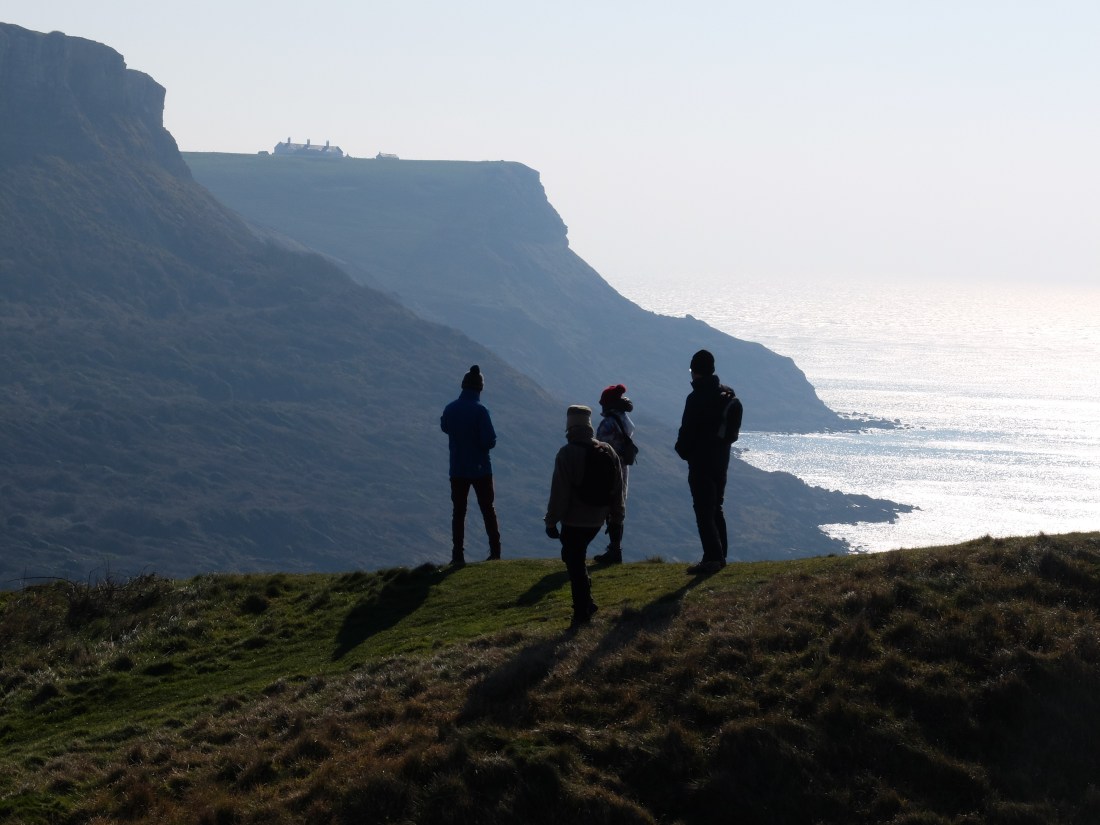
From Houns-tout the path is grassy and close to the cliff edge. Looking inland there were long strips of cover for game birds. There was debate about what the tall straw coloured plants were, with an eventual consensus on elephant grass.
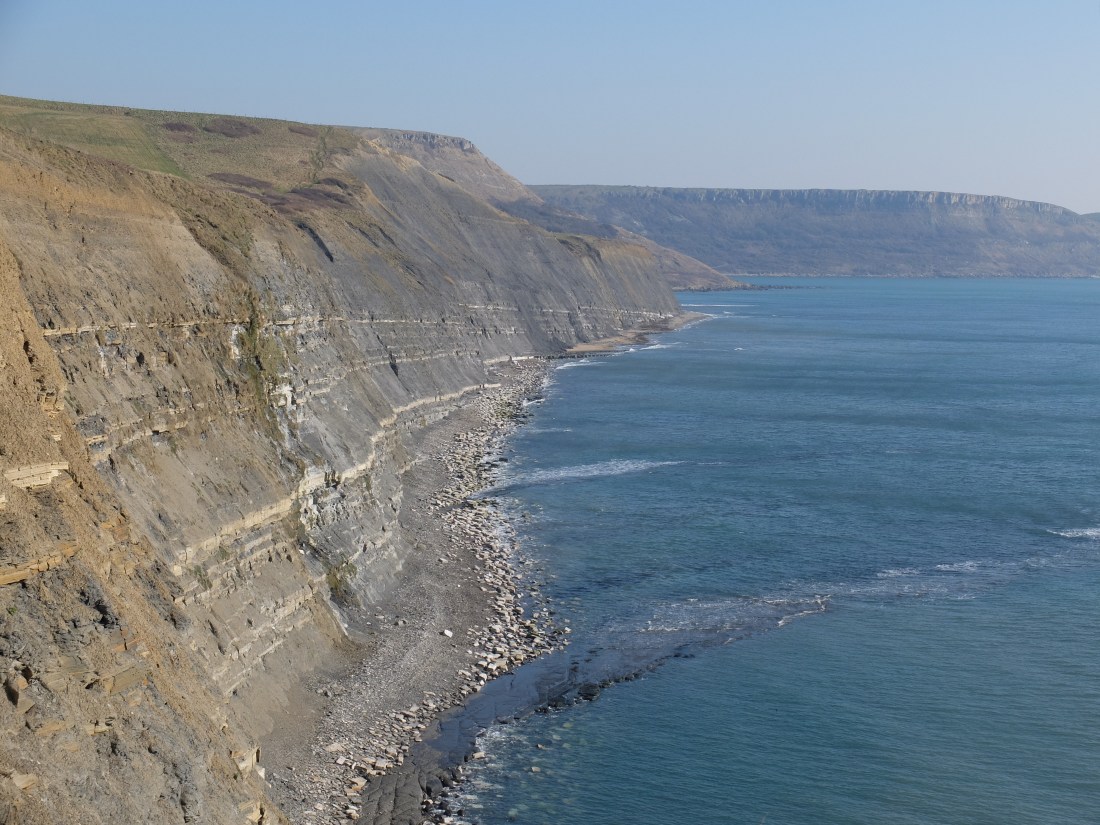
The views to the West were glorious, and along the cliff itself the strata of rock clear and striking. In some places there are very shallow strata no more than a metre deep which must represent a short but distinctly different period of sedimentation. At the foot of the cliff the tough and hard rock of the Kimmeridge Ledges stretches out to sea – dark and striated like old fashioned toffee – and the sea breaks so differently over the shallows.
Lunch was simple and good on the dry grass. Matthew and Emily seemed immune to the drop over the cliff and sat nonchalantly by it.
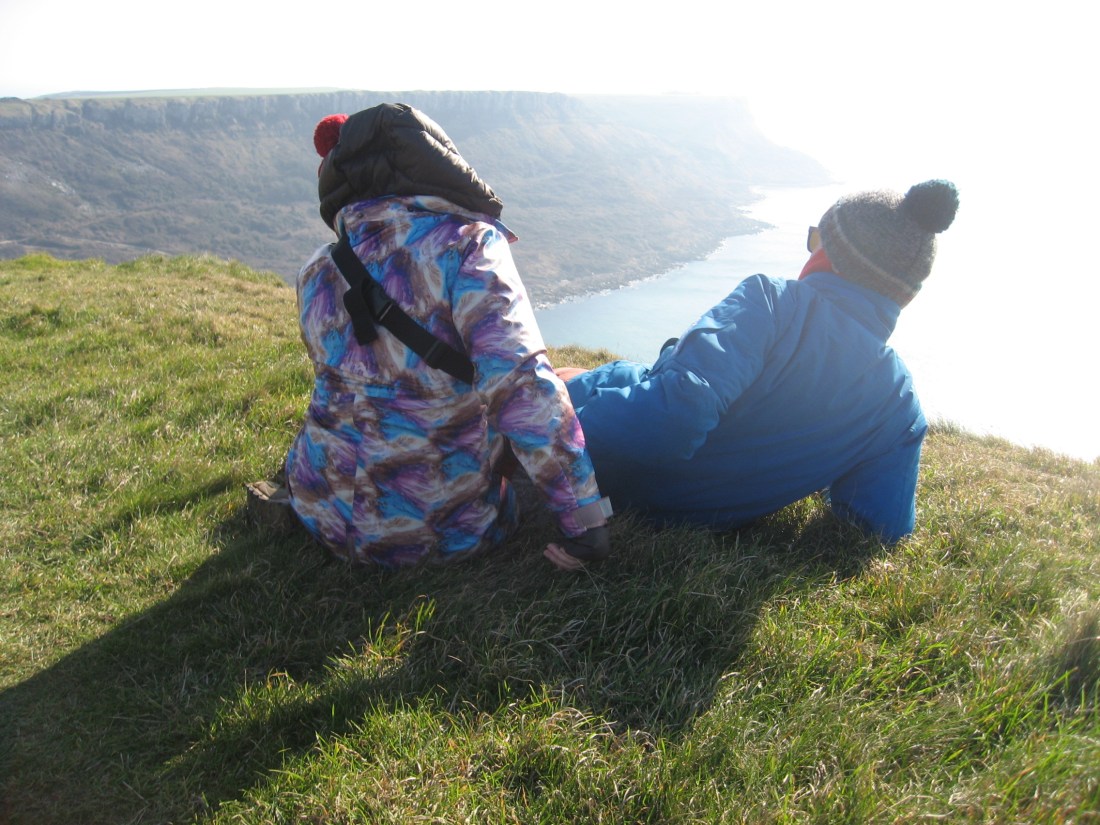
Martin too was oblivious of the cliff edge. If he heard a raven he had to lean over to check it out. He seems to have a gravity offset that keeps him safe, but it is nevertheless unnerving. But his sharp eyes spot small birds that ours miss. So we are shown stonechats – tiny but clear when pointed out.
So we ambled on to Kimmeridge, younger and better informed than usual. The day ended as it started, sunny with a sharp breeze. Emily declared her new walking boots a success. We all went home without realising how lucky we were to enjoy these two days just before the Beast of the East dumped snow and freezing temperatures on the whole of the UK.
Next month we should be able to walk through the Lulworth ranges and we need to speed up a bit – we are still over 600 miles from Minehead. ETA – not yet clear.

 Pensioners on The Path